

ICE Traffic Stop in Chicago Suburb Turns Deadly, Officer Injured
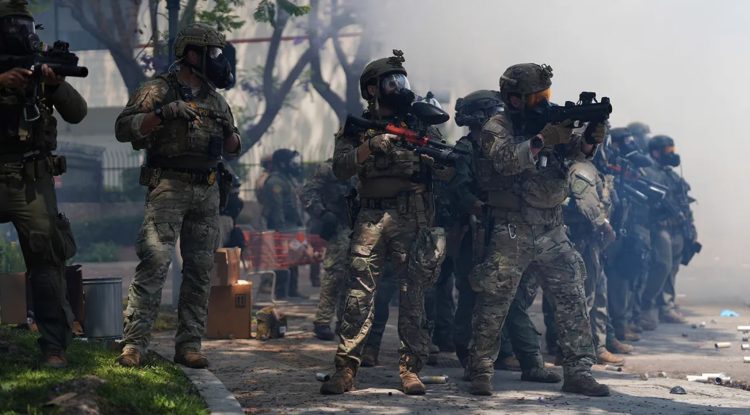
An immigration enforcement operation in Franklin Park, Illinois, ended in bloodshed Friday morning when U.S. Immigration and Customs Enforcement (ICE) officers shot and killed Silverio Villegas-Gonzalez during a traffic stop. The 12 September incident also left one ICE officer seriously injured.
According to ICE and the Department of Homeland Security (DHS), the enforcement team was targeting Villegas-Gonzalez, an undocumented immigrant with a history of reckless driving. When officers attempted to arrest him, he reportedly ignored commands and gunned his vehicle toward the team, striking and dragging one officer in the process. Fearing for his life, the agent discharged his weapon, fatally wounding Villegas-Gonzalez.
Emergency crews treated both men on scene before rushing them to a nearby hospital. Villegas-Gonzalez was pronounced dead shortly after arrival. The injured ICE officer remains hospitalized in stable condition.
DHS Assistant Secretary Tricia McLaughlin publicly backed the officer’s actions, emphasizing that he followed his training and acted to protect lives. The operation, part of a stepped-up federal campaign in the region, highlights the hazards officers face during targeted arrests. ICE officials also pushed back on misinformation circulating online, calling for a clear-eyed look at the risks inherent in immigration enforcement.
Calls for accountability quickly followed. Advocates and community leaders urged a transparent investigation into the use of force. Franklin Park police, who confirmed they were not involved, handed off the case to federal authorities. The investigation now rests with DHS and ICE, both of which face scrutiny not only for how the operation unfolded, but also for how the story will be told in a climate where enforcement actions are increasingly politicized.
Man fatally shot during ICE traffic stop after dragging and injuring an officer in Chicago suburbs, DHS sayshttps://t.co/Dw0Zljpox6
— CNN Politics (@CNNPolitics) September 12, 2025
National Guard Headed to Memphis Under Trump’s “Operation Viper”
Memphis is about to see boots on the ground. On September 12, President Trump announced that National Guard troops would be deployed to the city as part of his broader crackdown on violent crime. Memphis now joins the list of major U.S. cities targeted by federal interventions, with the White House branding this push under the banner of Operation Viper.
Trump described Memphis as “deeply troubled,” pointing to decades of violent crime and citing support from Tennessee’s Republican Governor Bill Lee. But the city’s Democratic Mayor Paul Young struck a different tone—acknowledging the decision but clarifying he never asked for troops and questioning whether the Guard is the right tool for the job.
Why Memphis?
The city’s crime statistics have long been grim. FBI data puts Memphis near the top for both murder and violent crime among large U.S. cities in 2024. Federal officials argue that lasting trends still warrant aggressive measures, even though local numbers are showing progress. City reports indicate a 44% drop in overall crime this year and nearly a 30% decline in homicides—evidence that local strategies may be turning the tide.
Divided Reception
Governor Lee welcomed the deployment as added muscle for law enforcement, but Mayor Young’s reservations highlight a tension that runs deep in the city itself. Community reactions are mixed: some see the Guard’s presence as a heavy-handed, politically motivated move aimed at a majority-Black city already showing improvements. Others back the decision, pointing to ongoing concerns about public safety and the sense that crime remains an ever-present threat.
For now, the Guard will deploy, the FBI will assist, and Memphis will become the next testing ground for Trump’s national experiment in crime suppression. Whether it reinforces safety or fuels new controversy will depend on what happens when soldiers trade their training grounds for city streets.
Exclusive — Sen. Bill Hagerty: ‘Project Viper’ Leads to More than 500 Arrests in Memphis in Federal-State Crackdown on Crime
I love to see the crackdown on crime across the US!
Sen. Bill Hagerty (R-TN) announced that a federal and state operation led to the arrest of more… pic.twitter.com/7ChlmcdW5u
— NWRain-Judi (@RYboating) September 12, 2025
Evergreen High School Shooter’s Path: From Gore Forums to White Supremacist Radicalization
The 16-year-old responsible for the Evergreen High School shooting has been identified as Desmond Holly, a teenager whose online life painted a chilling portrait of obsession with mass shootings and white supremacist ideology. Authorities and researchers say Holly’s digital trail shows how a mix of gore forums, extremist networks, and social media subcultures helped radicalize him before the attack.
Online Descent Into Extremism
Holly’s activity centered on a gore forum infamous for circulating violent killing videos and extremist propaganda. He joined in December 2024, following a pattern seen in other recent shooters from Madison and Nashville who also gravitated to the same online space. On TikTok, he displayed white supremacist symbols and even adopted a username tied to a well-known extremist slogan.
Glorifying Mass Murder
His fascination wasn’t limited to ideology—it bled into hero worship of prior attackers. Holly reposted material celebrating infamous shootings, especially Columbine. He mimicked shooters’ poses in self-made images, wore a black WRATH T-shirt like Columbine’s Eric Harris, and flaunted tactical gear in videos later scrubbed from his account.
The White Supremacist Playbook
Investigators found that Holly’s online interactions went beyond admiration—he was actively encouraged by extremists who pushed him toward violence. In TikTok’s “True Crime Community,” where some users romanticize mass killers, he was told to embrace the title of “hero,” a word white supremacists use for ideological gunmen. Posts urged him to buy Nazi-era patches tied to the Christchurch and Buffalo shootings. He took cues from their imagery, referenced past massacres, and signaled alignment with their cause.
Warnings From Experts
The Jefferson County Sheriff’s Office and the Anti-Defamation League confirmed Holly’s radicalization ties to extremist networks, though the investigation is ongoing. Researchers warn that youth exposure to gore culture and extremist propaganda blurs the line between morbid curiosity and ideological indoctrination. In Holly’s case, the digital cocktail of violent imagery, shooter glorification, and white supremacist dogma converged with deadly results.
The Evergreen tragedy highlights a grim reality: radicalization doesn’t happen in some dark corner of the web anymore. It’s out in the open, fueled by online communities that celebrate killers as icons and feed the cycle of ideologically driven violence.
“The 16-year-old boy who shot two students and then himself at Evergreen High School this week appeared to espouse white supremacist views online and showed an interest in mass shooters in the days before the attack.” This is why all the talk about college radicalizing Tyler… pic.twitter.com/kyKHGbZjdQ
— Pedro L. Gonzalez (@emeriticus) September 13, 2025








COMMENTS