

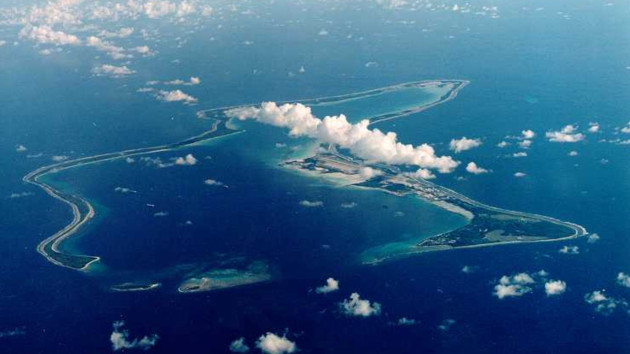
British officials called the attempt unsuccessful and offered few details, which leaves the operational picture deliberately thin. How close the missiles came, what systems were used, and whether defenses were engaged all remain unclear. In that absence, analysis fills the gap—and most of it points in the same direction: capability is evolving faster than the public narrative suggests.
There is also a second layer here, one that sits just beneath the technical question.
If Iran leaned on its space launch architecture to extend range, it underscores a long-standing reality: the line between civilian space capability and military strike potential is thinner than advertised. The hardware does not need to change much. The intent does.
That convergence has been understood in theory for years.
Now it is being exercised under combat conditions.
The broader war is already stretching across domains—air, sea, proxy networks, and economic pressure points like the Strait of Hormuz. This move stretches it geographically. It hints at a willingness to contest not just forces in theater, but the infrastructure that sustains them from a distance.
That is escalation by extension.
The Khorramshahr-4 is likely the intermediate-range ballistic missile that Iran used in the attempted attack on Diego Garcia, which analysts had previously assessed may have a range of +4,000km, though it had only been proven at between 2,000-3,000km. Such an attack would suggest… https://t.co/bLj7XzvKlz pic.twitter.com/fGMPtDs2Ih
— OSINTdefender (@sentdefender) March 21, 2026
For now, the strike missed. No damage, no casualties, no immediate shift in operations.
But the map is a little wider than it was yesterday.
And once a target enters range, even theoretically, it rarely leaves the planning cycle again.
Ukraine’s Drone Shield Extends Beyond Its Borders
Ukraine is no longer fighting only on its own soil. Its air defense expertise, honed against Moscow’s full-scale invasion, is now being exported to the Middle East and Gulf region, quietly reshaping the calculus of the Iran war.
Ukrainian President Volodymyr Zelenskyy confirmed that Ukrainian specialists are deployed across five countries—United Arab Emirates (UAE), Saudi Arabia, Qatar, Kuwait, and Jordan—building defenses against Iran’s Shahed drones. The units provide both technical guidance and operational support to protect civilian and critical infrastructure, turning what might have been soft targets into hardened zones.
Ukraine has become one of the world’s leading producers of inexpensive, battle-tested drone interceptors. Their effectiveness against Russian drones gives Kyiv a cache of credibility it can now trade regionally, offering expertise in exchange for advanced air defense systems it still desperately needs at home. In effect, Ukraine is leveraging a defensive innovation born under fire to extend influence across multiple theaters simultaneously.
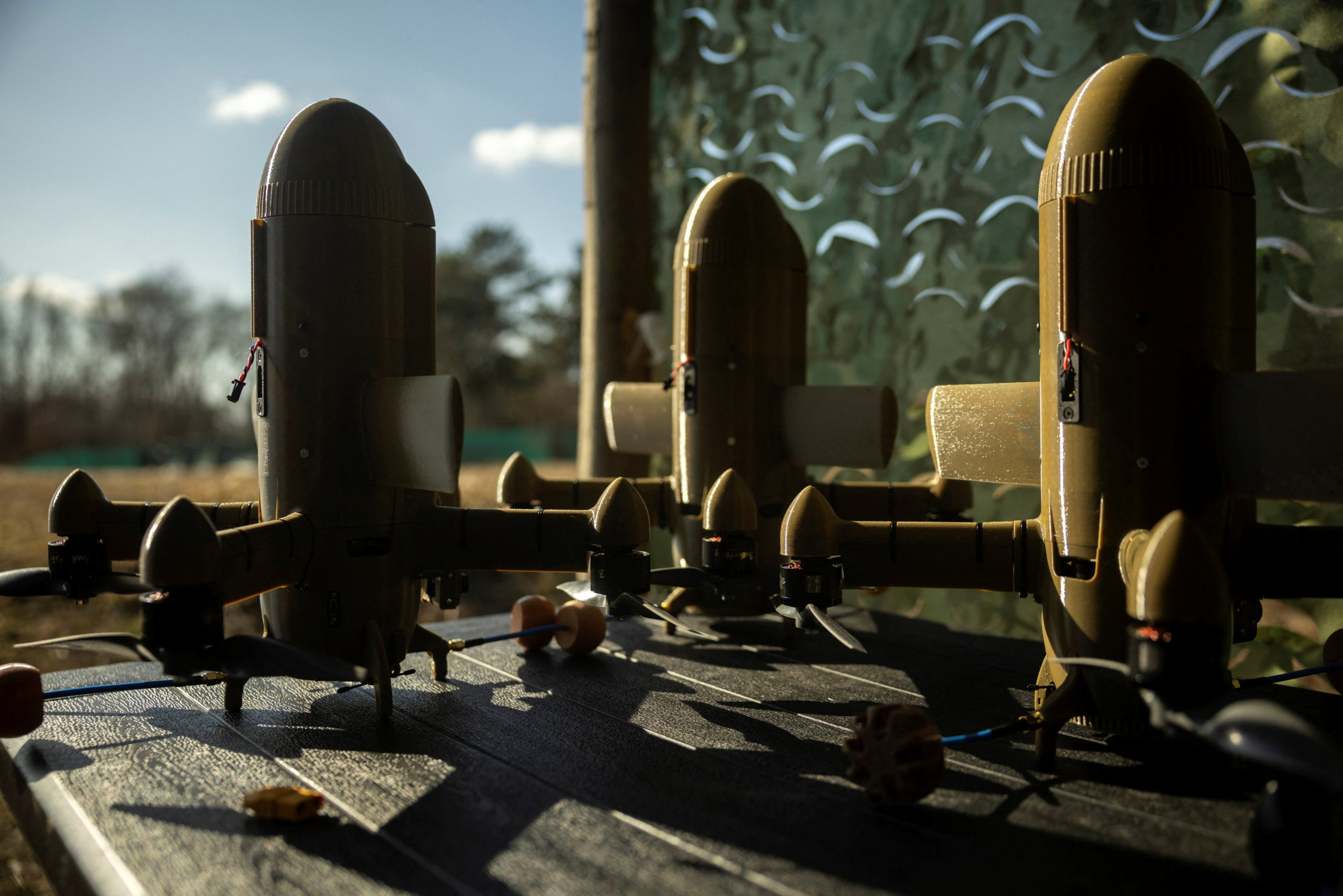
The operational picture is fluid. Ukrainian teams are assessing long-term security cooperation with each partner nation while simultaneously responding to requests from US and European forces in the region. That dual role positions Ukraine as a critical node in multinational counter-drone efforts. A force multiplier far beyond its borders.
This transfer of expertise has strategic implications. Iran, a Moscow ally, has increasingly integrated drone operations with Russian campaigns in Ukraine. Kyiv’s support to Gulf states adds a counterbalance, complicating Tehran’s ability to project airpower against regional partners without risk of interception.
In short, Iranian drones that might have operated with impunity are now facing tested, networked defenses.
At the same time, domestic pressures in Ukraine remain intense. Western attention and resources are being diverted by the Middle East conflict, delaying critical financial aid and reducing the flow of advanced systems that Kyiv needs to sustain its own war effort. Russian forces, flush with temporary financial relief from US sanctions waivers, are expected to press new offensives as spring approaches. Ukrainian leadership claims counterattacks have already disrupted one planned assault, but the margin for error is narrowing.
Ukraine’s approach illustrates a broader evolution in modern warfare: conflict zones and expertise are no longer bounded by geography. A country under siege at home is simultaneously shaping battles halfway across the globe, exporting solutions developed in response to its own crisis.
This is not just aid. It is strategic leverage in a rapidly expanding, multi-theater conflict.
Even as Kyiv protects others, its own survival hangs in the balance. But every interceptor deployed abroad strengthens a network of deterrence, one Shahed drone at a time.
Drones in the Sahel: Expanding US Reach Through Partners
The drones are flying, and the battlefield is shifting—quietly, methodically, and with precision. US military trainers deployed to Bauchi State Air Base are operating MQ-9 “Reaper” drones over Nigeria, not to strike, but to see. Their mission: provide intelligence and guidance to Nigerian forces battling jihadist militants across the northeast, a region long defined by insurgency, porous borders, and rapidly shifting threats.
This is a partnership, not a combat deployment. According to Major General Samaila Uba, US drones are strictly for reconnaissance, feeding Nigerian commanders actionable data to detect, track, and disrupt extremist activity before it escalates. That combination of American sensors and local knowledge amplifies Nigeria’s operational reach, creating a layer of oversight previously unavailable and extending situational awareness into areas where insurgents once moved freely.
The deployment builds on months of US overflights originating from Ghana, highlighting a growing reliance on persistent, remote surveillance paired with partner-led action. US Africa Command (AFRICOM) leadership emphasizes that this is not a new base—the US footprint in Niger has closed—but operational effect mirrors the permanence of a forward-deployed presence. Drones are quiet, but their eyes are relentless.
Partnership is the backbone of regional security. Exercise #JustifiedAccord unites forces from East Africa, the U.S., and allies to strengthen peacekeeping and crisis response. Training together boosts our ability to protect communities and ensure lasting stability. #Freedom250 pic.twitter.com/Ea7IoOfy3k
— U.S. Africa Command (AFRICOM) (@USAfricaCommand) March 20, 2026
For Nigeria, this is force multiplication at a critical moment. The insurgency, from Boko Haram to the Islamic State Sahel Province, has expanded beyond traditional strongholds, threatening civilian populations and key infrastructure. US support (including training, intelligence sharing, and arms) enables Nigerian units to anticipate threats, target networks, and operate with greater precision. In essence, the combination of US technology and Nigerian manpower turns vulnerability into capability.
Strategically, this deployment sends a message: the United States can project influence through partnerships, without large-scale troop commitments. Intelligence-driven operations reshape the battlefield from afar, creating deterrence and operational friction for adversaries while limiting US exposure. This model of “reach without footprint” demonstrates a new form of power projection, particularly in contested environments where permanent bases are politically or operationally impractical.
Challenges remain. Public criticism from US President Donald Trump has framed Nigeria’s inability to fully secure its territory as a failure, even as analysts note the insurgency affects all communities indiscriminately. Balancing perception with operational gains is as important as countering the militants themselves.
The drones do not fire. Yet every sortie changes the battlefield. Every sensor sweep, every intelligence feed, strengthens Nigerian defenses and tightens the net on extremists. The war in the Sahel is decades old, but these deployments show that modern conflict is increasingly about information, partnership, and precision—long before a single missile is launched.
Editor’s Note: Details in this story reflect the latest information at publication and may change as events evolve.








COMMENTS