

According to the South Korean Defense Ministry, this technology ranks among the top five globally in terms of Earth observation and resolution capacities.
The launch signifies more than just technological prowess; it denotes a strategic shift in South Korea’s defense tactics.
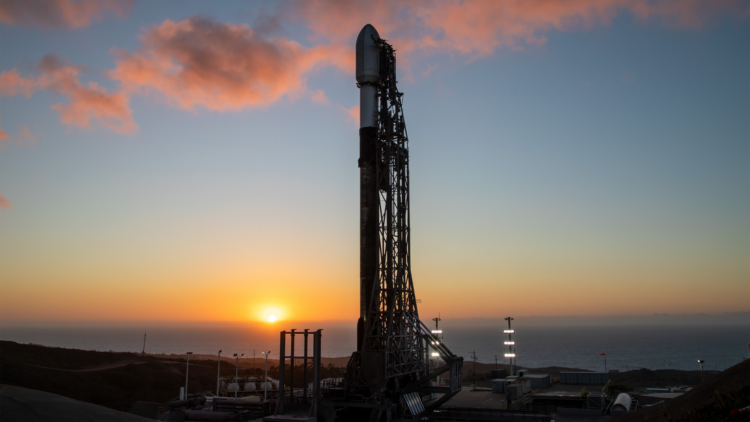
Previously reliant on external allies for crucial surveillance data, this success paves the way for South Korea’s plans to deploy four additional spy satellites by 2025, further augmenting its reconnaissance capabilities over North Korea.
The satellite launched on Friday is reportedly equipped with an electro-optical and infrared device, while the expected additions will feature the cutting-edge synthetic aperture radar (SAR).
This concerted effort aims to secure independent and comprehensive intelligence, surveillance, and reconnaissance (ISR) capabilities vital for safeguarding national security.
Competitive Dynamics: North Korea’s Parallel Progress
South Korea’s triumph comes in the wake of North Korea’s own achievement – the successful launch of its “Malligyong-1” surveillance satellite.
This recent deployment marked Pyongyang’s third attempt, following failures earlier in the year.
North Korea’s claims of having obtained imagery of major US and South Korean military installations, coupled with purported snapshots of the Italian capital, Rome, have raised eyebrows in the international community.
So beautiful and meaningful it makes ya want to cry…
DPRK's Chollima-1 rocket soaring into the night sky of North Pyongan Province carrying recon satellite Malligyong-1 pic.twitter.com/jOAchfzKBf
— Natalie Everhart 🇰🇵 (@NatalieRevolts) November 26, 2023
Yet, the secretive regime has not released any of the claimed satellite imagery, leaving experts curious about the actual capabilities and intentions behind its reconnaissance satellite.
Geopolitical Implications: Redefining Security Dynamics
The parallel advancements in satellite technology by both Koreas introduce a new dimension to the geopolitical landscape, replete with implications for regional security.
Experts suggest that North Korea’s newfound capability could significantly enhance its intelligence-gathering abilities, particularly with respect to South Korea, potentially influencing future military conflicts.
Furthermore, amidst the heightened tensions on the peninsula, speculation arose regarding North Korea’s alleged technical collaboration with Moscow.
Reports indicated that Pyongyang received technical assistance from Russia, possibly in exchange for providing weaponry for Russia’s ongoing conflict in Ukraine.
Such collaborations, if validated, could significantly alter the dynamics of the ongoing space race and have broader implications for international relations.
Conclusion: A Defining Moment in South Korea’s Pursuit of Independence
South Korea’s successful venture into space with its own spy satellite reflects a culmination of dedicated efforts in technological development and underscores its determination to strengthen national security through independent means.
As reported by AP News, the initial launching of the South Korean satellite was postponed due to unfavorable weather conditions, rescheduling it from November 28 to December 1.
This caused quite a bummer, considering North Korea had already sent its own first spy satellite into orbit weeks prior.
Nonetheless, this milestone achievement promises a significant boost to South Korea’s capabilities and signifies its resolve to assert itself in the increasingly competitive space technology arena.
And as both Koreas vie for supremacy in space-based intelligence, the race transcends mere technological prowess—reflecting their strategic maneuvers in an ever-evolving geopolitical landscape.
~
The trajectory of this space race remains uncertain, with implications reaching far beyond the confines of the Korean peninsula.
The development and deployment of advanced surveillance satellites introduce complexities that necessitate a recalibration of security dynamics in the region.








COMMENTS