The Pistolet Samozaryadny Malogabaritny (PSM) was developed by the KGB in 1969 as a compact, semi-automatic pistol for covert operations. Despite its low stopping power, the PSM has gained popularity among Russian officials and has become a status symbol, remaining in production today.
Key points from this article:
The PSM was specifically designed for KGB operatives to be a flat, easily concealable weapon, meeting the requirements of Soviet government documents.
How the PSM's armor-piercing capabilities have made it a preferred choice among Russian government agents, despite its low stopping power, leading some police operatives to refuse carrying it.
Why the PSM has developed a cult following among Russian elites, including President Putin, as a high-status symbol, despite its association with the KGB and its use in criminal activities.
Updating summary...
Spy Gun and Status Symbol: Russia’s PSM Compact Pistol
Warren Gray
Speed
1x
Listen
COMMENTS
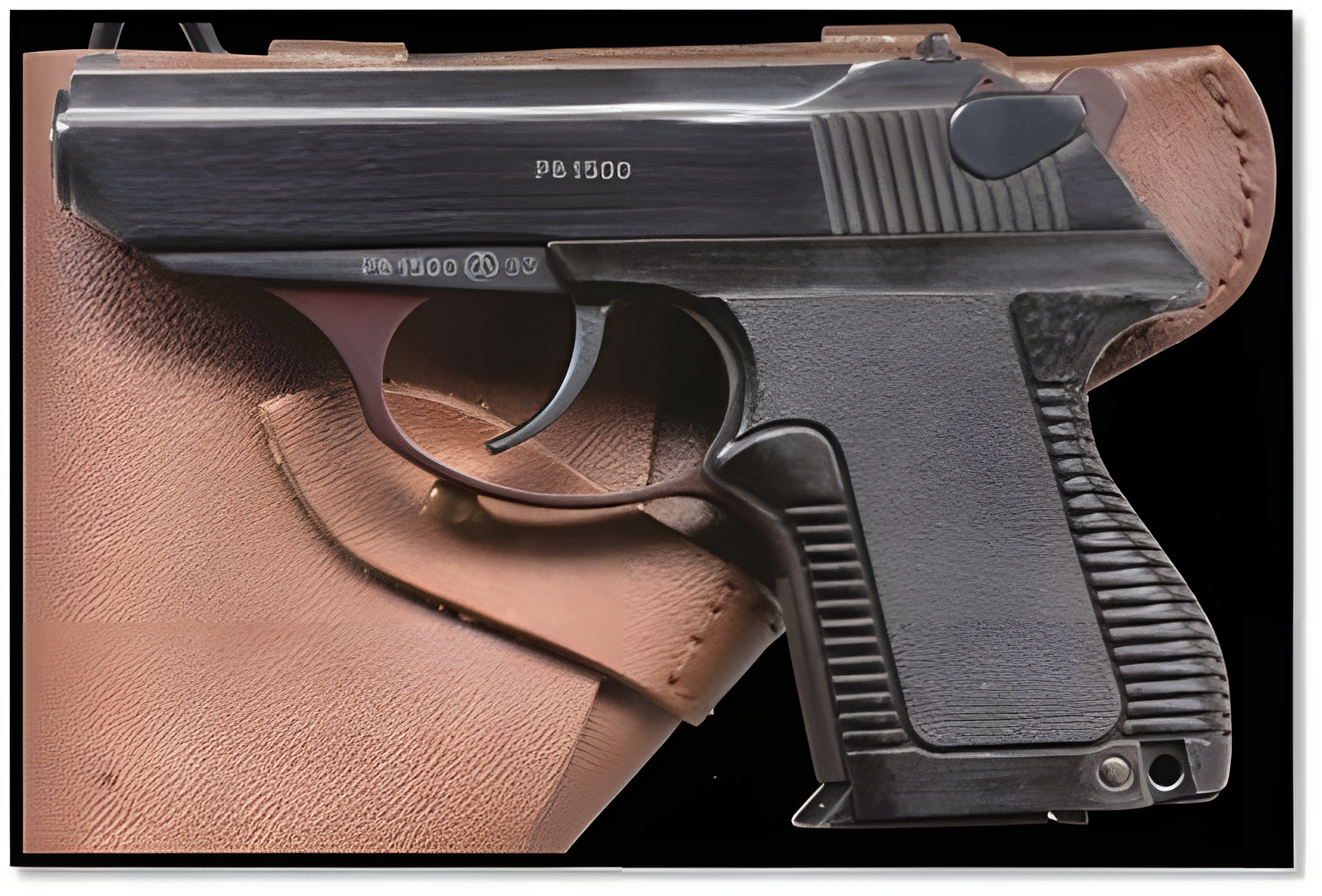
Designed for discreet KGB carry rather than battlefield firepower, the ultra-thin Soviet PSM pistol traded stopping power for concealment, mystique, and a lasting reputation as both spy gun and status symbol.
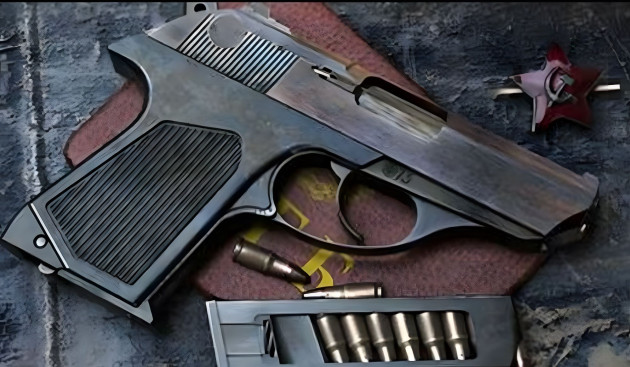
Russian Izhevsk PSM pistol with 5.45x18mm ammunition. Photo credit: Guns.com.
“Officially…a new, compact and concealable, lightweight, semi-automatic pistol was a much-needed, personal-defense weapon for senior, military officers and internal-security folks…All of that, however, was a smokescreen, because it was actually the KGB who needed the weapon.” — John Elliott, for Guns.com, October 10, 2011.
In 1969, the Tula (KBP) Design Bureau of Tula, Russia, created the Pistolet Samozaryadny Malogabaritny (PSM, or “Compact, Self-loading Pistol,” in English) as a small, self-defense weapon for KGB (Committee for State Security) covert intelligence operatives. The KGB specifically requested a “flat-sized pistol, not thicker than a standard matchbox (17mm),” according to official Soviet government documents, for concealed carry by plainclothes agents operating “in-country.” The written requirements stated that it was to be as slim as possible, with no sharp edges to inadvertently snag on clothing, so the pistol could be drawn quickly and smoothly.
Advertisement
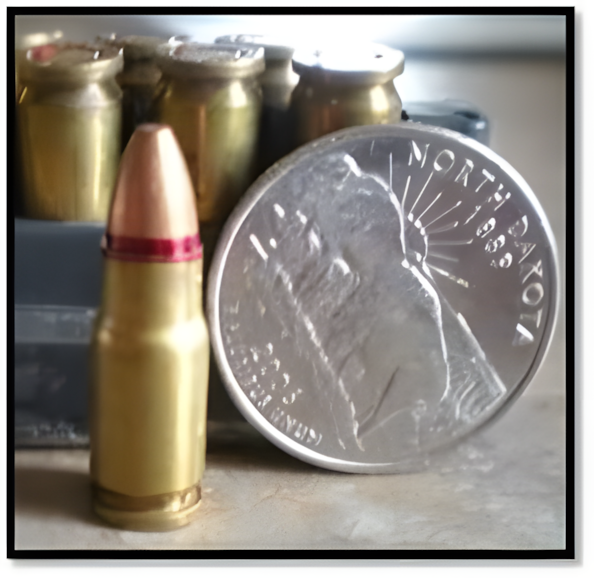
A brand-new, pistol cartridge was designed at the same time by Antonina D. Denisova, a female engineer at the Precision Mechanical Engineering Central Research Institute (TsNIITochmash): the bottle-necked, 5.45x18mm MPTs round. This was produced in two principal variants: the standard, 7N7 armor-piercing version with a steel core, firing a 38.6-grain bullet at 1,033 feet per second, and the more conventional, full-metal-jacket, PSO version with a lead core. Despite the nominal, 5.45mm designation, the actual, spitzer-style bullet diameter is 5.63mm (.222-caliber)
5.45x18mm PSO cartridge. Photo credit: Wikipedia.
There have been some rather fanciful and exaggerated claims that ex-KGB officer Vladimir Putin had a hand in suggesting design specifications for the new PSM pistol. The handgun, however, has been produced by the Izhevsk Mechanical Plant, now part of the overall Rostec State Corporation, from 1973 to the present day, and Putin did not join the KGB until 1975, after finishing his law degree at Leningrad State University. He had previously learned the German language in high school, practiced judo, and read spy novels.
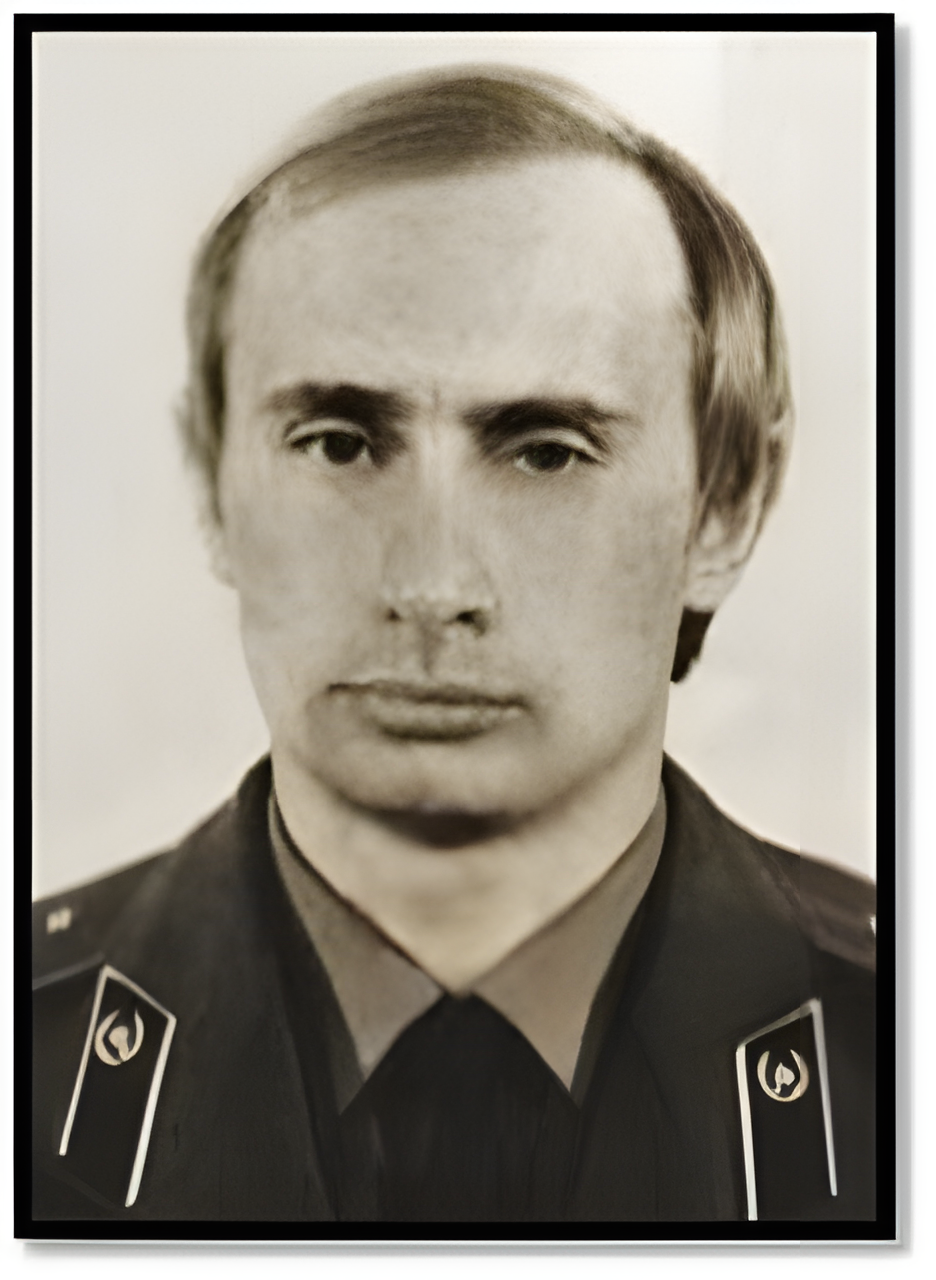
In 1985, Putin was finally assigned outside the Soviet Union, to a post in Dresden, East Germany. There, according to Politico and a former East German terrorist, Putin “worked in support of the (notorious Red Army Faction terrorist) group,” providing them with intelligence information, weapons, and supplies. By 1990, he had attained the KGB rank of lieutenant colonel. After the fall of the Soviet Union in December 1991, he allegedly “formally retired from the KGB,” but in 2004, Putin himself stated, “There is no such thing as a former KGB man.” In any event, he was surely a KGB spy, but clearly had nothing to do with the creation of the PSM pistol.
Advertisement
KGB Lt. Col. Vladimir V. Putin. Photo credit: Wikipedia.
The PSM is a compact handgun with clean, sleek lines, almost identical in basic design to the Walther PPK and Makarov PM pistols: exceptionally simple to operate, disassemble, and maintain. It’s about the size of a Kel-Tec P32, a very small, semiautomatic firearm. Early production models were only 17mm (.67-inch) wide, extremely thin, featuring a steel frame with thin, ribbed, aluminum grips.
It’s one of the thinnest, self-defense pistols ever created. Later models have thicker, more comfortable, plastic grips, measuring 21mm wide at the frame. With a barrel length of 3.35 inches (slightly longer than a Walther PPK barrel), and an overall length of just 6.1 inches, it weighs a mere 16 ounces. The barrel is fixed, like on the PPK or PM, with a straight-blowback action, the simplest and most-reliable principle of operation.
Advertisement
The magazines are single-stack, open-sided steel, each holding eight rounds of 5.45x18mm cartridges, which are no more powerful than standard-velocity, .22 Long Rifle ammunition, but the armor-piercing, 7N7 rounds have penetrated 45 to 55 layers of Kevlar in actual, firing tests. According to EnemyForces.net, “Clearly, no modern flak jackets offer protection from this bullet.”
So, while the PSM was created specifically for ease of carrying and concealment, it sacrifices firepower and capability for discretion and convenience. The effective range of the weapon is approximately 25 meters, with a shot dispersion of only 1 to 1.2 inches from a standing position at 25 feet, so it’s quite accurate for a self-defense weapon, and the recoil is almost non-existent, making it controllable and pleasant to shoot.
Overall, stopping power is fairly poor, and some police operatives have officially refused to carry this pistol in harm’s way, asking for the venerable Makarov PM instead. There have been many recorded cases of people shot with a PSM pistol who continued to fight or run for as long as a half-hour, then suddenly collapsed and died from internal bleeding. Soldier of Fortune magazine found the wounding characteristics of the round to be poor in a ballistic gel test. In the turbulent period of the early 1990s, after the collapse of the Soviet Union, many corrupt officials used it as a suicide weapon, but its low power level and non-expanding bullets resulted in a few slow, very painful deaths.
Advertisement
Nevertheless, the PSM has been incredibly popular with Russian government agents, especially with the Federal Security Service (FSB, the successor to the KGB), developing a certain, undeniable mystique that has also made it very desirable among high-ranking officials, such as the Soviet Politburo, the Russian Duma, and senior military officers, mostly generals.
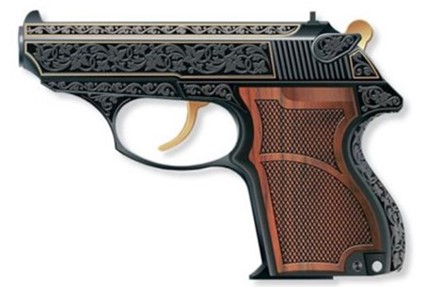
It has developed a cult following as a high-level, status symbol in Russian society, and President Putin, who is arguably the richest man in the world in terms of sheer wealth, power, position, and global influence, is certain to own at least one of the many exclusive, gold-accented, customized models that have been produced to satisfy this great demand.
The PSM has been exported to Armenia, Azerbaijan, Belarus, Bulgaria, Georgia, Kazakhstan, Kyrgyzstan, Latvia, Moldova, Mongolia, Syria, Tajikistan, Turkmenistan, Ukraine, and Uzbekistan. It also appeared in five Russian films between 1982 and 1998, and it was used by American actress Michelle Rodriguez in “Fast and Furious 6” in 2013.
They are extremely rare in the United States, and one example recently sold at a Legacy Collectibles auction in 2019 for $3,250, with the auction house stating that “The PSM remains as one of the Soviets’ most elusive and sought-after pistols.” That’s quite an impressive sale for a handgun that only cost about $100 to manufacture in the 1970s!
Due to its long-term KGB/FSB association, the slim PSM has sometimes been described as an “assassination pistol,” which was definitely true among the Russian mafia and its ruthless hitmen during the high-crime period of the 1990s, when it was often fitted with extended barrels and homemade suppressors. It has since been found on the black market all over Europe.
To this very day, the ultra-thin PSM remains in series production by the Izhevsk Mechanical Plant, which has been part of the overall Kalashnikov Concern (the AK-47 company) since 2013. It’s still a remarkably compact and concealable weapon for self-defense against opponents wearing body armor, and it remains enormously popular in Russia, particularly among government spies and the wealthy elite of society.
Advertisement
What readers are saying
Generating a quick summary of the conversation...
This summary is AI-generated. AI can make mistakes and this summary is not a replacement for reading the comments.










COMMENTS