

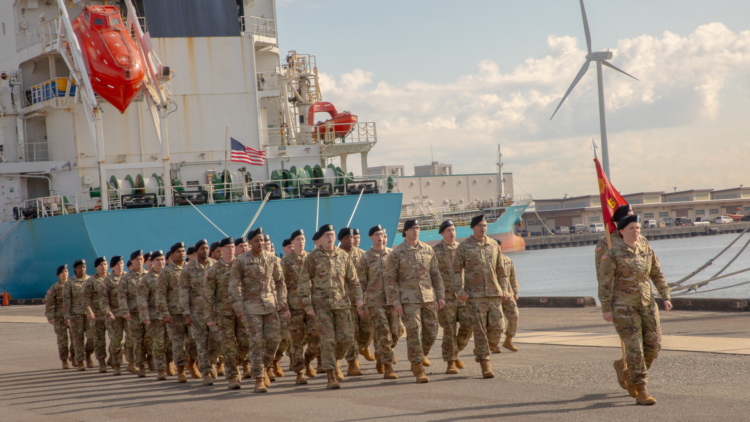
The brass, like Major General Jered Helwig and General Charles Flynn, aren’t just talking a good game; they’re laying down the groundwork for a kind of mobility and logistical support that the Indo-Pacific hasn’t seen before.
“By adding strategic capabilities, like Army watercraft, we can better respond to a myriad of contingencies in the region from HA/DR (humanitarian response and disaster relief) to crises,” Helwig told USNI News regarding the revival of the Army Watercraft in the Indo-Pacific theater.
This isn’t just about showing the flag; it’s about building a network that can move quickly, efficiently, and, when necessary, forcefully.
Filling the Capability Gaps
The 5th Composite Watercraft Company is stepping into a role that’s about as demanding as it gets, filling gaps that, until now, might not have even been known.
Their presence in Japan is a clear signal, a statement that the US Army is not just about tanks and troops but also about ships and strategy, about ensuring that no matter where trouble arises, there’s a way to get there, to support allies, to deter adversaries, and to keep the seas open and safe.
The Crew Behind the Mission
And let’s not forget the crew behind this operation.
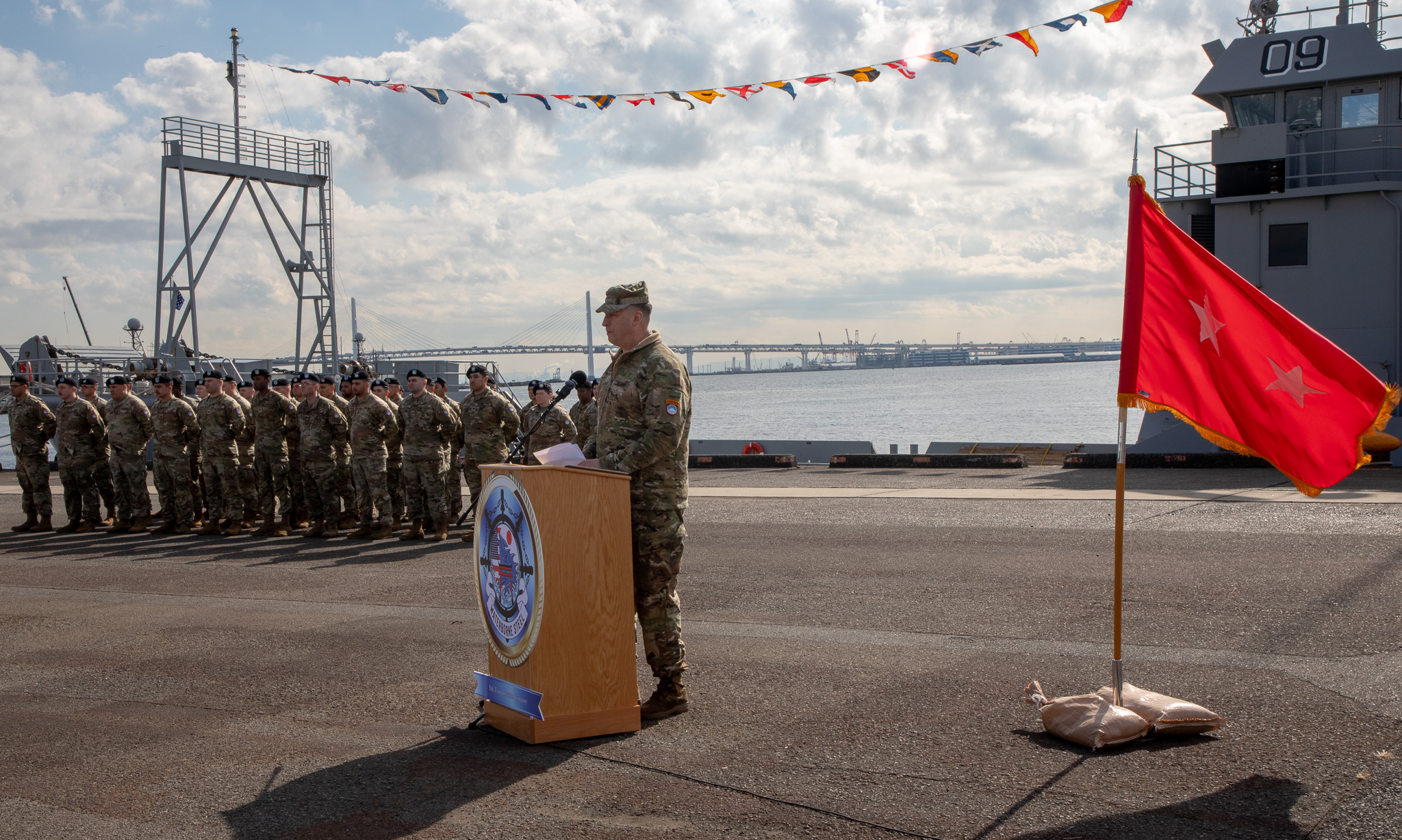
Led by officers and powered by a cadre of noncommissioned officers and enlisted personnel who know their way around both a wrench and a rudder, this unit is the epitome of what it means to be ready, to be resilient.
It’s a mix of old-school grit and new-age thinking, a combination that’s going to be key in navigating the complexities of modern warfare, where battles aren’t just fought on land or in the air but across the digital and the literal oceans.
A Vision for the Future
This move, the reactivation of the 5th Composite Watercraft Company, is more than just a change of station; it’s a shift in how the Army looks at the world and how it prepares for the challenges of the 21st century.
It’s about recognizing that the future of conflict, competition, and cooperation is as much about logistics and mobility as it is about firepower and force.
By setting up shop in Japan and expanding its reach across the Indo-Pacific, the Army is not just reacting to the world as it is but preparing for the world as it will be.
In the end, this isn’t just a story about ships and soldiers; it’s about vision and versatility.
It’s about understanding that in a world where threats can come from any direction, the ability to move, support, and adapt is just as crucial as the ability to fight.
The 5th Composite Watercraft Company, with its rich history and its renewed mission, stands as a testament to that understanding, a reminder that in the vast chessboard of international relations, sometimes the most powerful moves are those that bridge sea and shore, past and future.








COMMENTS