

So what is it that drives us to look for non-existent complexity in these sorts of situations, that prompts us to trust shady stories filmed or written by outlets we’ve never heard of, claiming things that seem outrageous? Why do we believe the talking points released by a nation that has a long and storied reputation for manipulating facts, that just ran an election that was laughably corrupt, and that evidence suggests has been using social media to manipulate our views of domestic politics and foreign policy for months?
Well, first, because we often don’t realize Moscow is the source of the nonsense we share and second, because we’re hardwired to try to find these conspiracies.
The human brain is particularly well suited to identify patterns — it’s why we see faces on Mars, why we form constellations out of stars, and how we spot a person that could be a threat as they approach in a crowd. This ability to identify trends and relate them to past experiences is a product of our evolution, and in the savanna, it helped keep us alive. The plains grow quiet, a rustling of the long grass, a glimpse of what may have been a tail — all evidence of a predator approaching.
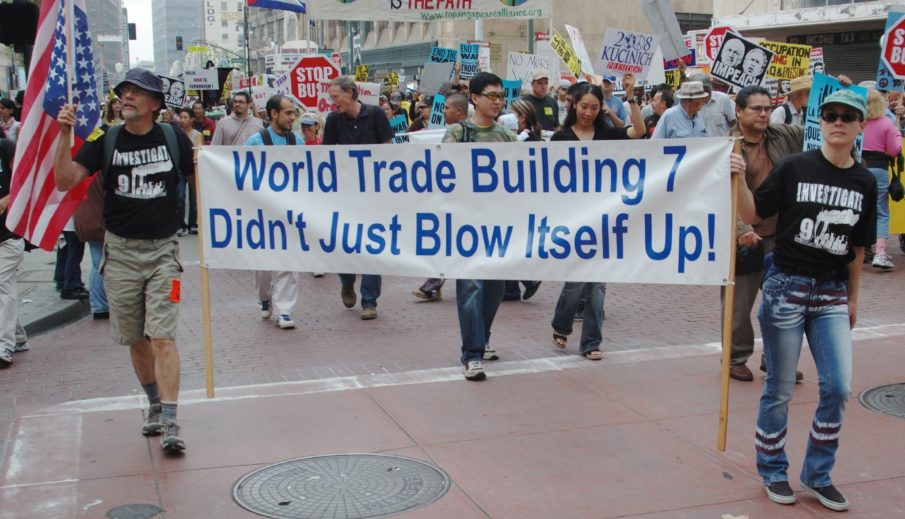
Now, without predators to keep an eye out for, that inclination has been redirected to things like 9/11, Roswell, the moon landing and Syrian chemical weapon attacks.
Our natural drive to establish a narrative out of seemingly disparate pieces of data allows us to compile the things we see into a story that fits our pre-existing ideas — something we call confirmation bias. If you’re inclined to assume everything Trump does is shady, or that Assad has gotten a bad rap in the press, you’ll also be more inclined to seek and cite stories that support that position. As a result, we get people sharing stories published by random outlets that “seem” legitimate, because the stories they’re telling fuel our need for a narrative, and support the narrative we either hoped for, or as is often the case, feared.
Confirmation bias isn’t the only cognitive bias in play during potentially world-altering events, either. Proportionality bias always plays a huge role in how we interpret events like a possible conflict between world powers, or a terrorist attack on New York City. It too speaks directly to our human desire for narrative, and it has helped start countless conspiracy theories surrounding every major tragedy in recent history.
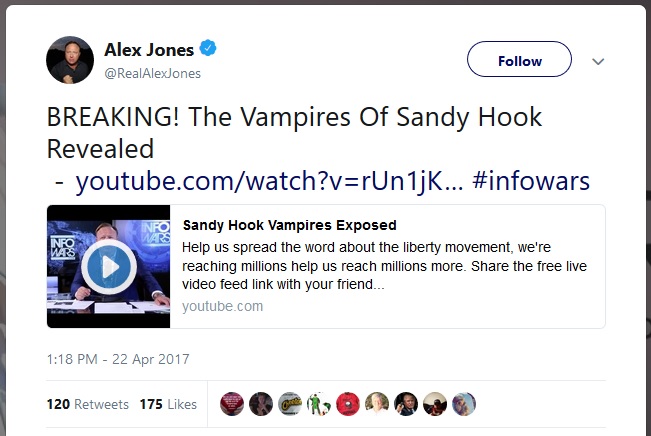
Proportionality bias is simply our innate desire to couple significant reasons to significant events. In order for world changing tragedies to make sense in a narrative way — the reason behind them needs to be equally huge. We don’t want to believe a handful of men planned and executed the terror attacks on 9/11 — we want there to be a secret conspiracy. We don’t want to believe a single crazed gunman could open fire on elementary school children, so we accuse Sandy Hook parents of being actors hired to advance an agenda. We don’t want to believe Assad would use chemical weapons against civilians in his own country, so we cling to a more ominous alternative that’s also in keeping with our disgust for the pictures of children we see dying on the news.
Many experts believe proportionality bias also feeds into our desire for control. A world where one man can negatively affect so many lives is just too scary. Assuming the deep state, Illuminati, Freemasons or Trump’s college frat are actually behind a tragedy removes that earth shattering power from the individual. Crazy and random is too large a threat to counter but keeping an eye out for the secret government? That’s something you might be able to do.
Finally, an increasingly pervasive driving force behind conspiracy culture in mainstream politics is the desire to maintain a positive self-image. American politics have grown so divisive that the victory has become more important than the debate. If you and many of your friends claim Trump is out to start World War III, you certainly can’t back down after fighting digital warfare from that position for the past two weeks. If you support Donald Trump unquestionably, you won’t acknowledge the foolishness of offering advanced warning of the strike via Twitter, either — as giving an inch feels like giving a mile in our ongoing political civil war.
As Americans, we’re happy to suggest other Americans are susceptible to being manipulated, that they’re stupid, or ill informed but to say the same about ourselves is just too big a shot to our ego.
There are undoubtedly details regarding the initial chemical attack, as well as the international response, that the majority of us are not privy to, and it is important to note that, while most conspiracies are little more than how we cope with big ideas and events, some aren’t. It’s always a good idea to approach these things with a level of skepticism — but remember, that skepticism needs to work in both directions. If you don’t trust a DoD press release, apply that same level of critical thinking to a news release you find on Twitter from a random three-letter outlet you’ve never heard of. If you don’t believe what Donald Trump has to say, consider Vladimir Putin’s track record for misrepresenting facts and pursuing his own self interests when you read his statements as well.
And if you see a meme that claims to show evidence that contradicts the commonly accepted facts reported by multiple national governments, don’t just share it because you knew it was true. Check to see if it actually is first.
Because in recent months, I’ve seen a whole lot of talk about Russian efforts to manipulate Americans through social media, and a whole lot of ideas regarding how to curb those endeavors but few people are addressing the simplest solution: take it upon yourself to stop sharing them on your newsfeed.
Feature image courtesy of Wikimedia Commons








COMMENTS