

General Scott Miller, the commander of the American troops in Afghanistan, is putting on an optimistic face, but he knows, this one is not winnable. He’s been placed in a terrible situation. He’s in charge of a military force that his government is no longer interested in maintaining. His enemies know this.
The U.S. keeps repeating the mantra that its withdrawal is based on the agreed-upon conditions. But the Taliban are breaking arguably the most important of these conditions by engaging in large-scale violence. Nevertheless, the U.S. won’t react to not jeopardize its withdrawal.
“We’ve shown a great deal of restraint because we’re trying to make this peace process work,” General Miller has said. “At the same time, we’ll defend our forces.”
Miller was asked if the Afghan national army was ready to defend its country on its own. His answer was quite telling.
“The Afghan forces have to be ready. So it’s not a question of if they’re ready — they have to be ready. The commitment I see from them is they understand that they are the security forces that must secure the Afghan people.” But that is hardly a ringing endorsement.
General Frank McKenzie, the Commander of the U.S. Central Command (CENTCOM), said in a television interview back in September that, “What we need to see is that they’re not going to allow al-Qaeda to base there.”
“And that has just not yet been demonstrated to my satisfaction,” he added. McKenzie has expressed concern about sensitive U.S. equipment, hastily left behind, being used against U.S. forces at a later date.
Once the coalition pulls out of the country, the Afghan government will soon collapse. The military and police forces can’t go toe-to-toe with the Taliban. The only force capable of defeating them are the U.S.-trained Afghan Special Forces. They are outstanding troops and are extremely well trained. But there aren’t enough of them and they are overtasked. Additionally, once the threat of American air support is gone, there will no doubt be even more large-scale attacks.
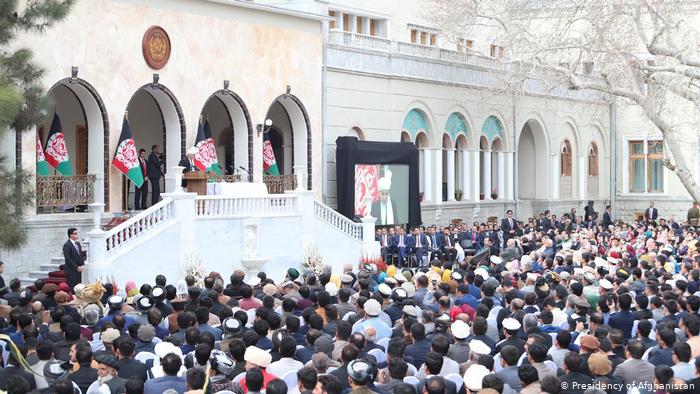
Compounding the problem for the Afghan government is the contentious presidential re-election of President Ashraf Ghani, which has been contested by rival Abdullah Abdullah. The two opponents even conducted rival swearing-in ceremonies in the same building at the same time. This lack of a unified front only emboldens the Taliban more.
Many political analysts fear that the Taliban will begin side discussions with the political opposition to President Ghani, thus weakening his position even further. There is a real concern that if that happens then the Afghan national army will splinter into different ethnic factions. The Taliban want to avoid the continuation of the civil war. They want to rule soon and alone. They’re hoping for economic aid to flow from the United States, without which, the economy will be in shambles.
The war has lasted over 19 years. The cost of American lives has been steep, with over 2,400 killed and 20,000 wounded. The U.S. government has spent about trillions of dollars in the country. The cost in Afghan lives has been even higher with about 500,000 Afghans killed or wounded.
The U.S. entered Afghanistan in 2001 with the intention of removing al-Qaeda, the terrorist group responsible for the bombings of 9/11, and hunting down its leader Osama bin Laden. Early on, bin Laden had been cornered in the Tora Bora region but escaped into Pakistan. He was finally tracked down and killed in 2011.
The removal of the U.S. troops should not be contingent on the Afghan government and the Taliban coming to a permanent peace deal. That could take years.
The time to withdraw the troops is here be it by Christmas or May. It should not be postponed past that.








COMMENTS