
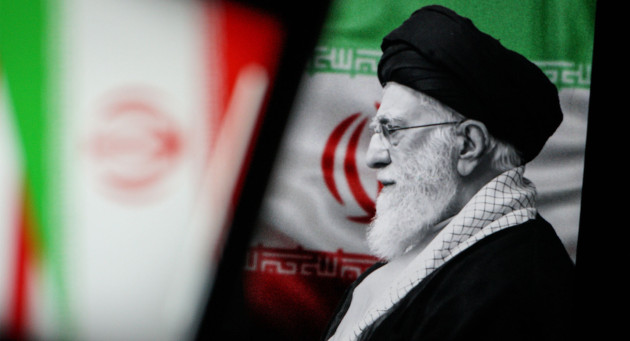
If you want to understand why Tehran currently looks like a high-tech graveyard of tactical technicals and cellular dead zones, you have to stop looking at the propaganda and start looking at the cold, hard body count. This is not a government. It is a 40-year crime scene where the math is written in spent shell casings and a currency that is worth less than the paper it is printed on. We are witnessing the final, desperate gasps of a geriatric theocracy that has spent four decades cannibalizing its own youth to keep a handful of clerics in silk robes and the Islamic Revolutionary Guard Corps (IRGC) in luxury villas.
Pull the curtain back, and you do not find a holy mission. You find a systematic, state-sponsored demolition of a once-great civilization.
Death to America came home to roost courtesy of Trump.
The Architects of the Abyss: Leadership’s Role
At the top of this pyramid sat Ali Khamenei, a man who ruled for nearly 37 years with strategic patience. He wasn’t just a religious figure; he was the ultimate CEO of a conglomerate called “The Axis of Resistance.”
Khamenei’s primary legacy was the “Dual State” model.
He allowed a “civilian” government (presidents like the current Masoud Pezeshkian) to handle the boring stuff like fixing potholes, while he gave the keys to the kingdom to the Islamic Revolutionary Guard Corps (IRGC).
The IRGC isn’t just a military force, it is a mafia-state within a state that controls up to 50% of the Iranian economy, from telecommunications to dam construction.
The Ugly: A History Written in Red
The regime’s survival manual has only one lever to pull: overwhelming force.The 1988 “Death Commissions.”While the world was watching the end of the Cold War, Ebrahim Raisi (the “Butcher of Tehran”) and his colleagues were signing execution orders for thousands of prisoners. This was a bureaucratic slaughter at its best.
Then we saw the rise of the surveillance state 2.0.
In the last five years, they’ve traded their old-school thugs for Chinese-style digital repression. The 2025 “National Information Network” was designed to kill the global internet during protests, turning the country into a digital black box while security forces “cleaned up” the streets, as we saw recently with the killing of thousands of innocent civilians.
As of early 2026, Iran has hit its highest execution rates since the ’80s.
They aren’t just hanging criminals; they are hanging teenage protesters to send a message to anyone else thinking about picking up a sign.
The Bad: The Economic Suicide Note
The regime’s “Resistant Economy” is a fancy way of saying they’ve turned the country into a fortress where the walls are closing in.
Despite sitting on 10% of the world’s oil, over half the population now lives under the poverty line.
Even as the currency collapsed last year, the regime hiked the budget for the Ministry of Intelligence and the IRGC by over 25%.
They are literally taking food out of people’s mouths to buy more tear gas and servers for their Chinese-powered facial recognition systems.
The Good: An Iranian People Who Refuse to Break
Here is the part the leadership didn’t account for. By modernizing the country’s infrastructure in the ’90s to stay relevant, they accidentally created their own greatest enemy: the Iranian citizen.
And even worse for the hard-line male clerics?
Women are now the intellectual backbone of the country.
They outnumber men in the most difficult university tracks, creating a massive demographic of highly educated, fiercely brave women who have zero interest in 7th-century laws.
In a system designed to keep them in the kitchen, Iranian women are dominating the universities, especially in STEM. You have a demographic of highly educated, tech-savvy geniuses being ruled by a handful of geriatric clerics who are terrified of the internet.
The regime also managed to build out a solid rural infrastructure, bringing power and water to the middle of nowhere.
They’ve essentially built the perfect foundation for a modern democracy, but they’re using it to run a theological dictatorship.
Despite the “Filter-net,” Iranians are some of the most tech-savvy people on the planet.
They’ve built an entire parallel digital society using VPNs and decentralized tech that the regime’s censors can’t fully kill.
The tragedy is that they’ve built a first-world population trapped inside a third-world dictatorship.
40 Years of State-Sponsored Atrocities
The 1988 Prison Massacres: Following a secret fatwa, the regime used “Death Commissions” to purge up to 5,000 political prisoners in a matter of months. Most were already serving sentences for non-violent offenses like distributing leaflets. They were buried in unmarked mass graves like Khavaran, and families were never given the bodies.
The 1990s Chain Murders: A systematic campaign by the Ministry of Intelligence to assassinate writers, poets, and political activists who dared to advocate for a secular or reformed Iran
The Kahrizak Torture Center (2009): During the Green Movement protests, detainees were sent to the notorious Kahrizak facility where they faced systematic rape, torture, and “deaths in custody” that were so brutal even some regime insiders had to condemn the facility.
Bloody November (2019): When the working class protested fuel price hikes, the Islamic Revolutionary Guard Corps opened fire from rooftops and helicopters. In less than two weeks, they slaughtered an estimated 1,500 people and threw the country into a near-total internet blackout to hide the carnage.
The 2022 Gender Apartheid Crackdown: In response to the “Woman, Life, Freedom” movement, the state began using “blind shot” tactics, intentionally firing metal pellets into the eyes of protesters. They followed this with a wave of public executions by crane to terrify the Gen Z population into submission.
The 2026 Winter Purge: Under the cover of recent regional conflicts, the regime has hit a record-breaking execution rate, liquidating political prisoners in Evin and Qarchak prisons without notifying their families.
What’s Next?
With Khamenei gone as of yesterday, the IRGC is currently staring down the “Assembly of Experts.”This is a bunch of out-of-touch elderly clerics who will decide who wears the ring of power next.
A valid concern the West should have is that they may skip this process and just move toward a formal military dictatorship.
The Iranian people have spent 40 years being the anvil to the regime’s hammer. But if you hit an anvil long enough and hard enough, eventually the hammer breaks.
When the dust finally settles and the historians start picking through the wreckage of the Islamic Republic, Ali Khamenei won’t be remembered as a holy man or a strategic genius.
He’ll be remembered as the ultimate warden of a prison-state who spent 30 years suffocating the potential of his own people.
History is going to paint him as a relic who mistook fear for respect and cruelty for strength.
He inherited a nation with the intellectual horsepower to lead the world and instead steered it into a ditch of isolation, corruption, and systemic state-sponsored murder.
By the time his name is etched into the textbooks, it’ll be as a cautionary tale of what happens when a leader loves his own power more than the lives of the citizens he was supposed to protect. The man tried to stop time. But as history has taught us, you can only hold back the tide for so long before you get swept out to sea.








COMMENTS