The Iran Conflict has led to severe economic instability, regional security deterioration, and strained international relations, particularly affecting U.S. standing in the Middle East. Discussions within the Trump administration about a potential abrupt end to U.S. involvement raise concerns about empowering adversaries and exacerbating existing tensions.
Key points from this article:
The Iran Conflict has resulted in hyperinflation and unemployment in Iran, leading to widespread civil unrest and economic distress.
How the conflict has intensified sectarian tensions between Sunni and Shia communities, contributing to increased violence across the Middle East.
Why the potential abrupt end to U.S. involvement could empower adversaries like Russia and China, further destabilizing the region and complicating global dynamics.
Updating summary...
The Bolduc Brief: The Negative Effects of the Iran Conflict on Global Dynamics
Donald Bolduc
Speed
1x
Listen
COMMENTS
A war sold as precision has spiraled into economic shockwaves, fractured alliances, and a region more volatile than before, leaving the United States staring at the consequences of strategy without a clear endgame.
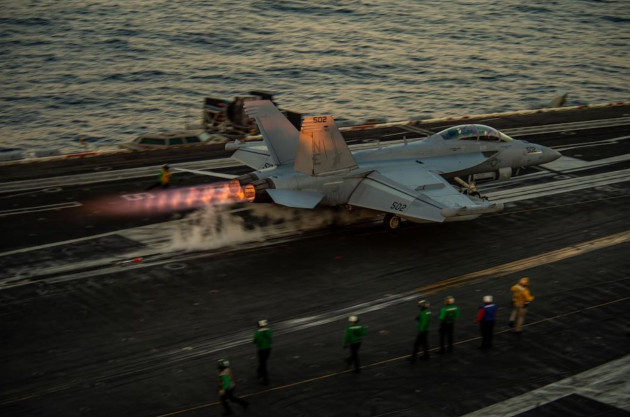
A U.S. Navy F/A-18 Super Hornet roars off the carrier deck in full afterburner, the kind of raw power that looks decisive in the moment but doesn’t always translate into lasting results on the ground. Image Credit: US Navy
The conflict in Iran, often characterized as a multifaceted struggle involving military engagement, economic sanctions, and geopolitical maneuvering, and now the air campaign has had far-reaching consequences. These consequences extend beyond Iran’s borders, affecting not only regional security and international relations but also the domestic climate within the United States. The war has exacerbated economic instability, intensified global tensions, and prompted calls for a reevaluation of American national strategy. Recent discussions within the Trump administration about potentially ending the conflict abruptly highlight the complexities of this situation and the risks associated with the air campaign and the significant geopolitical consequences.
Advertisement
Economic Fallout
One of the most immediate and pressing impacts of the Iran Conflict has been on the economy, both for Iran and for nations involved in the conflict. In Iran, the relentless cycle of conflict has crippled the national economy, leading to hyperinflation, rampant unemployment, and a deterioration of living standards. This economic distress has led to widespread civil unrest, fueling further instability.
For countries involved in the conflict, particularly those within the region and NATO allies, the economic consequences have been similarly dire. The war has disrupted trade routes and energy supplies, particularly affecting oil markets, and has increased military spending at the expense of critical social programs. The escalation of conflict has diverted resources away from domestic priorities, straining fiscal systems and exacerbating the global economy.
Brigadier General (Ret.) Donald C. Bolduc, U.S. Army Special Forces veteran and former commander of U.S. Army Special Operations Command. (U.S. Army)
Regional Security Issues
The Iran Conflict has also contributed to a significant deterioration of regional security. The continuing violence has created a vacuum that has been filled by extremist groups and militias, further destabilizing neighboring countries. The conflict has intensified sectarian tensions, particularly between Sunni and Shia communities, leading to increased hostilities and violence across the Middle East.
Advertisement
Moreover, the insistence on a military solution has proven inadequate in achieving lasting peace. Instead of creating a stable environment conducive to diplomacy, the war has entrenched rivalries and encouraged arms races among regional powers. This instability raises the specter of further military confrontations, making diplomatic resolutions increasingly elusive.
International Relations and Diplomatic Consequences
On the international stage, the Iran Conflict has strained relationships between the United States and its allies. While some nations have rallied behind the U.S. efforts to curb Iran’s influence, others, notably Russia and China, have taken advantage of the situation to strengthen their own ties with Tehran. These shifts in alliances have complicated global dynamics, reducing American influence and jeopardizing long-term strategic interests.
Advertisement
The potential for an abrupt end to the Iran Conflict under the Trump administration could exacerbate these diplomatic failures. A sudden withdrawal might send a signal of American disengagement from the region, empowering adversarial nations such as Russia, China, North Korea, and Iran. The vacuum left by U.S. forces will embolden terrorist organizations as they capitalize on the chaos that ensues from a hasty retreat. This scenario runs the risk of destabilizing not only Iran but also the broader Middle East.
Divisiveness within the United States
Domestically, the conflict has created deep political divides within the United States. Opinions on the conflict have been sharply polarized, with debates over its cost, morality, and efficacy dominating national discourse. The military engagement has ignited protests, fueled partisan battles, and intensified calls for accountability and transparency in foreign policy. Each faction leverages the conversation to further its agenda, making a coherent and unified approach to international relations increasingly difficult.
The divisiveness surrounding the Iran Conflict has hindered bipartisan efforts to address pressing issues and establish a coherent strategy moving forward. As the public grows weary of endless conflict, the discourse increasingly shifts from a focus on strategic objectives to a desire for immediate disengagement, often without consideration for long-term consequences.
Advertisement
A Failed Military Air Campaign Strategy
One of the key elements that underscores the inefficacy of the Iran Conflict has been the reliance on a failed military air campaign strategy. While air strikes have been positioned as decisive moves aimed at crippling Iran’s military capabilities and nuclear ambitions, they have often resulted in unintended consequences—civilian casualties, further entrenchment of Iranian resolve, and the radicalization of local populations. The apparent lack of a comprehensive strategy that connects military action with broader political objectives has left many questioning the efficacy of air campaigns as a tool for achieving strategic results.
Conclusion
In summary, the Iran Conflict has engendered a multitude of negative effects, shaping the economic, regional, and international landscape in profound ways. The potential discussion within the Trump administration about abruptly ending U.S. involvement and leaving NATO raises pressing concerns about what such a decision would mean for global geopolitics. It risks empowering adversaries like Russia and China while undermining the already tenuous security situation in the Middle East and beyond. Ultimately, the legacy of the Iran Conflict serves as a cautionary tale about the complex interplay of military action, economic consequences, and diplomatic relations. The path forward necessitates a multifaceted and carefully considered approach, one that embraces diplomacy and cooperation rather than retreat and disengagement.











COMMENTS