

“You think I work so you can throw food in the trash?”
The belt comes off in one motion. Practiced. Familiar. Like an expert swordsman.
The boy counts. Like a game. Like he’s somewhere else watching it happen to someone else.
One. Two. Three.
At eight, he bites through his lip.
At fourteen, he tastes blood and swallows it.
As time passes, the ritual intensifies. At nineteen, his mother steps between them. The lash catches her across the mouth. She drops. The boy moves without thinking and drives his shoulder into his father’s chest, knocking him into the counter.
For three seconds, they both freeze.
Then his father smiles. Pulls himself up. And the boy learns what a closed fist feels like against his temple. Against his ribs. Against parts of him that won’t bruise where teachers can see.
That night, bleeding into his pillow, he makes a vow.
I will be something better than that motherfucker. I will never be powerless again. I will make sure no one ever looks at me the way he does.
He kept that promise.
He died at fifty-two.
No funeral. No service. A few people found out and said he got what he deserved. Others celebrated. Most didn’t know or didn’t care.
He died alone, on a table, in a room designed for dying. The people watching weren’t there to mourn. They were there to witness.
Exposed to the world. Exposed to the state. Strapped down.
Just like he used to be.
By the time the needle went in, he’d murdered fourteen people.
The first was a drifter. The rest were strangers, mostly…people who made the mistake of trusting him. Some he buried. Some were never found.
The papers called him a monster. The prosecutors called him evil. The jury deliberated for six hours.
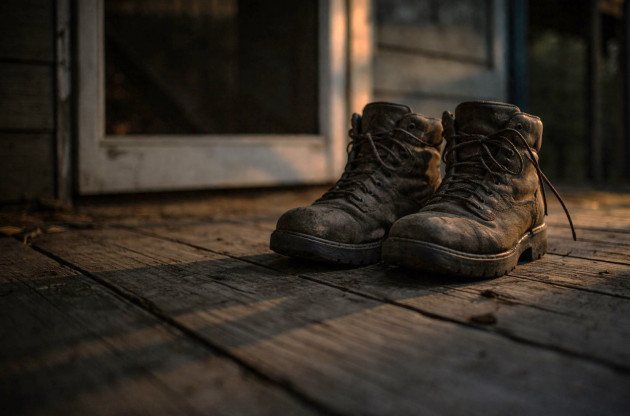
None of them mentioned the boots on the porch.
Here’s what I’m not saying:
I’m not saying his childhood excuses a single death. It doesn’t. Fourteen families were destroyed. Fourteen lives ended by his hands. He made choices. He earned that needle.
I’m also not saying every abused child becomes a killer. They don’t. Millions of people survive brutal childhoods and never harm anyone. Some become protectors. Some break the cycle entirely.
But here’s what I am saying:
That boy was real.
Not this specific boy…this is fiction. But the pattern isn’t. Exposed to violence early. Attachment severed before it could form. Shame converted to rage. A vow to never be weak again, twisted into something unrecognizable.
Fifty percent of serial killers report childhood psychological abuse. Thirty-six percent physical. Twenty-six percent sexual.
The sum isn’t necessarily destiny. But it ain’t nothing.
The boy in that first scene? He was killed long before the state got around to it.
Not by a needle, but by what happened in that house. What walked out years later, wearing his face, using his name, was something else entirely.
That doesn’t make him innocent.
But it lets you trace the line.
You don’t have to mourn him. You don’t have to forgive him.
But if you can hold both truths, the abused child and the monster he became, you’re doing something most people refuse to do.
You’re not excusing. You’re not condemning.
You’re seeing… recognizing… acknowledging… understanding, even.
There’s a version of justice that only asks: What did he do?
And there’s a deeper version that also asks: What was done to him?
The first version is necessary. The second is harder.
But the second is how cycles break.
I don’t change minds (though I might).
I just deepen them.
—
Tegan Broadwater spent 13 years with the Fort Worth Police Department, including two years assigned to the FBI working deep undercover inside a violent Crip organization. That operation, detailed in his book Life in the Fishbowl, resulted in 51 convictions. He has since founded Tactical Systems Network, an armed security & protection firm primarily staffed by veterans, is a creative writer and musician, and hosts The Tegan Broadwater Podcast. All book profits benefit children of incarcerated parents. Learn more at TeganBroadwater.com








COMMENTS