

“This is where Burns’ experience as a senior diplomat and policy maker comes in. Because, in strategic intelligence and forecasting, known ‘facts’ are not enough. Mature, astute judgment based on experience needs to be brought to bear in looking at raw intelligence ‘facts.’ The facts are unlikely to give us a clear answer about how Kim Jong Un’s health might affect future Korean actions. What will happen in Iran after the Supreme Leader dies? How much support does Xi Jinping actually enjoy within the Chinese Communist Party as he directs China’s strategic future? Is Israel likely to try to drag the United States into direct military conflict with Iran? Is the all-important alliance between Russia and China likely to prove durable over the longer-term? Is the European Union headed for break-up, or will it endure? There is probably no document that the CIA can steal, no microphone hidden in any supreme leader’s office, no reliable public opinion poll on how populations think of their authoritarian leaders that can answer these ‘mysteries.'”
Thus, Burns may be intent on redefining the CIA’s chief role as intel gatherers that inform diplomacy, rather than secret agents taking diplomacy into their own hands through kinetic operations.
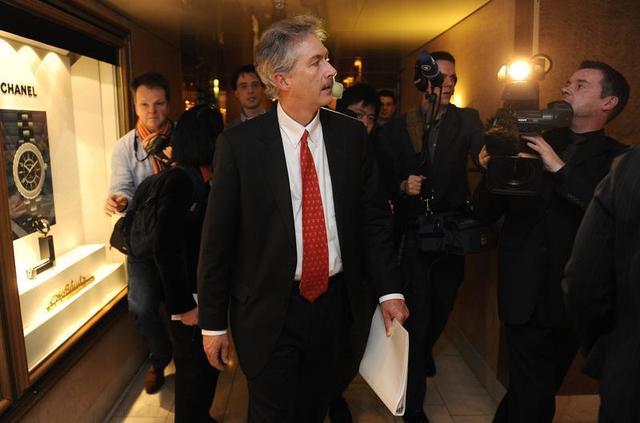
Biden Could Use Burns as an Auxiliary Secretary of State
It’s clear that the Biden administration has a very different set of foreign policy guidelines and goals than its predecessor. It is also nearly certain that Biden will seek to undo much of what Trump did while he was in office. Reforming our ties with allies and restructuring our talks with adversaries is going to be an uphill battle — not because of the issues involved, but because of the urgency with which Biden will want to accomplish these goals. Therefore, he’s going to need all the help he can get if he’s to be successful.
In this way, Burns could be a very valuable asset to Biden. It’s possible that Burns could be tasked with operating alongside the State Department as a kind of de facto auxiliary secretary of state. While untraditional, the role would surely suit Burns’s experience: He has a lot of clout internationally and knows the diplomatic passageways well enough that he could take on special “trouble areas” — in which the State Department wouldn’t want to get involved with — either overtly or behind closed doors.
The most likely “trouble area” that Burns would address is our relationship with Iran.
Tellingly, in November Biden named Sullivan as his national security advisor and plans to keep him close as a member of his cabinet. Thus, the decision to put Sullivan and Burns in top roles, which will all but assure a very close working relationship, could indicate Biden’s intention to task them with reopening lines of communication with Iran. And, perhaps, given the role the two men had played in the 2015 nuclear agreement, with bringing the Islamic country back to the nuclear conversation.
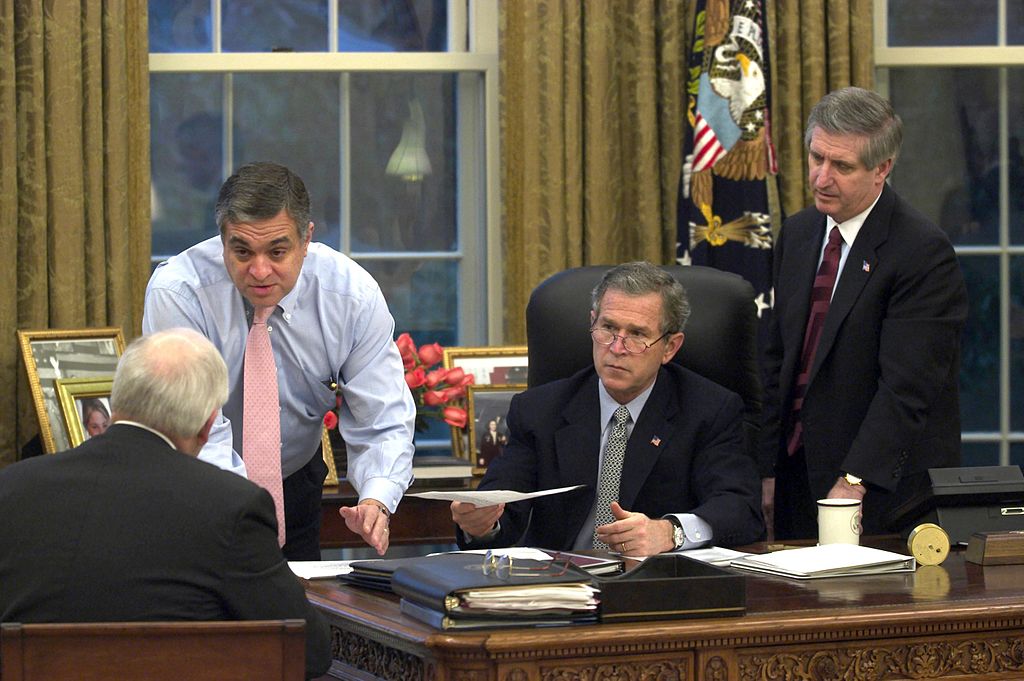
Burns to Manage the Great Power Competition
There’s little doubt that the Great Power competition is weighing heavily on the minds of everyone inside the Pentagon and the State Department. While President Trump worked to reduce the U.S. presence in the Middle East and broke historic ground when it came to forming relations between Israel and the Arab world, the old stalemates with China and Russia were left to simmer.
As we look to a possible future near-peer conflict, our intelligence capabilities will be an increasingly critical weapon in our arsenal. Not only would Burns understand the importance of accurate intelligence reporting, but he also has the first-hand experience in how good intel can turn bad.
Remember CIA Director George Tenet with whom Burns worked to secure the aforementioned Israeli-Palestinian ceasefire in 2001? Well, it is Tenet who is widely criticized for the intelligence reports on the dangers of al-Qaeda in the late 1990s and early 2000s. It is Tenet that devised the (failed) “Plan” to track, infiltrate and neutralize Osama bin Laden in 1999, and who failed to surface intelligence about the impending 9/11 attacks. Though hotly contested, the official CIA inspector general report released in 2007 states that Tenet knew of the dangers well before September 2001 and “bears ultimate responsibility” for the intelligence failure.
It should be noted that Tenet was responsible for increasing the strength of the CIA’s special operations component housed in the Special Operations Group — which had languished under Bill Clinton. The Group was ultimately responsible for forming the Northern Alliance against the Taliban in Afghanistan and mobilizing the Kurds against Ansar Al-Islam and Saddam’s forces in Iraq. He also introduced the Worldwide Attack Matrix, an account of covert counter-terrorist attacks across the globe that laid the groundwork for the Global War on Terror.
Tenet was also at the heart of the intelligence reporting about Iraq’s supposed weapons of mass destruction (WMDs). Some argue that Tenet originally surfaced CIA intelligence reports to George W. Bush which showed no evidence of WMDs and that Bush exerted pressure on the CIA to produce more evidence. Tenet would be haunted by the “slam dunk case” and an invasion made possible by his intelligence reports.
Burns was witness to all of this in his role as assistant secretary of state for near east affairs from 2001 to 2005. The Bureau of Near East Affairs is an agency of the Department of State that deals with U.S. foreign policy and diplomatic relations with Middle Eastern and North African countries. Burns would have been at the mercy of Tenet’s CIA and its intelligence reports during those tumultuous years which saw the U.S. fighting on two fronts in the Middle East.
Wrap all this up and you have a diplomat who lived at the intersection of intelligence, diplomacy, and foreign policy during the largest American military operations in recent history. He, more than most, would have an acute understanding of the importance of timely and accurate intelligence reporting. He has experience in the Middle East, Russia, and Iran. What’s more, he has an insider’s look at how the CIA’s special operations component operated and where it was successful. That experience could make him an invaluable asset in a near-peer conflict.
Conclusion
It’s still too early to know how Burns will direct the CIA. The Biden administration has given no indication, one way or another, on how it views the agency’s role when it comes to foreign policy. Moreover, whether Burns will be able to harness his three decades of experience and diplomatic cachet inside the intelligence community is yet to be seen.
Nevertheless, there is no doubt that William Burns will bring change to the agency at an incredibly critical time for the United States and that his decisions will affect American foreign policy for the next few decades.








COMMENTS