Nangalam, Pech River Valley, Kunar Province – November 21, 2004
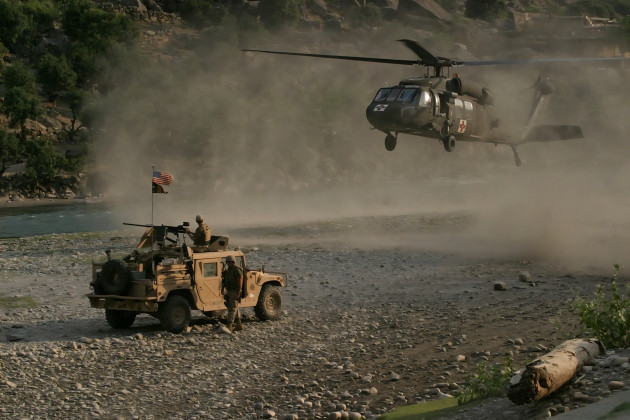
The Black Hawk settled into a landing zone carved into a knife-edge ridgeline above the Pech River. Below, the valley dropped nearly a thousand feet into terraced fields and mud compounds. Ten kilometers east sat the Pakistani border. Fighters crossed at will.
India Company, 3rd Battalion, 3rd Marines stepped off into what passed for a forward operating base. Camp Blessing was HESCO barriers, plywood hooches, and exposed fighting positions perched on high ground that could be engaged from multiple directions.
The outpost was named for Army Ranger Sgt. Jay A. Blessing, killed nearby by an IED weeks earlier.
The Marines were not the first Americans to fight for influence there. In 2003–2004, Capt. Ronald Fry’s 19th Special Forces Group ODA operated in the Pech, building early tribal relationships and conducting unconventional warfare in terrain that favored the insurgent. India Company inherited a valley already contested and only partially stabilized.
Their mission was direct: disrupt Taliban and Hezb-e Islami Gulbuddin networks using the Pech as a ratline into and out of Pakistan.
That meant patrols. Constant patrols.
In December 2004, India Company pushed into the Korengal Valley during Operation CORNHUSKERS, among the first sustained coalition movements into ground that would later define some of the heaviest fighting in eastern Afghanistan. Mortar fire against Blessing became routine. Counter-fire patrols became routine. Contact became routine.
By early 2005, intelligence indicated insurgent forces were preparing for larger operations against Asadabad. India Company participated in Operation SPURS, clearing the Pech and Rechah Lam valleys, detaining fighters, and conducting medical engagements that produced actionable intelligence. MEDCAPs were tied to security gains. Villages that received treatment often produced names, routes, and weapons cache locations.
Enemy activity intensified in the spring.
Patrol bases were engaged at close range. Outposts such as LZ Lumber Yard became forward operating positions in their own right. In April, an HIG figure, Najmuddin, surrendered at Blessing, yielding further intelligence.
Already have an account? Sign In
Two ways to continue to read this article.
Subscribe
$1.99
every 4 weeks
- Unlimited access to all articles
- Support independent journalism
- Ad-free reading experience
Subscribe Now
Recurring Monthly. Cancel Anytime.
By the time India Company rotated out in mid-June 2006, Marine reporting credited the unit with more than ninety firefights, 174 enemy killed in action, and eight CASEVACs. Schools reopened. Local governance functioned under Marine presence. The Pech was not pacified, but it was pressured.
The fight didn’t end.
Elements of 1-26 Infantry, 101st Airborne Division later operated from Blessing alongside Afghan National Army units.
Mortar exchanges, ambushes, helicopter recovery operations, and tribal power struggles continued for years. On March 4, 2010, Camp Blessing was formally transferred to Afghan control as part of the broader eastern Afghanistan drawdown.
Eventually, coalition forces abandoned the Pech outposts altogether.
What stands out from Blessing is scale. A company-sized element operated in terrain that allowed insurgent forces to mass in larger numbers and disappear across an international border. The Marines held ground through sustained patrolling, pressure on insurgent networks, and consistent engagement with local leaders first approached by Special Forces teams years earlier.
Technology did not replace presence in the Pech. Terrain had to be walked. Ground had to be owned.
Camp Blessing no longer flies an American flag.
For those who served there, the ridgeline above Nangalam was not symbolic ground.
It was held ground.
And it was earned.










COMMENTS