



SOFREP: It’s a man’s world. What was it like as a woman among Gurkhas?
Alex: That wasn’t a problem at all. First of all, my dad was in the army, so I was practically raised in garrisons. Military environments are my comfort zone. Also, despite the Nepalese still adhering to a pretty traditional culture, one in which women are designated very old-fashioned roles, when someone comes along who doesn’t quite fit into their worldview, they don’t react with hostility, but instead with curiosity and a lot of questions.
The Gurkhas accept other cultures and respect them. They don’t judge. Instead there’s a lot of good-natured teasing and banter going on. On deployment or on exercise with a Gurkha (or any other) unit, you get slightly skeptical looks for a little while, but as soon as they see that you pitch in, don’t whine, and carry your own stuff, you’re treated as one of them in no time. I was happily integrated into the Gurkha companies and experienced huge support for my project among the guys, which was humbling.
SOFREP: What fascinated you the most? And was there anything that repelled you?
Alex: What fascinated me the most about the Gurkhas was this incredible contrast between their steely toughness, endurance, and uncanny warrior’s instinct, and their gentleness, generosity, and warmth. Nothing repelled me about the Gurkhas at all, but Afghanistan was an experience like no other. There were a few things I saw and heard there that haunted me for a while.

SOFREP: A final word on your relationship to the Gurkhas today?
Alex: They will always be in my heart. I am well acquainted with a lot of Gurkhas and a small handful have become close friends. I lived with the families of Gurkha friends in Nepal, have met wives, children, and parents of soldiers. I’m still in contact with many of them, mostly via Facebook. The Baby-Gurkhas from 2013 and 2014 have a special place in my heart as well—I accompanied them all through the entire recruitment process in Nepal to basic training in the UK. Some of them send me pictures of their progress and their new regiments, and tell me about the exams they’ve aced. I always feel a bit like a proud mom when that happens.

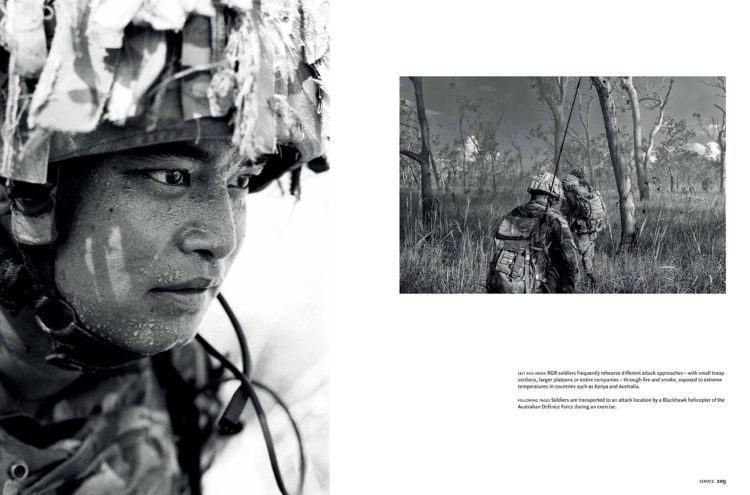
About the author: ALEX SCHLACHER (second from the left) was born and raised in Austria. She started taking pictures at age four, but didn’t choose it as a profession until 20 years after graduating from high school, during which time she traveled the world looking for a purpose. She came upon military and police photography by accident, but stayed with it and has since taken pictures of a number of U.S. police departments, U.S. Marines, the Afghan National Police, the Afghan National Army, and the Austrian counter-terrorist unit COBRA as well as, of course, the Gurkhas.

“Arc of the Gurkha” by Alex Schlacher, 288 pages, published by Elliott & Thompson RRP € 35,29. The book is available at bookstores and online booksellers now. We have picked a few of the amazing pictures for our gallery.
Interview originally conducted by spartanat.com in German. Special thanks to Alex Schlacher and Spartanat for the translation work.








COMMENTS