
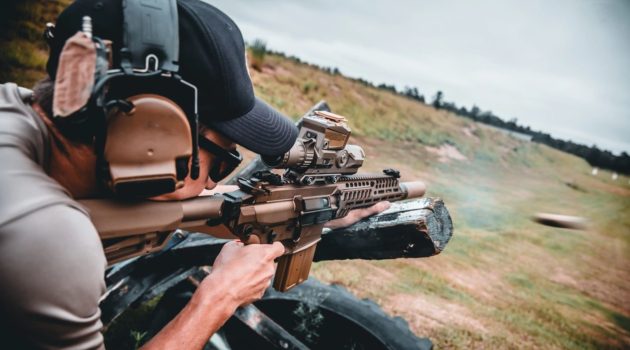
The Rifle Is the System
People talk about the SIG Sauer M7 like it is only a rifle. That framing misses the point. The Next Generation Squad Weapon (NGSW) is not one single piece of steel and polymer replacing another. It is a network built around a rifle, where optic, suppressor, ammunition, training, and doctrine arrive together and are meant to work as one.
Think of it this way. The M7 is not a brighter flashlight. It is a full night-operations kit: night vision, IR laser, better comms, and a playbook that assumes you will fight in the dark as a default setting.
That is the shift the Army is chasing. Integration, not iteration.
XM157: The Brain on Top
The XM157 is not merely an optic in the traditional sense. It is a fire control system designed to collapse multiple shooter tasks into a single, ruggedized unit. The Army describes it as integrating variable magnification, an etched reticle that works without power, a laser rangefinder, a ballistic computer, atmospheric sensors, a compass, visible and infrared aiming lasers, and a digital overlay that feeds firing solutions directly into the sight picture.
What that signals about future marksmanship is straightforward. The Army is betting that speed, consistency, and accuracy at distance come from reducing the number of manual steps between seeing a target and engaging it. Less guessing. Fewer mental calculations under stress. More emphasis on confirming information and making decisions.
This does not eliminate skill. It reshapes it. Shooters still need fundamentals, judgment, and discipline. But the skill set shifts away from memorized holdovers and toward managing inputs, validating data, and understanding when technology helps and when it does not.
There have been documented challenges. Department of War testing has highlighted usability concerns and reliability issues during early operational assessments. That matters, and it is part of any program that pushes new capability forward. What matters more is the direction of travel. The XM157 represents a move toward treating the squad’s sighting system as a core capability rather than an accessory.
A Suppressor as the Baseline, Not the Exception
The SIG M7 was designed from the start to be used with a suppressor. That design choice is not cosmetic. A suppressed baseline changes how a rifle behaves and how a squad fights.
Reduced visible flash matters at night. Lower concussion matters when soldiers are stacked close, communicating, and moving under pressure. Sound is still present, but the sharp, disorienting report that gives away positions and disrupts command and control is reduced.
Designing a rifle around suppression also forces attention to gas management, reliability, and durability in a way older add-on approaches did not. When suppression is standard issue instead of optional kit, it stops being a special capability and becomes part of the expected operating environment.
This is another example of the “system” mindset. The suppressor is not a bolt-on advantage for a few. It is baked into how the weapon is intended to be carried, fired, and maintained.
Training and Doctrine Catching Up
When a squad is given better reach and greater fire control, expectations change. Engagement distances stretch. Target identification becomes more demanding. Leaders have to manage fields of fire with greater discipline because the tools make it possible to hit farther and faster.
This is where integration matters more than hardware. The NGSW approach is not about handing out new gear and hoping soldiers figure it out. It is about aligning training and doctrine with what the system enables. A smarter optic and a suppressed rifle only pay off when a squad is trained to use them deliberately.
Compared to the older way of doing things, where optics, suppressors, and weapon upgrades often arrived piecemeal, this represents a more coherent push. The intent is for the rifle, optic, and supporting equipment to shape positive habits together rather than fighting each other.
Why the System Matters More Than the Rifle
The M4 era proved that modularity alone does not guarantee overmatch. Accessories added over time can improve performance, but they often leave gaps in training, sustainment, and expectations.
The M7 concept aims to close those gaps by treating the squad’s primary weapon as an integrated capability from day one. Suppression is assumed. Fire control is built in. The rifle is part of a larger effort to help squads detect, decide, and deliver faster than an opponent who is still working through older limitations.
That does not make the system perfect. It makes it purposeful.
The real story of the SIG Sauer M7 is not that it replaces an old rifle. It represents a shift in how American small arms are fielded and fought with.
The M7 is not the future because it is new; it is the future because it turns the squad’s rifle into a complete fighting system where sighting, signature, and accuracy work together to win the day.








COMMENTS