

Another thing I have to mention is the actual information you will get from interrogations. I am guessing about only 15 to 20 percent of the reports I wrote were what I would be considered “tactically sexy”. The type of potential intel that talks about possible locations of a high value target (HVT), weapons caches, planned attacks against U.S. Forces, or whatever. The rest was stuff like “average prices of petro sold in Kandahar” or “decision making for national elections at the local level” or even “irrigation techniques in Marjah”, etc. We called these “atmospherics” because they weren’t solving critical PIRs. Why we would even gather this information? Because number one, it gives us interrogators a rather good idea of life on the ground. If operations are running smoothly, most detainees assigned to you should be from the same area. It creates a sort of baseline to go on, something we can use in a way to vet information from each detainee. It’s the next best thing as patrolling the area on foot, and providing additional nuances of the local communities you might not get through sight alone. If for example, a detainee innocently claims they bought a cell phone linked to an IED cell from a market he points out on the map, but you know that market only sells fresh produce, it’s a good indication he is lying and respond accordingly. There are, believe it or not, some intelligence requirements asking for this specific type of information. Some of this may be feelers put out by non-military government agencies looking for information on reconstruction projects or assessing the competence level of local government services. When we were in Afghanistan during my last deployment, the national elections was taking place soon and there was a flurry of questions asking for reports on who local communities would vote for and why. Plus depending what level you are questioning the detainee at, like say at the brigade or regional level, most of the pertinent tactical intel the detainee may happen to know has probable already been asked and answered.
Lastly, I will point out there are just some detainees that won’t give any information, period. Depending on what you assess their importance to be and the amount of time you may or may not have, it just might be best to cut sling load. That’s something you have to constantly factor in your decision-making process, one that you and your chain of command have to work out. You can’t win them all.
Overall, despite our problems, I think we have to keep in mind that almost every major terrorist or insurgent leader we killed or captured was a result of direct or indirect human intelligence. Uday and Qusay Saddam were killed because of a tip to their location. Abu Musab al-Zarqawi was killed when a JDAM hit his safehouse, due in large part to HUMINT and SIGINT information from captured associates. Bin Laden was located after years of careful MI analytical and HUMINT work. Important individuals like these obviously don’t wander around on foot and engage in random fire fights with passing U.S. troops, while screaming “come and get me infidels!”
Entertainment
Someone asked me one time if there were any recent movies or shows that did a good job accurately portraying Army or military interrogations as a whole. I couldn’t come up with anything. Most writers devolve into the “Mutt only” approach to interrogation. It’s the exciting, action orientated, angry, get-er-done approach. But real life interrogations would be long, boring, and uninteresting to the general audience. There are some scenes in certain movies that do a good job showing military interrogation techniques. The movie “Act of Valor” actually had a brief interrogation scene where the interrogator actually follows proper protocol, while using the crucial moments after shock of capture to leverage his position. Although I think it’s a generally dumb movie, “Inglorious Basterds” had a very good scene in the beginning when the German SS Colonel interrogates the French dairy farmer (prior to him ordering his troops to open fire on the hiding Jewish family below that is). The series “Homeland” did have some interrogation scenes, but most were conducted by the FBI or CIA. The movie “Body of Lies” was mostly CIA, and just an overall terrible movie on not what to do regarding both interrogations and source operations. And I don’t need to tell you the errors with the Jack Bauer approach found in the series “24”. He would have been checked into a mental institution by the end of season two, with his constant use of emotional “fear up” approaches. The show “Persons of Interest” had a main character who was an Army interrogator, but unfortunately, it only showed one flashback interrogation scene. Another show that occasionally showed a few military interrogations (and does offer some good techniques on body languages and human psychology) was the series “Lie to Me”, but again, actual military style interrogations were far and few in between. There may be more shows and movies, but that’s the only ones I can think of at the moment, and to be frank, I don’t watch much movies or TV nowadays.
Torture and Enhanced Interrogations
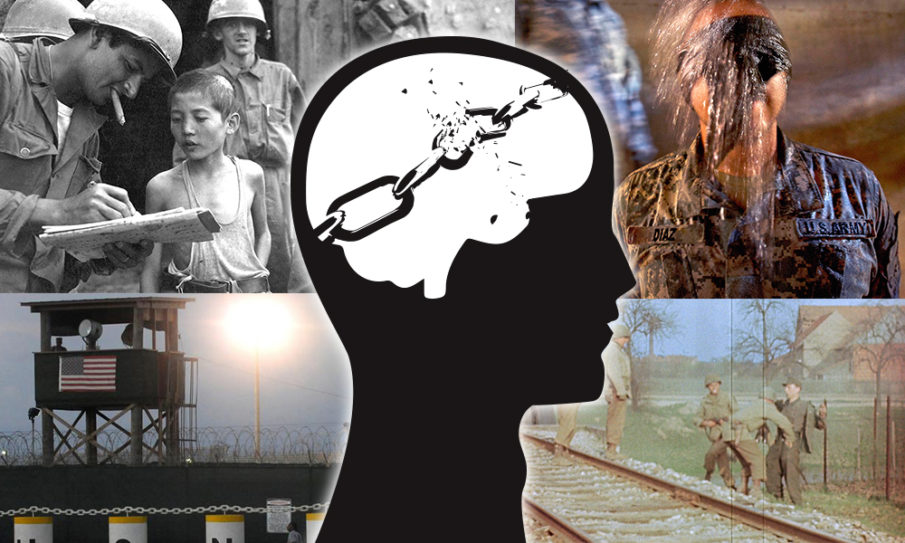
If you’ve been reading the series, you will notice I caution against overusing emotional “fear up” approaches for a variety of specific reasons. General James Mattis , when replying to President elect Trump, stated “I’ve always found, give me a pack of cigarettes and a couple of beers and I do better with that than I do with torture.” (Nevermind that the people we are fighting nowadays probable won’t touch a beer.) Furthermore, the U.S. Army and other branches of the Military are prohibited from using any form of physical or mental torture against detainees and POWs. FM 2-22.3 was largely written to re-address longstanding techniques that the U.S. Army were authorized to use, in light of abuse cases that came up during Abu Graib and other places. But Abu Graib was a result of a breakdown in order and discipline, not because of proper use of longstanding detention and interrogation SOPs. It was a classic problem of everything going wrong, not because of a cabal of evil interrogators instructing military police to stack naked detainees on top of one another because the earlier FM said it was ok. In a way, it was a derivative of the interesting (but slightly flawed) “Stanford Prison Experiment”.
I do, however, have an issue with various articles that are against the concept of torture or enhanced interrogations because it “isn’t effective”. That’s a vapid argument in my opinion. I can accept the general argument it is immoral. It’s as immoral as systematically killing POW’s or detainees that are in your custody, even if just hours ago you were systematically killing one another on the battlefield. I always told my team members to never violate our standards, because no detainee is worth a stint in Leavenworth. But what is “effective” is largely dependent on how good the interrogator is, the mindset of the detainee, and the specific circumstances that the detainee decided to talk or not. The question whether or not a detainee breaks is moot, because the idea of “breaking” someone isn’t a simple concept. People can give pertinent valid information one minute and walk back from that the next minute. And the claim that somebody will say anything under torture also misses the point; a person can say anything even when treated very well. You don’t run with intel without trying to vet it further, regardless of the method that was used. I had an interrogator one time who seemed to be getting very pertinent information from a very compliant detainee. I asked him later on his progress. He rolled his eyes and said his analyst looked at the information. The detainee was lying about everything. He was a low-level nobody, just trying to garnish attention.
Now with that being said, I’m going to risk hearing gasps of swooning and hand-wringing by saying I personally don’t care that the CIA or some other 3 letter agencies may have used it on key individuals, such as waterboarded Khalid Sheikh Mohammad 50 plus times or whatever. Having Gitmo open and operational doesn’t bother me. Nor do I agree with applying the U.S. Constitution, the law of land warfare, or the Hague and Geneva Convention to international terrorists or terrorist organizations that operate outside international norms to begin with, but that decision is made well above my pay grade.
Additional Information
If you would like to know more about military interrogations, you can start by downloading a copy of the U.S. Army HUMINT Operations manual FM 2-22.3. You can even pick up a physical copy of it at your local library. I was able to find one at my local branch. It’s rather dry and procedural, but you the taxpayer paid for it, so you might as well take advantage of it. I would also suggest picking up “Interrogation: World War II, Vietnam, and Iraq” by John A. Wahlquist, James A. Stone, David P. Shoemaker, and Nicholas R. Dotti. It’s more of a compilation of various different military papers, but it still has much to offer. You can purchase it, but it’s available for free if you search for the pdf version online.
If you want books written from an interrogators point of view, I recommend “The Interrogator: The Story of Hanns Joachim Scharff, Master Interrogator of the Luftwaffe” which I mentioned in the previous article. For more recent accounts, “The Interrogators: Task Force 500 and America’s Secret War Against Al Qaeda” by Chris Mackey and Greg Miller is relatively easy to understand and follow. I also recommended “How to Break a Terrorist: The U.S. Interrogators Who Used Brains, Not Brutality, to Take Down the Deadliest Man in Iraq” by Matthew Alexander, although some parts I felt seemed a tad over-dramatic. I actually met Mr. Alexander (and got a book signed) during my graduation ceremony from U.S. Army interrogation school.
Although it doesn’t cover interrogations, the book “A Soldier’s Dream: Captain Travis Patriquin and the Awakening of Iraq” does a good job showing the importance of knowing and understanding culture. It follows CPT Travis Patriquin, an experienced Arab linguist who was instrumental in fostering the so-called “Anbar Awakening” during the Iraq War. Unfortunately, he and several other Soldiers in his vehicle were killed by an IED explosion during his final tour.
The show “60 minutes”, which I am not the biggest fan of, did a great interview of George Piro, the FBI agent who interrogated Saddam Hussein. Although he was in the FBI, he still followed similar guidelines that we in the military faced. The CBS website (http://www.cbsnews.com/news/interrogator-shares-saddams-confessions/) has the videos but you have to subscribe to their services to watch them. Last time I checked, youtube had them up for free.
Additional Credit
I would like to thank Sam Durham for help in providing additional insight. Alongside serving beside me in Afghanistan, he offered a wealth of experience from his time in Iraq. With his insight, he was able to fill in some intelligence gaps and help me complete this series. I would also like to extend credit to all my fellow brother and sisters in arms who deployed before, with, and after me to the theater of war, in service to our country.
Sources:
- FM 2-22.3 U.S. Army Human Intelligence Collector Operations, Department of the Army, September 6, 2006, http://fas.org/irp/doddir/army/fm2-22-3.pdf
- Learning From History: What Is Successful Interrogation?, LTC Ronny Kristoffersen, RNN, CTX Vol. 2 No. 3, August 2012, https://globalecco.org/learning-from-history-what-is-successful-interrogation-
- Man Gets $30 Million for Saddam Sons Tip, July 31, http://abcnews.go.com/WNT/story?id=129547&page=1
- Cell phone tracking helped find al-Zarqawi, June 10 2006, http://www.cnn.com/2006/WORLD/meast/06/09/iraq.al.zarqawi/
- How the US tracked couriers to elaborate bin Laden compound, 05/03/2011, http://www.nbcnews.com/id/42853221/ns/world_news-death_of_bin_laden/t/how-us-tracked-couriers-elaborate-bin-laden-compound/#.WGLXRX28r6Y
- An Important but Rarely Discussed Lesson of the Stanford Prison Experiment, August 27 2015, https://blogs.scientificamerican.com/beautiful-minds/an-important-but-rarely-discussed-lesson-of-the-stanford-prison-experiment/
- Mattis to Trump: Beer, Cigarettes Work Better Than Waterboarding, Nov 23 2016, http://www.military.com/daily-news/2016/11/23/mattis-trump-beer-cigarettes-work-better-waterboarding.html








COMMENTS