

Of the fatalities studied, approximately 52 percent of those who died did so within “minutes or hours” of the time of injury, before reaching a medical treatment facility. The non-survivable injuries suffered by this group included traumatic brain injury, injuries to the heart and thoracic blood vessels, high spinal cord injuries, and destructive injuries to the “abdominopelvic” area, per Eastridge.
Of those 52 percent of fatalities who died within minutes or hours, some could have survived given the availability of proper medical training and equipment and/or rapid transport to a surgical facility. These deaths were primarily (91 percent) caused by hemorrhage (bleeding to death) and airway obstruction (eight percent).
Digging further into those deaths caused by hemorrhage, the lethal bleeding occurred in the torso (non-compressible hemorrhage) 67.3 percent of the time; in the so-called “junctional” areas where the arms, legs, and neck meet the torso 19.2 percent of the time; and in the extremities (arms and legs) 13.5 percent of the time.
The Eastridge study notes that deaths due to extremity bleeding decreased to 2.6 percent of the total combat fatalities (a reduction of 67 percent compared to earlier studies from Iraq and Afghanistan) after the widespread fielding and use of modern extremity tourniquets. This landmark change in battlefield trauma care was pioneered by Tactical Combat Casualty Care (TCCC) and was implemented thoughout U.S. combat forces during the years 2005-2007.
The dramatic reduction in deaths from extremity hemorrhage observed after this transition took place makes tourniquet use the signature success in battlefield trauma care in these two wars and is one of the most significant changes to U.S. military medicine in decades.
The Eastridge study also highlighted the need for better techniques to control junctional and truncal hemorrhage, noting that “there was no effective means to control or temporize junctional or truncal sources of hemorrhage on the battlefield.” This means that there is a “clear and persistent gap in medical treatment capability” when it comes to stopping torso bleeds.
With respect to the junctional hemorrhage deaths, this type of hemorrhage is external and theoretically compressible, that is, able to be controlled by a medic though the use of pressure. In the early years of the war, the U.S. military had not yet fielded combat gauze or other hemostatic dressings. Junctional tourniquets, capable of being applied in the groin area and controlling hemorrhage by compressing the large vessels to the legs as they cross the groin area, were not introduced in U.S. forces until 2011.
In the years since the Eastridge study, TCCC has recommended three junctional tourniquets for use (The Combat Ready Clamp, the Junctional Emergency Treatment Tool, and the SAM Junctional Tourniquet), but these devices are still not being used by all units in the U.S. military. The Eastridge study helped to document the need for this advance in battlefield trauma care.
It is more difficult to stop massive bleeds that occur in the torso, but TCCC measures such as the use of tranexamic acide (TXA), pelvic binders, prehospital use of blood products rather than crystalloid for fluid resuscitation, avoidance of conditions that decrease the blood’s ability to clot (coagulopathy), and avoidance of pain medications that worsen shock (opioids) through the use of ketamine in such casualties. All have the potential to reduce death from non-compressible hemorrhage. The only truly effective measure for this type of bleeding, however, has been and continues to be a skilled trauma surgeon.
Research and development is ongoing in the area of non-compressible hemorrhage, and promising new treatment options such as resuscitative endovascular occlusion of the aorta (REBOA), and injectible foams such as ResQFoam, may soon offer new hope for casualties with internal bleeding.
In summary, most deaths on the battlefield are caused by injuries that are non-survivable. Advances in medical care will not save service members whose airplane explodes in mid-air or who are hit by a direct strike from an artillery round. The Eastridge study found, however, that “the survivability of those injured on the battlefield is an unprecedented historical level of 90 percent, compared with 84 percent in Vietnam and 80 percent in World War II,” and notes further that “some of the likely factors influencing this improved survivability include advances in personal protective equipment, a deployed trauma system, and improved training of medics and corpsman based on the concepts of Tactical Combat Casualty Care (TCCC).”
Our deployed servicemen and women can take great comfort in knowing that casualty survival in the U.S. military is at an all-time high. But the military must remain vigilant for ways to continue to improve combat casualty care. It must also continue to turn the intent and methods of the Eastridge study into an ongoing process.
We should not wait until a decade of war has occurred to see how we are doing in combat casualty care. Every death sustained by U.S. forces should be carefully studied by the Armed Forces Medical Examiner System and the Joint Trauma System to determine what more, if anything, could have been done to save that serviceman or woman. Furthermore, we have to make sure that we do that for the next casualty, too.
Our nation’s combat casualties deserve the absolute best care we can possibly give them, and the ongoing effort to improve that care should never let up.
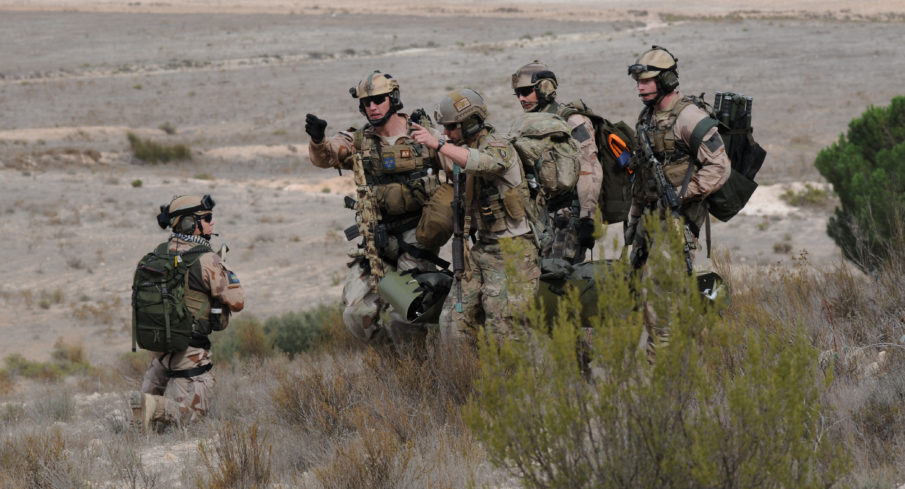
(U.S. Air Force photo by Airman Cory D. Payne).








COMMENTS