Operation Epic Fury has escalated from a limited strike campaign into a broader regional conflict involving multiple state and proxy actors, particularly as Iran retaliates against U.S. and Israeli actions. The Islamic Revolutionary Guard Corps (IRGC) is central to Iran's strategy, leveraging asymmetric warfare and proxy forces to project power across the Middle East.
Key points from this article:
The conflict has expanded to include U.S. airstrikes on the Popular Mobilization Forces (PMF) in Iraq and Israeli strikes on Hezbollah in Lebanon.
How the IRGC's asymmetric warfare tactics, including missile strikes and proxy engagements, allow Iran to impose costs on its adversaries while avoiding direct confrontation.
Why the ongoing conflict poses significant challenges for President Trump, as sustaining military efforts requires public support and could lead to a prolonged stalemate if the IRGC maintains its operational capabilities.
Updating summary...
Trump’s Jihad Against the IRGC: The War to Break Iran’s Revolutionary Guard
Benjamin Reed
Speed
1x
Listen
COMMENTS
Operation Epic Fury has turned into a regional confrontation with Iran’s Islamic Revolutionary Guard Corps at its core. As the conflict spreads across multiple fronts, President Donald Trump faces the difficult task of weakening an institution designed to survive long wars.
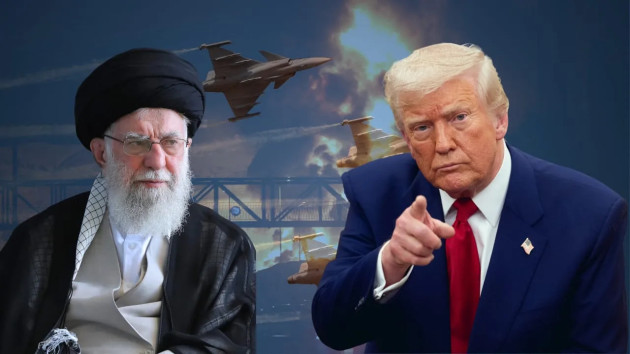
U.S. President Donald Trump and Iran’s former Supreme Leader Ayatollah Ali Khamenei are shown
Photo: REUTERS/Majid Asgaripour/WANA 2; Iranian Leader's Press Office - Handout
Operation Epic Fury is no longer a limited strike campaign. It has expanded into a regional conflict with multiple state and proxy actors now involved. What began as coordinated U.S. and Israeli attacks on the Iranian regime has widened steadily as Iran and its partners retaliate across the Middle East.
France has already been drawn into the escalation after the death of a French soldier in Iraq. Israel continues striking Hezbollah infrastructure in Lebanon. Iranian ballistic missiles have reached Turkey and Gulf states, while Iranian-designed Shahed drones have hit targets as far away as Azerbaijan and Cyprus. Across the region, desalination plants, oil facilities, and other strategic infrastructure have been targeted. Iranian naval units have also begun laying mines in the Strait of Hormuz, raising the risk of disruption to global shipping.
Yet Tehran’s response remains calculated. Iran appears determined to impose costs across the region while avoiding a direct escalation that could trigger large-scale U.S. intervention. That restraint may not hold indefinitely. U.S. troop deployments cannot be ruled out, and Kharg Island—home to a large share of Iran’s oil exports—remains an obvious strategic target should Washington choose to escalate further.
Advertisement
One reality is already clear: the Islamic Revolutionary Guard Corps is now doing exactly what it was created to do. Formed after the 1979 revolution, the IRGC exists above all to protect the regime. In wartime, its role expands to spreading the battlefield outward and imposing costs on Iran’s enemies.
For President Donald Trump, the objective of Operation Epic Fury is increasingly clear: weaken the Revolutionary Guard enough that the Iranian regime can no longer project power across the region. The challenge is that the IRGC was built precisely for this kind of confrontation.
Advertisement
Understanding how this war unfolds requires understanding the institution at its center.
What exactly is the IRGC, and how does it fight?
What Is the IRGC?
The Islamic Revolutionary Guard Corps (IRGC) is not simply another branch of Iran’s military. It is the regime’s parallel security state: an ideological force created to defend the Islamic Republic itself. Formed on May 5, 1979, in the aftermath of the Iranian Revolution, the IRGC was tasked with protecting the new clerical government from both internal dissent and external threats. From its beginning, loyalty to the revolution and to the Supreme Leader mattered more than conventional military professionalism.
Ayatollah Ruhollah Khomeini did not trust the existing Iranian armed forces. The Shah’s military had been trained and equipped by Western powers, and many of its officers were viewed as politically unreliable. The solution was to create a new institution that would serve as a counterweight to the conventional army. Unlike Iran’s regular military, known as the Artesh, the IRGC answers directly to the Supreme Leader rather than to Iran’s civilian government.
Born in War
The organization’s early transformation came during the Iran–Iraq War (1980–1988). What began as a loosely organized revolutionary militia evolved into a hardened military force under the pressure of that eight-year conflict. The IRGC developed ground combat formations, built naval capabilities in the Persian Gulf, and laid the foundations for what would later become Iran’s missile program.
The war also shaped the Guard’s internal culture. Ideological commitment, sacrifice, and endurance became defining features of the organization. The willingness to absorb heavy casualties in pursuit of strategic goals became part of the institutional identity that still defines the IRGC today.
A Parallel State
Over time, the IRGC expanded far beyond its original military function. Today it operates as a military, intelligence, economic, and political power center within Iran. Through a network of state-linked companies and construction conglomerates, the organization holds influence across major sectors of the Iranian economy, including infrastructure development, energy, telecommunications, and shipping.
Senior IRGC officers frequently transition into political roles, while the organization itself maintains significant influence over national security policy. In practice, the IRGC functions as a parallel structure inside the state, capable of shaping both domestic and foreign policy decisions while answering ultimately to the Supreme Leader.
The IRGC’s Military Structure
The IRGC itself is divided into several major operational components.
The IRGC Ground Forces manage domestic security missions and conventional military operations. They are frequently deployed to reinforce regime control during periods of internal unrest and have played a central role in suppressing protests inside Iran.
The IRGC Navy specializes in asymmetric warfare in the Persian Gulf. Rather than maintaining a large conventional fleet, it relies on fast attack boats, anti-ship missiles, naval mines, and swarm tactics designed to threaten shipping and complicate the operations of larger naval forces operating near Iran’s coastline and in the Strait of Hormuz.
The IRGC Aerospace Force oversees Iran’s ballistic missile arsenal and many of its drone programs. This branch has become a central pillar of Iran’s military strategy, giving the regime long-range strike capabilities that extend far beyond its borders. Iran now possesses one of the largest missile inventories in the Middle East, with systems capable of striking targets up to roughly 2,000 kilometers away.
The most internationally visible branch of the IRGC is the Quds Force, which conducts foreign operations and manages relationships with allied militias across the Middle East. Serving as Iran’s expeditionary arm, the Quds Force coordinates training, funding, intelligence sharing, and weapons transfers to a network of regional partners.
Through these relationships Iran has developed a web of influence stretching across multiple countries. The network includes Hezbollah in Lebanon, Shiite militia groups in Iraq such as Kata’ib Hezbollah, elements of the Syrian government’s military forces, and armed groups in Yemen including the Houthi movement. These partnerships allow Iran to project power across the region without relying solely on its own conventional military forces.
The result is a layered system of influence in which local militias function as extensions of Iranian strategy while maintaining their own political identities and operational structures.
The Basij and Internal Control
Another key component of the IRGC system is the Basij, a paramilitary volunteer organization that operates under Revolutionary Guard supervision. During the Iran–Iraq War, the regime mobilized the Basij to recruit civilians for national defense.
Today the Basij serves primarily as a domestic security force. Authorities deploy Basij units during protests and political unrest, where they reinforce the regime’s internal security apparatus. Their presence allows the government to monitor dissent, enforce ideological conformity, and maintain control during periods of instability.
How the IRGC Fights
The IRGC relies heavily on asymmetric warfare. Rather than confronting technologically superior adversaries in conventional battles, it favors tactics that raise the cost of confrontation.
These methods include ballistic missile strikes, drone warfare, cyber operations, maritime harassment, and the use of proxy forces across multiple theaters. The objective is not decisive battlefield victory but strategic endurance. By stretching opponents across several environments, the IRGC seeks to impose economic, political, and military costs over time.
A Regional Power
Today the IRGC projects power across a wide geographic arc stretching from the Persian Gulf to the eastern Mediterranean. Its influence appears in Iraq, Syria, Lebanon, and Yemen, while its naval forces maintain a steady presence along Iran’s southern coastline.
Despite this expansion, the organization’s core mission has remained unchanged since 1979. The IRGC exists first and foremost to preserve the Islamic Republic. Every capability it has built, from missile deterrence to proxy warfare, serves that objective.
Why the IRGC Is Built for This War
The IRGC does not fight like a conventional army. It avoids direct battles with stronger adversaries and instead raises the cost of conflict across multiple fronts. Its strategy centers on endurance, disruption, and escalation below the threshold of full-scale war.
One of its primary tools is proxy warfare. For decades, the IRGC has built relationships with armed groups across the Middle East. Hezbollah in Lebanon remains its most capable partner. Shiite militias in Iraq, pro-government forces in Syria, and Houthi fighters in Yemen also form part of this network. These groups extend Iran’s reach while allowing Tehran to avoid direct responsibility for many attacks.
Missiles and drones form another pillar of IRGC strategy. Iran maintains one of the largest missile inventories in the Middle East. Its Aerospace Force also produces large numbers of drones, including the widely used Shahed systems. These weapons allow Iran to strike infrastructure, military bases, and economic targets across long distances. They are relatively cheap, easy to produce, and difficult to fully intercept.
The IRGC Navy focuses on maritime disruption in the Persian Gulf. It relies on fast attack craft, naval mines, anti-ship missiles, and swarm tactics rather than large warships. These methods aim to threaten shipping lanes and complicate naval operations near Iran’s coastline. The Strait of Hormuz remains a central pressure point. Even limited disruption there can drive up global energy prices.
The IRGC also practices careful escalation management. Its commanders often apply pressure in stages. They test responses, adjust tactics, and avoid actions that might trigger a large-scale invasion of Iran itself. The goal is not immediate victory. The goal is to stretch the battlefield and force adversaries to manage multiple threats at once.
This approach does not promise decisive battlefield success. But it reflects the mission the IRGC has held since its creation: protect the regime and outlast its enemies.
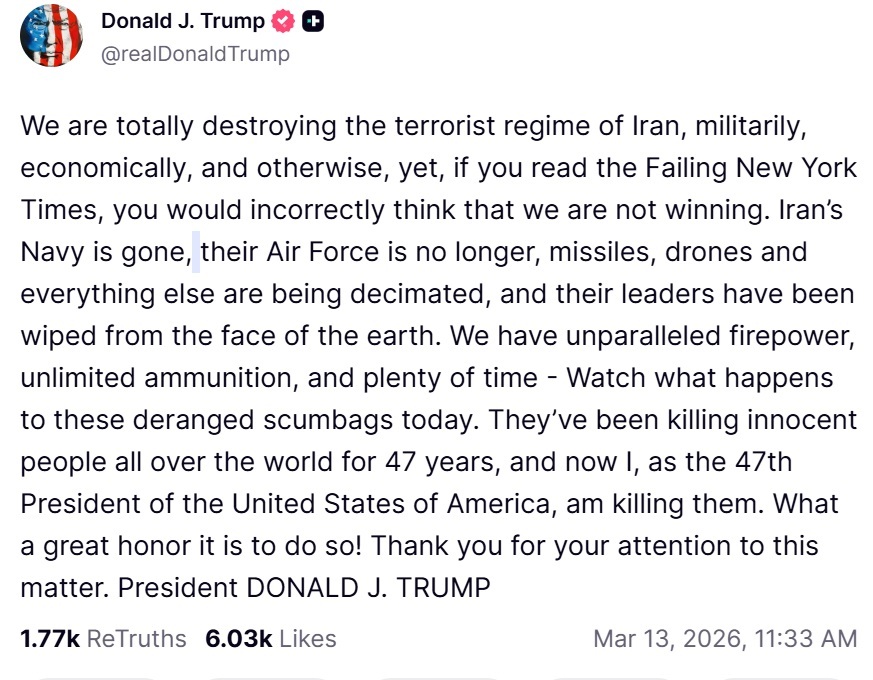
United States is “totally destroying” Iran’s regime militarily and economically in a March 13, 2026 post, framing Operation Epic Fury as a decisive campaign against Tehran’s military and leadership.
The Strategic Hurdles Ahead
As the conflict expands, President Donald Trump faces a series of military and political constraints that will shape how Operation Epic Fury unfolds. The United States retains overwhelming conventional military superiority, but defeating the IRGC outright is not a straightforward task. The Revolutionary Guard was built for long conflicts fought through proxies, asymmetric tactics, and regional pressure points.
One challenge is geography. Iran sits at the center of a vast operational environment that stretches from the Persian Gulf to the eastern Mediterranean. U.S. forces must defend bases, shipping lanes, and allied infrastructure across multiple countries at once. Even limited IRGC attacks—missiles, drones, maritime harassment, or militia strikes—can force Washington to respond in several theaters simultaneously. This creates a constant strain on resources and complicates escalation management.
Another constraint is the risk of regional expansion. Iran’s partners in Lebanon, Iraq, Syria, and Yemen all retain the ability to widen the conflict. Hezbollah alone possesses a large arsenal of rockets capable of targeting Israel. Iraqi militias can threaten U.S. personnel stationed across the country. The Houthis have already demonstrated their ability to strike shipping and infrastructure in the Red Sea. Each of these fronts carries the potential to escalate independently.
Domestic political pressure also shapes the battlefield. Sustaining a prolonged military campaign requires public support, congressional backing, and the willingness to absorb economic consequences. Rising energy prices, global shipping disruptions, and the possibility of American casualties could gradually shift the political environment surrounding the war.
For Trump, the stakes are unusually high. Operation Epic Fury has already become the defining foreign policy initiative of his presidency. Success would mean weakening the Revolutionary Guard’s ability to project power across the region and forcing Tehran into a more constrained strategic posture.
Failure would carry its own consequences. If the IRGC absorbs the pressure, continues operating through proxies, and outlasts the campaign, the conflict could settle into a long and unstable stalemate.
For now, there is little indication that the war is approaching a clear endpoint. The IRGC remains intact, its regional networks remain active, and both sides appear prepared for a prolonged confrontation.
The result is a conflict that may define not only the balance of power in the Middle East, but the ultimate legacy of Trump’s foreign policy.
Advertisement
What readers are saying
Generating a quick summary of the conversation...
This summary is AI-generated. AI can make mistakes and this summary is not a replacement for reading the comments.










COMMENTS