

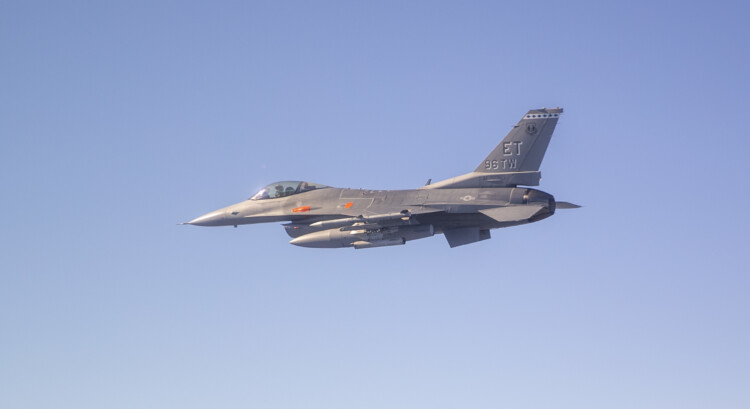
The APKWS is a hydra 2.75-inch diameter rocket with a semi-active laser seeker that allows it to home in on a laser target designator. The seeker can acquire and track the laser spot, subsequently providing high accuracy and lethality against soft and lightly armored targets. Meanwhile, its rocket carries a warhead that can be selected depending on the target type, including high-explosive, blast-fragmentation, and shaped charge variants. The APKWS has a range of up to 5 kilometers (3.1 miles) and can be fired in single-shot or ripple-fire mode, allowing multiple firing simultaneously.
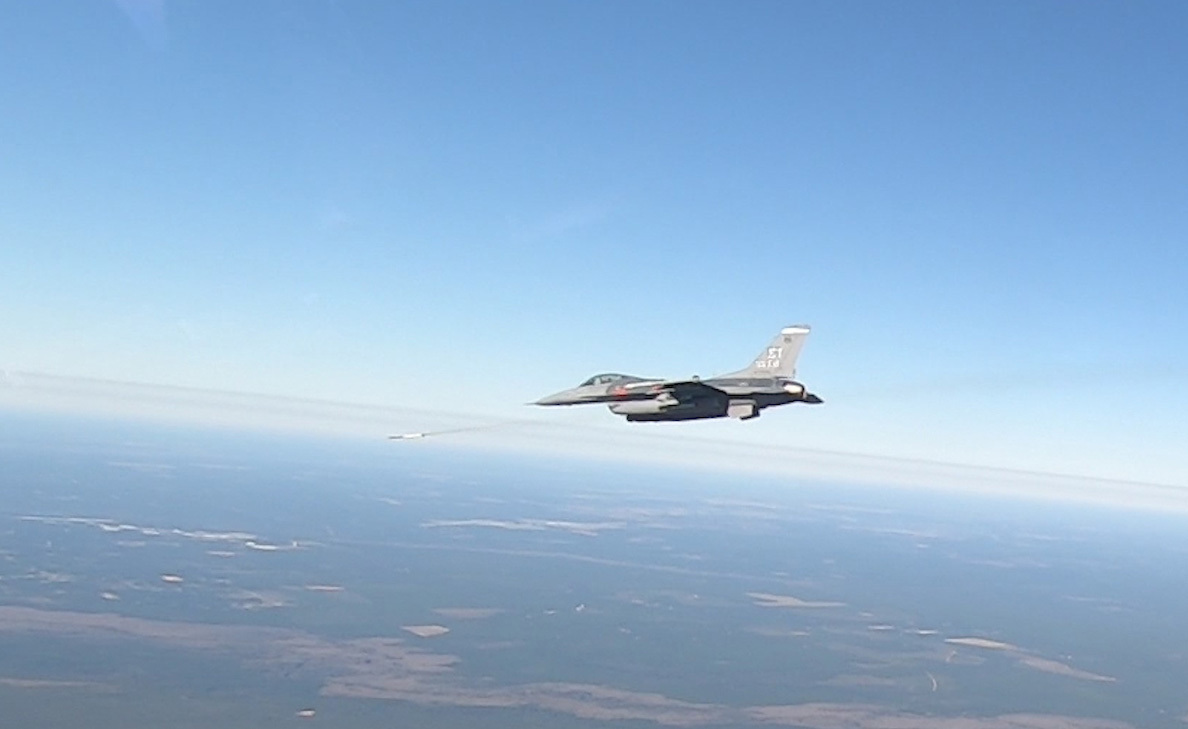
Ukraine, however, received the upgraded APKWS II with several feature improvements and technical enhancements over its predecessor. One of the main advancements of the latest version is its new guidance section that can turn dumb rockets into smart projectiles. While the first version used a modified seeker from an air-to-air-missile, limiting its range and accuracy, the APKWS II has a newly designed guidance section incorporating a low-cost imaging infrared laser seeker capable of providing the weapon system a greater accuracy and more extended range.
Furthermore, the APKWS II features advanced capabilities that allow it to track and engage stationary and moving targets, such as vehicles or fast-moving boats, which is a significant improvement compared to its predecessor, which could only effectively hit stationary targets (i.e., buildings, outposts, etc.). Other than that, both weapon systems have almost exact technical specifications and performance, with the upgraded version sharing the same range capacity of up to 5 km (3.1 miles), as well as size and dimensions at a diameter of 2.75 inches and a length of 71 inches. The missile’s weight can vary slightly depending on the warhead type, but both versions’ dimensions remain the same.
APKWS II’s Impact on Ukraine
Initially, experts speculated that Ukrainian forces would mount the APKWS II system on its Mi-17 Hip helicopters when the US announced that it would send millions worth of APKWS packages to Ukraine—to which Germany also pledged additional launchers and rockets shortly after. Some experts also considered the possibility of integrating the laser-guided missiles on surface-launched platforms due to their flexibility, allowing the operators to mount them on vehicles as small as an MRZR buggy. So, it was not surprising when the conflict-affected country used a Humvee and a German-lend pickup truck as its launch platform.
Location: Korsunka (Корсунка), Kherson Oblast – left bank
0:05-0:13 46.772752, 33.175658
0:14-0:26 46.769809, 33.180969 https://t.co/E5RCEgeyi9 @UAControlMap @GeoConfirmed
Ukrainian 37th Marine Brigade attacks Russian positions with APKWS
Located by @blinzka + @intel_pigeon pic.twitter.com/1QfvXCDUXG— blinzka (@blinzka) April 27, 2023
On how it works, Forbes explained that both ground-based vehicles have their respective laser designators but can, nonetheless, steer rockets from laser sparkle coming from either the designators. Meanwhile, Forbes added that if the launcher crew has difficulties using a line of sight to locate targets, a forward observer or drone can do it.
While it is true that the 70mm rocket with a 10-pound warhead is relatively smaller than other munitions in Ukraine’s current arsenal, it remains a powerful weapon that can effectively strike out light-armored vehicles or blast key buildings open, or even disable a tank. Ukrainian troops can also use the APKWS II against Russia’s incessant combat and loitering/kamikaze drone attacks, which seriously threaten Ukraine’s vulnerable artillery and air defense in its southern region.
The APKWS II is not exactly a game-changer like other Western-supplied artillery and weapon systems has done (i.e., Javelins anti-armor systems, High Mobility Artillery Rocket System, M1A1 Abrams tanks, etc.). However, it would still significantly impact the battlefield, prompting Russia to track its movements.
However, to deliver a significant blow to the aggressors and neutralize threats such as the persistent drone activity in Ukrainian airspace, it would be necessary for Ukraine to acquire several dozen more APKWS II systems.
Photos of recently delivered 🇫🇷#French-made AMX-10RCR wheeled AFV and 🇺🇸#US-made #Oshkosh M-ATV MRAP’s in service of the 🇺🇦#Ukrainian 37th Separate Marine Brigade.
This brigade was formed only in February 2023 as part of the Naval Infantry Corps of the… pic.twitter.com/pLGVkLZ2PN
— 𝕻𝖗𝖆𝖎𝖘𝖊 𝕿𝖍𝖊 𝕾𝖙𝖊𝖕𝖍 (@praisethesteph) April 24, 2023








COMMENTS