

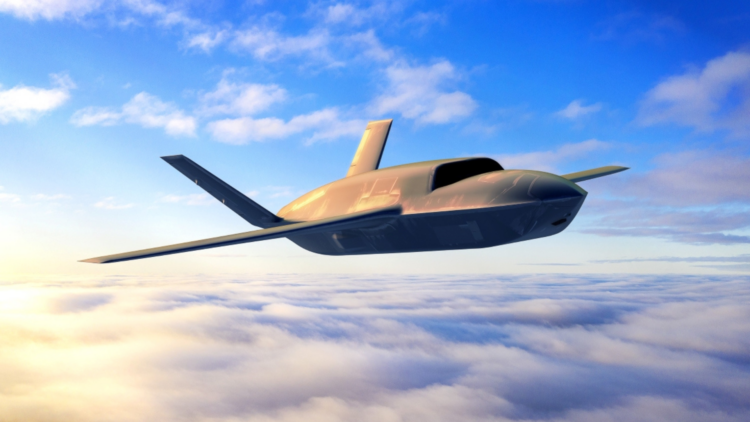
GA-ASI’s innovative approach allows for the development of multiple aircraft variants built upon a common core chassis, maximizing production efficiency and minimizing development timelines.
Anduril Enters the Fray: A Dose of Innovation for the Program
While specific details surrounding Anduril’s CCA concept remain under wraps, their selection as a key player injects an exciting dose of innovation into the program.
Their involvement injects an exciting dose of innovation into the program, which focuses on speed, affordability, and autonomy—all of which align perfectly with the Air Force’s vision and overall shape the future of unmanned aerial combat.
The @usairforce has selected Anduril to design, manufacture, and test production-representative Collaborative Combat Aircraft (CCA).
In this era of great power competition, there is no time to waste on business as usual. We look forward to delivering CCAs on schedule, within… pic.twitter.com/EMz8b9LkcY
— Anduril Industries (@anduriltech) April 24, 2024
Industry Collaboration: A Broader Team for Broader Success
This announcement doesn’t mark the end of the road for other contenders.
The Air Force has emphasized continuous industry collaboration, with over 20 companies remaining in the broader partner pool.
These companies will have the opportunity to compete for future production contracts and contribute valuable expertise to the program’s ongoing development.
“The progress we’ve made is a testament to the invaluable collaboration with industry, whose investment alongside the Air Force has propelled this initiative forward,” said Secretary of the Air Force Frank Kendall. “It’s truly encouraging to witness the rapid execution of this program.”
Speed and Scale: The Air Force’s Ambitious Goals
The urgency surrounding the CCA program is evident.
The Air Force aims to field a fully operational capability before the decade’s end, underscoring the critical nature of this next-generation technology.
The program also has its sights set on international collaboration, potentially leveraging Foreign Military Sales to achieve “affordable mass at scale” and bolster global partnerships.
Anduril vs General Atomics under the U.S. Air Force's Collaborative Combat Aircraft (CCA) program.
Link for 3D models:https://t.co/lZhYHuqeJ2https://t.co/3551e3QN79 pic.twitter.com/ec2dMDRwKt
— Akela Freedom (@AkelaFreedom) April 25, 2024
With a projected production target exceeding 1,000 CCAs, the program promises to reshape the landscape of air combat.
The Air Force’s strategic partnership with Anduril and GA-ASI, coupled with the continued involvement of a wider industry pool, paves the way for a more agile, cost-effective approach to air dominance.
The success of the CCA program has the potential to redefine the balance of power in the skies, ensuring the US Air Force maintains its edge for years to come.
Final Thoughts: Challenges and Opportunities
However, questions remain.
The impact of autonomous drone swarms on traditional combat tactics and potential ethical considerations surrounding autonomous warfare are topics that will need careful consideration as the program progresses.
Additionally, the success of the project hinges on the ability of Anduril and GA-ASI to deliver on their promises.
Integrating these unmanned systems seamlessly with manned aircraft and ensuring robust and secure communication channels will be crucial to achieving true battlefield collaboration.
Despite these challenges, the CCA program represents a bold step towards the future of aerial warfare.
With a focus on affordability, adaptability, and international collaboration, this initiative has the potential to revolutionize air combat and solidify American air superiority for the foreseeable future.








COMMENTS