

In that environment, political incentives align in a predictable direction. Distance from the conflict becomes valuable. Responsibility is pushed outward. Washington and Jerusalem become convenient focal points for criticism.
This is a function of democratic pressure. Leaders respond to what is immediate and visible. Economic stress compresses foreign policy space.
Recent friction between Washington and European capitals has compounded the problem. Trade disputes, threats involving allied territory, and abrupt policy shifts have eroded trust. European governments now have stronger incentives to demonstrate independence. Public resistance to deeper involvement carries political upside.
Why Public Pressure Backfires
Public criticism of European reluctance narrows the path to cooperation.
When leaders are challenged in front of their own voters, they are forced into defensive postures. Even those inclined to assist must signal autonomy. Alignment becomes politically expensive.
For France, the incentive cuts even sharper. Paris has positioned itself as a moral and strategic center within the European Union, and it has the only combination of a credible blue-water navy and deployable ground forces on the continent to back that posture. Public defiance of Washington strengthens that image at home and abroad. In the current climate, standing up to the United States—especially under Donald Trump—carries political upside in a way quiet alignment does not.
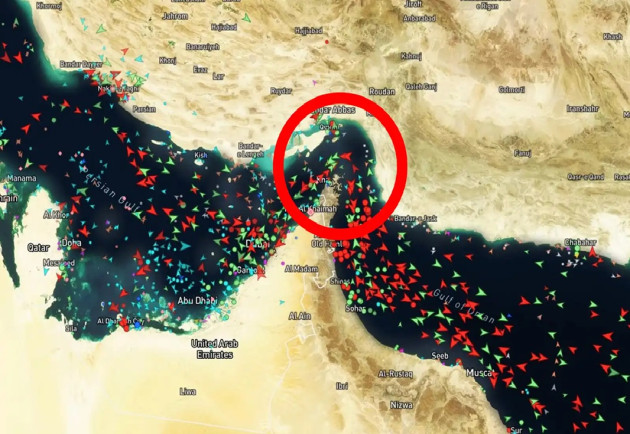
Calls for Europe to “show courage” or to move unilaterally into the Strait flatten the complexity of the situation. The risks are clear: missile exposure, maritime mines, escalation with Iran, and uncertain end states. These are not abstract concerns; they are immediate operational realities that European governments must justify to their publics.
European navies are not structured for sustained high-threat convoy operations in the Gulf. Mine countermeasure fleets are limited, air defense coverage is thin without U.S. integration, and rules of engagement become politically sensitive the moment a missile is intercepted or a retaliatory strike is required. Participation is not just a political decision; it is a capability gap.
Effective alliance management tends to happen away from the spotlight. It relies on defined missions, shared intelligence, and calibrated risk. Public pressure disrupts that process. It converts a coordination problem into a political contest.
The Moscow Effect
Energy prices introduce another layer of tension.
Sustained increases in oil and gas prices deliver direct financial gains to Vladimir Putin and the Russian state. Higher revenues ease fiscal pressure, support military activity, and soften the impact of sanctions tied to Ukraine.
For Europe, this creates a strategic bind. Actions that prolong instability in the Strait tighten global energy markets and raise prices. Those same price increases strengthen Moscow. The longer the disruption persists, the sharper that contradiction becomes.
In practical terms, every tanker delayed in the Strait is a financial transfer to Moscow. The war in Ukraine does not pause while this plays out. It gets funded.
European policy over the past two years has focused on reducing dependence on Russian energy. A prolonged Hormuz crisis pulls in the opposite direction. It restores leverage to the Kremlin at a moment when Europe is trying to constrain it.
I left Ukraine in September 2022 just as the Nord Stream pipeline sabotage dominated the conversation across Europe. Moscow immediately pushed the line that the United States stood behind the attack; it argued that Washington had both motive and opportunity, and pointed to earlier remarks by Joe Biden suggesting the pipeline would be “ended” if Russia invaded Ukraine. That claim remains unproven and widely contested. Still, what mattered on the ground was not evidentiary rigor; it was how quickly the narrative took hold in certain circles.
Among Europeans I spoke with at the time, there was a noticeable openness to the possibility. Not a majority view, and often expressed with hesitation, but present enough to register. Trust had already been strained by the war, the sanctions regime, and the economic pain that followed. The sabotage incident became a vehicle for suspicion, particularly in countries already sensitive to energy shocks.
That memory lingers. It shapes how European publics interpret disruptions tied to U.S. policy, even when the facts are unclear or disputed. In the current environment, where energy prices are again rising and supply routes are under threat, those perceptions carry weight.
Any decision to engage in the Gulf will be weighed against that reality.
The Strategic Requirement
If the objective is to stabilize the Strait and maintain coalition cohesion, the approach has to reflect these constraints.
Securing the Strait requires sustained maritime operations: mine countermeasures, layered air defense, convoy systems, and clear escalation boundaries. It is a campaign, not a gesture.
What remains unclear is the end state. Is the objective simply to keep the Strait open, or to degrade Iran’s ability to threaten it altogether? Those are two very different campaigns, with two very different timelines and risks.
The political dimension carries equal weight. Exposure must be limited. Missions need to be defined with precision. Public narratives should avoid framing allies into positions they cannot sustain domestically.
European leaders also have to maintain visible distance from Israeli decision-making. That posture has become a political requirement at home. At the outset of the conflict, many governments moved quickly to attribute escalation to Iran’s attacks on regional partners rather than place immediate blame on Washington or Jerusalem. That restraint bought them room. Sustaining it now requires careful positioning.
Coordination will depend on discipline. Pressure applied in the wrong place fractures the coalition; applied with care, it can still produce alignment.
That starts with tone. The Trump administration would be better served by restraint in public. There is no political upside in trying to win over European voters through confrontation or blame. It lands poorly and narrows space for cooperation.
If Washington wants cooperation, it has to lead with clarity and control. This is an American-led campaign whether stated or not. Allies will support it when the mission is defined, the risks are contained, and the objective is credible. Pressure won’t build that. Execution will.








COMMENTS