

When 20 people were killed in a terrorist attack in the Xinjiang province in July 2011, the Chinese authorities had criticised Pakistan’s failure to crack down on the Uighur rebels as well as their training camps. The Chinese media alleged that those who conducted the 2011 attacks in the Kashgar city had received training in the Waziristan tribal region of Pakistan.
Well placed diplomatic circles in Islamabad say the release of the video by the Chinese separatists would exert further pressure on Islamabad to uproot the ETIM/TIP network from Waziristan, as had been repeatedly promised in the past, especially after the July 2011 terror attack in Kashgar. In the training video, the children, some of whom appear to be no older than six, are shown firing handguns, AK-47 assault rifles and a machine-gun from various positions.
At one point, 13 Uighur children are seen firing AK-47s while standing and lying down. As the children fire their weapons, the black flag of the Taliban and a light blue banner used by the Turkistan Islamic Party can be seen flying in the background. (The News International, April 27, 2013)
Interesting reports regarding Uighur presence northeastern Afghanistan have also surfaced recently. Local Taliban officials, seemingly substantiating the presence of the group in the remote northeastern Afghanistan provinces of Kunar and Nuristan, have acknowledged the presence of ethnic Uighurs in the area. Statements from the same Taliban leaders number the Uighurs in the two Afghan provinces at 250:
According to Afghan Taliban sources, there are about 250 Uighur militants in Afghanistan’s Nuristan and Kunar provinces.
“They live here with us but are always concerned about their people and mission in China. They are nice people, good Muslims and the best fighters,” a senior Taliban commander said.
He added that Uighur militants were not fond of guns, and resorted mostly to knives and daggers.
China has stepped up security in Xinjiang after a vehicle ploughed into tourists on the edge of Beijing’s Tiananmen Square in October, killing the three people in the car and two bystanders. China labeled it a suicide attack by militants from the region. (Mehsud and Golovnina, Reuters, May 14)
China’s investment in Pakistan, particularly deals to assist Islamabad with the construction of two ACP-1000 nuclear power plants in Karachi and the sale of six Chinese submarines by the end of 2014, could be construed as inducements to focus more military and intelligence services assets on groups in Pakistan that are harboring and training Uighur militants from Xinjiang.
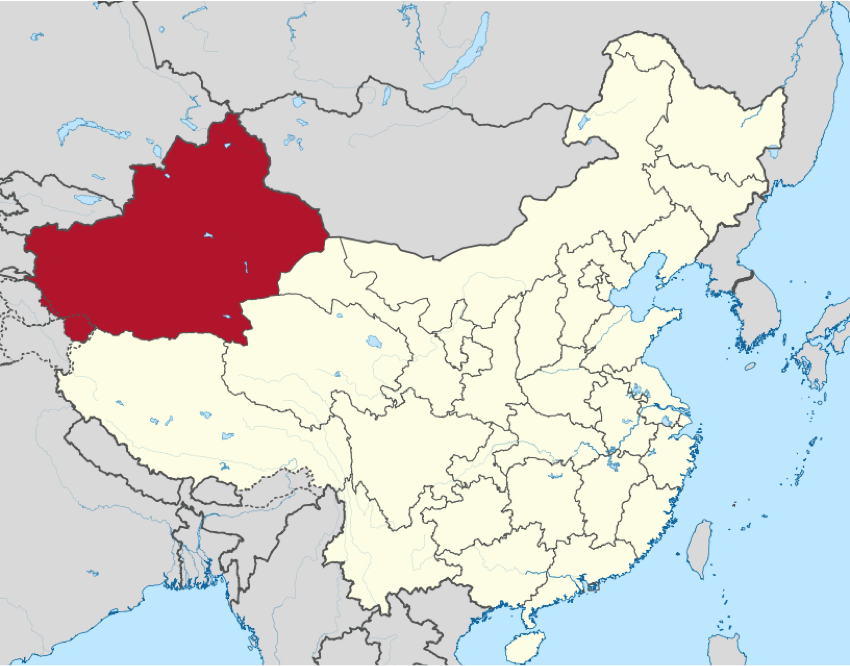
Xianjiang, the northwestern most province in modern China, is administered by Beijing as an autonomous region. The region is home to China’s Uighur population, an ethnic group distinguished from the Chinese majority Han largely by the group’s Muslim religion and their Turkish ethnic roots.More than 10 million Uighurs reside in Xinjiang, comprising nearly 50% of the population. For Beijing, Xinjiang represents a a key line of communication to Tibet in the south and the states of Central Asia in the west. Recent Chinese government trade agreements with neighboring Kazakhstan highlight the importance of Xinjiang, which shares its western border with the country. Kazkhstan and China have cooperated on a pipeline connecting the two countries:
JSC NC “KazMunayGas” together with China National Petroleum Corporation conducts work on the Kazakhstan-China oil pipeline construction project the implementation of which made it possible to ensure the capability of raw hydrocarbons supply from the West Kazakhstan deposits to the promising market of China. First of all the Kazakhstan-China oil pipeline construction project is aimed at diversifying oil transportation directions under implementation of the policy of creation of a multi-vector system for transportation of hydrocarbons of independent Kazakhstan. (Kazakhstan-China Oil Pipeline, KMG EP)
Most of the ethnic Uighur population (43% of nearly 22 million people residing in Xinjiang) reside in the southern half of Xinjiang. This area of the province shares important borders with Kazakhstan, Kyrgyzstan, Tajikistan, Afghanistan (via the Wakhan Corridor of northeastern Badakhshan Province), Pakistan, and India. Of particular importance in China’s long term geostrategic planning in Xinjiang’s border with India. In particular, China’s ongoing dispute with India over Chinese-occupied Aksai Chin has highlighted a more aggressive Chinese foreign policy, one that has been more willing to engage in territorial disputes in the furthering of Chinese strategic interests. I will explore the strategic implications of Chinese interest in Xinjiang in part two of this series.
Covering more than 1.6 million square kilometers, the Xinjiang region is home to vast deposits of minerals and other resources. Of particular interest to the Chinese government is Xinjiang’s natural gas and oil deposits. In 2010, Beijing leveled a 5% tax on all business dealings related to natural gas and oil in Xinjiang. A 1999 estimate of natural resources in the region burgeons the assessment that Beijing’s motivation in ensuring their control over the region is based on access to potentially valuable commodities:
The province is relatively undeveloped, with substantial quantities of mineral resources… It has the largest reserves of oil, natural gas and coal in the country. Its coal reserves amount to 27 million tons (40 per cent of the country’s total) and oil reserves amount to 30 billion tons. Crude oil output, which reached 17.4 million tons in 1999, was the third highest in the country. The oil and gas reserves found in Tarim, Junggar and Turpan-Hami basins in the region account for one-fourth and one-third, respectively, of the country’s total.
Xinjiang’s reserves of mineral resources are also substantial. The region’s reserves of beryllium and mica are the highest in China. Some of the region’s granite products such as “Xinjiang Red,” Tianshan White” and “Snowflower Black” are famous brands in the country. The country’s largest copper mine is also found in Xinjiang. (The Australia-China Chamber of Commerce and Industry of New South Wales).
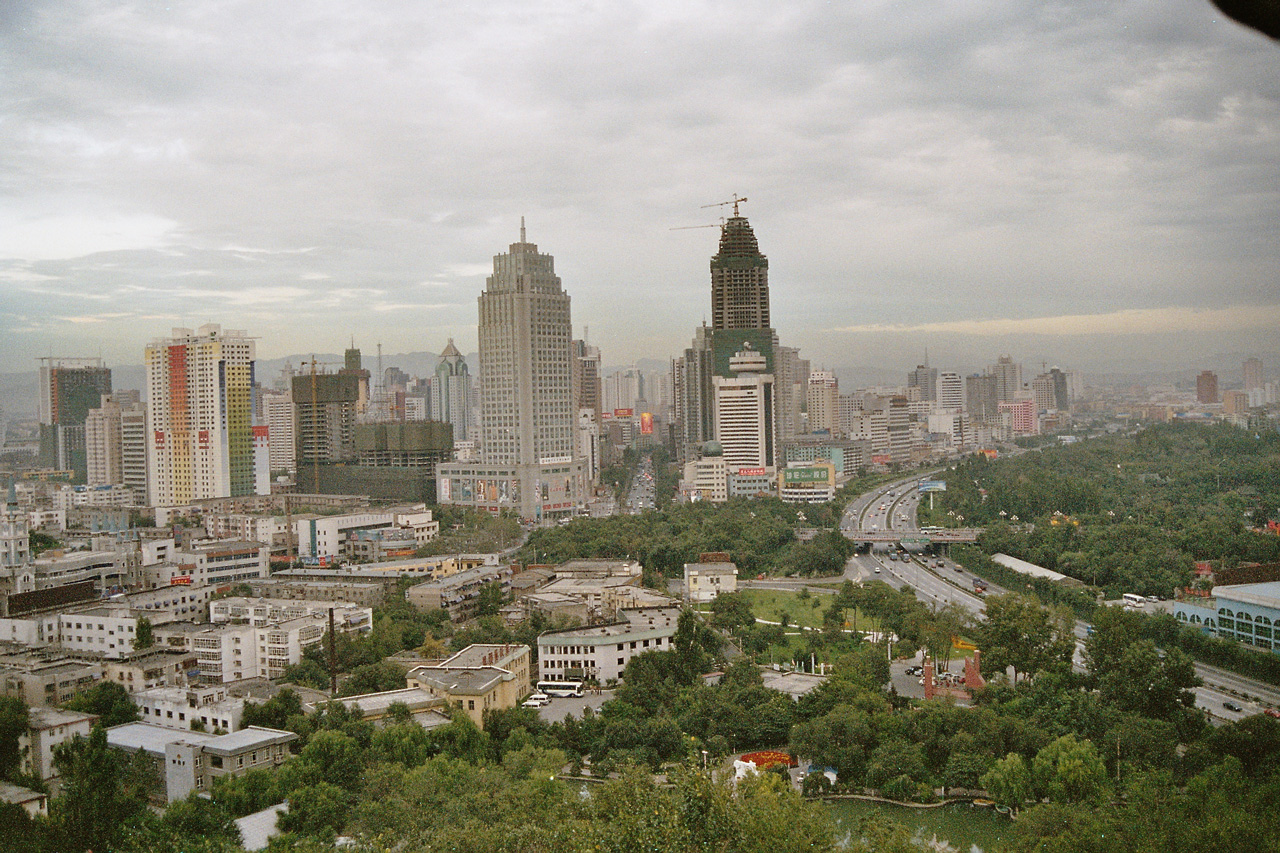
A geoscientific research project, funded by State Key Laboratory of Geological Processes and Mineral Resources at the China University of Geosciences, analyzed mineral deposits in depth in the region of Xinjiang and concluded, interestingly, that among the more valuable resource materials in the region is uranium. In a paper titled “A Review of Mineral Systems and Associated Tectonic Settings of Northern Xinjiang, NW China”, the authors make particular mention of a significant uranium deposit near Urumqi, the site of recent attacks against the Chinese government:
…studied and reported on sandstone-hosted roll-front type uranium deposits in Xinjiang. Three of these deposits, Wuyer, Wuyisan and Wuyiyi, are located near the Kazakhstan border in what the authors refer to as YL Basin (Yili) and a fourth in the Turpan Basin, about 200 km southeast of Urumqi. (Pirajno, Seltmann, and Yang, A Review of Mineral Systems and Associated Tectonic Settings of Northern Xinjiang, NW China, 2011)
China’s recent energy deal with Russia, a 30 year trade agreement worth $400 billion, assures China of a source of natural gas for the foreseeable future. As demonstrated by a map by The Washington Post, a pipeline from Turkmenistan could transport the gas through Urumqi as it moves eastward towards its destinations in the more densely populated areas of China along the Pacific coast line. As Russia has become a more assertive international actor in the past two years, so has China begun acting with a more muscled approach in places such as the East China Sea. An interesting point in the timeline of the deal between the two rising powers is when Moscow suddenly lowered the cost of the gas in the wake of sanctions on the country after Russia’s annexation of Crimea in March. As William Wan and Abigail Hauslohner note for The Washington Post:
“This is the largest contract in the history of the gas industry of the former USSR and the Russian Federation,” Putin told reporters in Shanghai. The infrastructure costs to develop the natural gas fields needed to supply China will top those of the Sochi Games — which are believed to have been in the tens of billions of dollars, officials said.
But the missing price details raised the suspicions of some Russians, who suspect Putin dropped the price of gas significantly for China in a desperate maneuver to ensure a steady cash flow for Gazprom in the face of sinking revenue and Western sanctions. (Wan and Hauslohner, The Washington Post, May 21)
As Ishan Tharoor observes, the marginalization of the Uighur population by the government in Beijing is compounded by the international nature of the issue of the separatist campaign in Xinjiang:
Chinese government white papers point to the considerable economic and infrastructure developments brought about by Beijing in the region — which is rich in resources and sits at a strategic crossroads between China and Central Asia. Clearly, that’s a narrative not accepted by all Uighurs.
While their disaffection remains palpable — and many observers call for a liberalization of Chinese policy in the region rather than an inevitable, harsh crackdown — the Uighurs also have very little leverage. While well-known, their plight is hardly a cause celebre internationally, and few regional governments would risk trade ties and other diplomatic links with China over the rights of one marginalized minority. In the past, Turkish Prime Minister Recep Tayyip Erdogan has expressed solidarity with the Turkic Uighurs, but even he sees little point in compromising relations with the world’s next superpower, and promised China’s President Xi Jinping on a visit in 2012 that Turkey would not allow any Uighur separatist activity to take place on its soil. (Tharoor, The Washington Post, May 22, 2013)
The uprising in Xinjiang, while in no way resembling the more violent insurgencies in Mogadishu, Aleppo, or even Donetsk, remains a tinderbox. As the Chinese government pursues a more muscular foreign policy, one augmented by a national security strategy that relies more heavily on the implementation of military and police forces in support of the government’s more aggressive international posture, it will be wary of igniting a wider conflict. The government in Beijing will pursue policies that would contain the conflict inside Xinjiang while simultaneously working to cut off support for the active insurgent nodes in the region.
The nexus of the conflict lies in Beijing’s rising demand for resources and the geographical value of Xinjiang. On the latter point, its importance is in Xinjiang’s necessity as a hub on a vital resource transport line. China’s ability to both import and export natural resources will be a determining factor in the country’s ability to meet the demand of a growing population and sustain economic growth. China’s future pivots solidly on Beijing’s ability to ensure access to resources for purposes of consumption and export. On the surface, the 30-year, $400 billion Russian-Chinese natural gas agreement would provide valuable energy resources for Chinese consumption as China begins to flex its muscle and attain regional hegemonic status in East Asia. However, as that gas would at least partially be transported through Urumqi and Xinjiang, Beijing is moving quickly to stamp out a rising tide of insurrection in the region.
The delicate balance between swift and assertive action to suppress an escalating insurrection in Xinjiang and the risk of inspiring a widened insurgency will be a tightrope that Beijing would be well-advised to walk with great care. Sparks and tinderboxes are natural enemies.
(Featured map courtesy of Wikimedia Commons)








COMMENTS