3 brothers in south Texas, one a Border Patrol agent, charged in drug cartel-linked murder case

Joel Luna seemed an ideal Border Patrol hire: south Texas native, high school ROTC standout, Army combat veteran.

A ledger documented the sale of drugs, guns and ammunition. Most damning of all, authorities said, was a commemorative Border Patrol badge and documents belonging to Joel Luna, including his work station password and Security Service Federal Credit Union account number.

Joel said he “had no knowledge of the safe,” according to investigators’ dash camera video. He was arrested on various charges, including tampering with evidence and capital murder. In his mugshot, he looked weary.

Special operations getting smart technology for better teamwork and higher precision

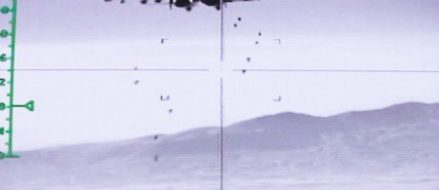
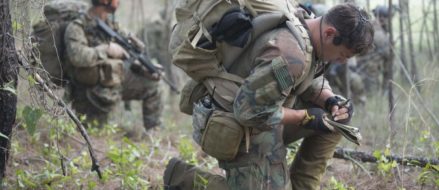
Special Operations Forces (SOF), such as the Navy SEALs and Delta Force, may soon get a new type of technology that gives them additional eyes on the ground, make airstrikes more accurate, and help them better discern enemy fighters from civilians.

Using this new technology, troops will be able to livestream video back to command, see through each-other’s eyes, track targets, and call in air strikes—using just their smartphones.

The new technology could roll out soon. The company that develops it, CrowdOptic, received a rapid prototyping request from SOFWERX, which is a partnership between Doolittle Institute and U.S. Special Operations Command. Under the request, which CrowdOptic received on Sept. 8, they are expected to have a working prototype available by Sept. 30.

According to CrowdOptic CEO Jon Fisher, the technology works on just about any device with a sensor, from smart glasses to drones, but they’ll be starting with smartphones since troops with SOF use personal phones as their main communication devices while on the field.

“It’s the phones first because that’s what’s everywhere for the military,” Fisher said.

The technology works by linking data between multiple devices and finding common information between them. It can also detect the direction a device is facing, and Fisher noted “with that type of content you can do some incredible things.” This opens many doors for new technology that Fisher said could benefit anyone from warfighters to firefighters, and in industries from police work to entertainment.

The technology has been framed before as a tool that lets you “see through walls.” This is partially true, since by using smart glasses and syncing them with cameras fixated in various locations, a wearer can look in the directions of different cameras to see what they see. The CrowdOptic technology is being used this way by San Francisco Zoo’s wolf exhibit.

Since the technology can sync multiple devices and find common information, it can also be used to interconnect what various people are looking at through smart glasses. The Denver Broncos are using CrowdOptic technology, for example, to detect where fans are looking on the field, and to use this data to find the best camera angles of the action.


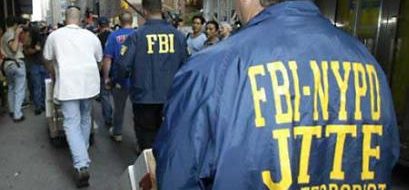
NYPD’s Intelligence Division: answering the terrorism challenge post 9/11

The Deep Undercover Program

The Intelligence Division Undercover [UC] Program is arguably the most unique in the world. It consisted of young officers – typically 22-26 years old – almost all born abroad or first generation Americans, all U.S. citizens, and all with native fluency in languages ranging from Bengali to Urdu. Over time, the cadre consisted of men and women with roots in over a dozen countries, mostly South Asia, the Middle East, and North Africa. Instead of using experienced detectives who couldn’t blend in with investigative subjects, these rookies entered the Department via the Intelligence Division rather than the Police Academy. Hand chosen, they were smart, highly motivated, and fully understanding of the complexity of what they were about to do as professionals.

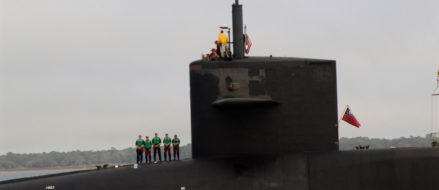
The U.S. Navy Tests Fires Its Ultimate Weapon: Underwater Nuclear Missiles

The Navy is also working with the Air Force on refurbishing the Mk-5 re-entry body which will be ready by 2019, senior Navy officials said.

Benedict said the Mk-5 re-entry body has more yield than a Mk-4 re-entry body, adding that more detail on the differences was not publically available.

The missile also has a larger structure called a release assembly which houses and releases the re-entry bodies, Navy officials said. There is an ongoing effort to engineer a new release assembly that will work with either the Mk-4 or Mk-5 re-entry body.

U.S. Special Operations forces begin new role alongside Turkish troops in Syria

In April, the White House authorized up to 300 Special Operations troops in Syria. According to a U.S. defense official speaking on the condition of anonymity to discuss ongoing operations, the new detachment of U.S. forces with the Turks was requested by Defense Secretary Ashton B. Carter and was approved by President Obama. It is unclear whether the new detachment of troops alongside the Turks will increase the overall number of Special Operations forces in Syria.

In the past, the Pentagon has insisted that the troops are not on the “front line” and have instead remained in an advisory role, helping local forces call in airstrikes and assisting them plan operations. In August, Syrian Democratic Forces backed by heavy U.S. and coalition airstrikes, took the key town of Manbij. Although no U.S. troops have been killed in Syria, several have been wounded.

Polygraph panic: CIA director fretted his vote for communist

So if back in 1980, John Brennan was allowed to say, ‘I voted for the Communist Party with Gus Hall’ … and still got through, rest assured that your rights and your expressions and your freedom of speech as Americans is something that’s not going to be disqualifying of you as you pursue a career in government.

US spies ‘are playing catch-up big time’ against Russia

And during the time it takes to train and shift the US’s intelligence capabilities against Russia, the US remains greatly outnumbered by Russian operatives.

“The counterintelligence operation that [Moscow] runs against the US Embassy measured in the thousands,” Michael McFaul, a Stanford University professor and former US ambassador to Russia, told the Post. “It always felt, especially sitting in Moscow, of course, that we were in a counterintelligence and collection battle that was an asymmetric fight.”

CIA Director John Brennan recently addressed Russia’s “exceptionally capable and sophisticated” infiltration abilities.

“I think that we have to be very, very wary of what the Russians might be trying to do in terms of collecting information in a cyber realm, as well as what they might want to do with it,” Brennan explained on CBS.

Ex-Navy Commander: Russia, Iran using aggression to influence election

According to Dolan, “intercepts near Russian territory” are “expected” and “in a word – commonplace.” He adds “aggressive behavior by the Iranian Revolutionary Guard Corps Navy in the Strait of Hormuz” also “is nothing new.”

Some critics, however, blame the encounters on President Obama’s foreign policy weakness, both toward Iran, with the hammering out of the Iran nuclear deal, and toward Russia, with the administration’s measured response to the 2014 illegal annexation of Crimea.

Dolan thinks, however, there’s “strategic communications” in the incidents.

U.S. intelligence challenges for our next Commander-in-Chief

Why is this important? The intelligence community deals with such a large amount of data, you can’t always assume people who have the “need to know,” and who should have access to the data, have seen all of the available information on any topic. The challenge of the intelligence professional is to rapidly sort through all of the data in order to develop usable intelligence analysis, enabling decision makers and warfighters to make informed decisions. Depending on the scenario, these decisions sometimes have to be made within minutes. Sometimes seconds.

Think of someone shoving you into a room filled with thousands of puzzle pieces, and then telling you to put it together in a few hours.

Where will Russia invade next?

Russia’s new, asymmetric approach is perhaps best exemplified by its state-run nuclear contractor Rosatom’s strategy of creating security vulnerabilities in Europe. A recent report from a think tank in Finland – where Rosatom partly owns a nuclear power plant being built in Pyhajoki – suggested that the Kremlin is striking deals such as these to create dependencies in other countries. Separately, Lithuania has said it may file a lawsuit over the poor-quality construction of the Astravets nuclear power plant, which is being built by Rosatom in neighboring Belarus with no supervision and at a very low cost. Lithuanian officials are worried that Rosatom is using substandard Russian security systems that are likely much weaker than their Western equivalents – a state of affairs that analysts believe could pave the way for a nuclear disaster. Recent reports that at least ten workers died in mysterious circumstances while working at Astravets, and that a 330-ton reactor shell was dropped thus triggering an emergency situation, have hardly reassured Vilnius. Outside of Europe, Rosatom is also playing a very delicate role in Iran’s nuclear program, working on the construction of the Bushehr nuclear power plant while the Obama administration tries to preserve its controversial Iran nuclear deal.