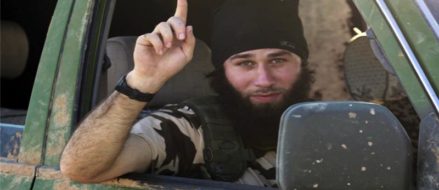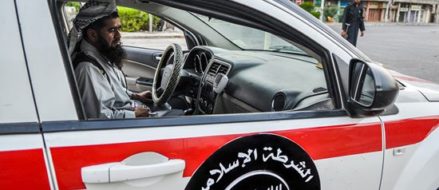
Daesh ‘ISIS’ trades in human organs in Nineveh after losing funding sources

Sharing details the source said, “Special medical unit of the organization proceeded to steal human organs for about 23 Daesh militants of those who slept in the hospitals of Nineveh,” noting that “what has been stolen from those members included the kidneys, intestines and more; they were transferred under tight control to affiliated hospital on the outskirts of the city. ”

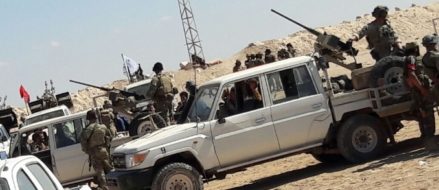
US Special Forces to back Turkish troops in Syria

The special forces deployment comes as Washington accused Damascus of blocking aid to besieged cities and warned it will not boost military cooperation with Russia unless Moscow is able to convince President Bashar al-Assad both to halt attacks on rebel groups and allow humanitarian access.

U.S. military commanders are ‘pissed off’ about the mission creep in Syria

The U.S. has teams of special operations troops on the ground in Syria to support some Sunni Arab militias in fights against ISIS. Other Sunni Arab groups receive money and weapons from the U.S. In some situations, they fight alongside al Nusra militants against common enemies like ISIS.

That ambiguity will frustrate the Russians.

“The Russia would like to make it black and white, and say ‘U.S., you tell your guys to separate form Nusra.’ But I can’t see the U.S. being that black and white about it,” Lopour said.

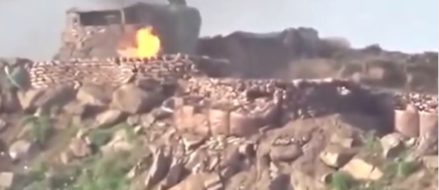
Watch: Mountain warfare – ‘Kurdish’ PKK assaults a Turkish army outpost

The PKK is not affiliated with the Kurdistan Regional Government or the Peshmerga. The Kurdistan Workers’ Party or PKK (Kurdish: Partiya Karkerên Kurdistanê‎) is a far left-wing guerilla organization that operates in the mountainous border regions of Iran, Iraq, Syria, and Turkey.

The combat between the PKK and Turkish army within this video demonstrates one of many longstanding conflicts in volatile proximity of the fight against, Daesh, or the Islamic State, as well as the Syrian Civil War.

Islamic State shoots down Syrian military jet, kills pilot

ISIL fighters shot down a Syrian military plane in the eastern Syrian city of Deir Az Zor, the group’s Amaq news agency reported on Sunday. “A Syrian warplane belonging to the Syrian regime was brought down when targeted by fighters from the Islamic State in the city of Deir al-Zor,” Amaq said in an online […]

U.S. Special Operations forces begin new role alongside Turkish troops in Syria

In April, the White House authorized up to 300 Special Operations troops in Syria. According to a U.S. defense official speaking on the condition of anonymity to discuss ongoing operations, the new detachment of U.S. forces with the Turks was requested by Defense Secretary Ashton B. Carter and was approved by President Obama. It is unclear whether the new detachment of troops alongside the Turks will increase the overall number of Special Operations forces in Syria.

In the past, the Pentagon has insisted that the troops are not on the “front line” and have instead remained in an advisory role, helping local forces call in airstrikes and assisting them plan operations. In August, Syrian Democratic Forces backed by heavy U.S. and coalition airstrikes, took the key town of Manbij. Although no U.S. troops have been killed in Syria, several have been wounded.

U.S. intelligence challenges for our next Commander-in-Chief

Why is this important? The intelligence community deals with such a large amount of data, you can’t always assume people who have the “need to know,” and who should have access to the data, have seen all of the available information on any topic. The challenge of the intelligence professional is to rapidly sort through all of the data in order to develop usable intelligence analysis, enabling decision makers and warfighters to make informed decisions. Depending on the scenario, these decisions sometimes have to be made within minutes. Sometimes seconds.

Think of someone shoving you into a room filled with thousands of puzzle pieces, and then telling you to put it together in a few hours.

What comes after we retake Mosul?: The case for using ‘Tactical Economics’

The U.S. military is in principle all about metrics and assessments. Here at West Point, we have binders full of metrics on every cadet, from their physical training prowess to their math scores. Yet strangely in Iraq and Afghanistan we lack basic feedback mechanisms to determine whether our spending has the desired effect on the ground.

As an evidence-based approach to stability and reconstruction operations, tactical economics seeks to measure the impact of economic programs, in a manner similar to the “impact evaluations” that the international development community began employing over the past decade. If a program is not producing results, rapid assessment of the data can allow the resources to be conserved so military units can try a different approach.

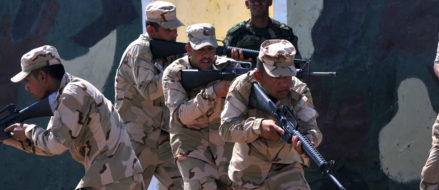
US Ranger training helps build more elite Iraqi force

The Ranger training program, led by Company A, 1-502nd, is one of the multiple building partner capacity missions the around 1,800 member strong task force leads in Iraq.

“This program is important because it lays the foundation for an elite Iraqi unit,” said Capt. Peter Jacob, commander of Company A. “Students start at day one as an individual and come away at the end of this course as part of a team.”

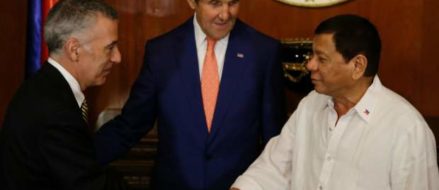
US Special Forces kicked out of areas of the Philippines

The president of the Philippines just asked for US forces to leave his Southern region. Duterte cites security concerns for both his people and US forces. Duterte also claimed that peace in the Southern portion is unlikely as long as there is a military presence. Relations in East Asia are becoming more complicated all the […]

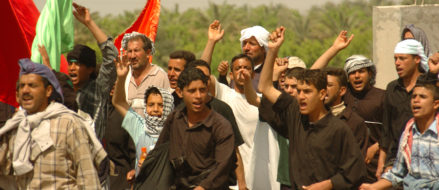
Progress in Daesh ‘ISIS’ fight tainted by Iranian-backed militias’ atrocities

What began as a desperate, stopgap campaign by Iraqi leaders to stem Islamic State forces from overrunning Baghdad and other major cities in the country is now fueling a new era of sectarian violence, as a formidable array of Shiite militias casts a dark shadow over the Iraqi military’s recent battlefield successes.
American commanders have become increasingly wary that the more integral the militias become to the battle plan, the weaker Baghdad’s ability will be to rein in the paramilitary force — which now numbers over 120,000 fighters.