Pages of War: ‘Safety’ by Rupert Brooke

When I was on my third deployment, my father sent me a poem. He has done aid work in some pretty dangerous areas of the world, so while our circumstances were quite different, both of us had brushed up against the line of life and death a few times and related to each other’s experiences […]
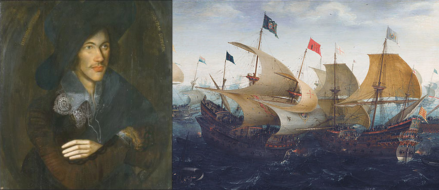
Pages of War: John Donne and ‘For whom the bell tolls’

No man is an Iland, intire of it selfe; every man is a peece of the Continent, a part of the maine; if a Clod bee washed away by the Sea, Europe is the lesse, as well as if a Promontorie were, as well as if a Mannor of thy friends or of thine owne […]

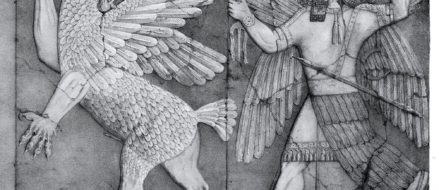
Pages of War: ‘Gilgamesh’ and the grief tied to brotherhood

“The Epic of Gilgamesh” is widely considered the oldest piece of literature in existence today, though the original author (or authors) are unknown. From ancient Mesopotamia, the story follows Gilgamesh, a demigod who is both a great warrior and all around good-looking guy. After some questionable escapades at the beginning, the gods create for him […]

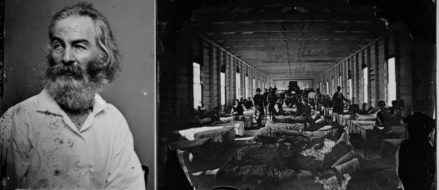
Pages of War: Walt Whitman and the Civil War

When most people thing of Walt Whitman, they think of “O Captain! my Captain!” Perhaps this is from a high school English class like mine, perhaps it’s from the “Dead Poets Society” movie with Robin Williams. However, he wrote hundreds of other poems and was quite popular in his day — though just as controversial, […]

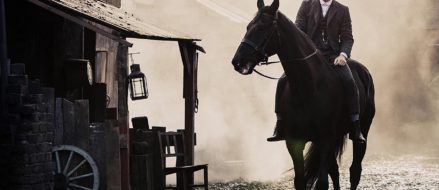
Frames of War: ‘Peaky Blinders’ and a crushed post-WWI society

BBC (available on Netflix) has released the fourth season of “Peaky Blinders” recently, a show centered around British gangsters of the same name in 1919. We follow Tommy Shelby, played by Cillian Murphy, as he takes his small, hometown, family-run gang beyond the small pickings of local crime and into some high-risk high-reward criminal ventures. […]

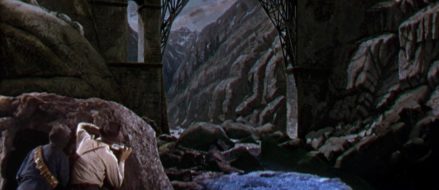
Pages of War: ‘For Whom the Bell Tolls’ — A revolution in a small town

There are many common themes in literature that have become so overused, watered down and taken lightly that they eventually transform into a trope or a stereotype. If you are to read classic literature, you can often find the origins of these tropes in a classic story, and somehow those classics rarely feel so overused […]

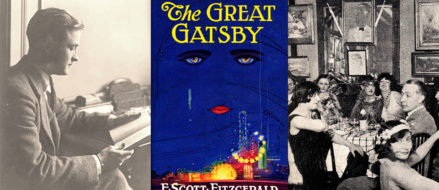
Pages of War: ‘The Great Gatsby’

So I’ve done a couple of these that could be considered a bit of a stretch — the last one being Stephen Crane’s “The Open Boat.” I included it because I really enjoy fiction that parallel’s an author’s personal experiences, be it in combat against man or combat against nature. There are just details and moments […]

Pages of War: ‘The Lion, the Witch and the Wardrobe’ by C. S. Lewis

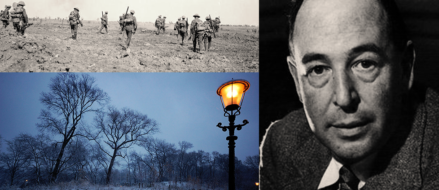
What does a children’s book have to do with war? Most people who have read the installments of “The Chronicles of Narnia” read them as a child or read them to their children. Like “The Hobbit” or a boatload of modern Disney movies, they are highly entertaining to most adults too, but are generally geared […]

Pages of War: ‘The Open Boat’ and Stephen Crane’s real life shipwreck

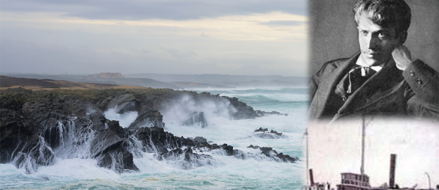
If you’ve read the previous installments of this series, you’re probably thinking that “The Open Boat” by Stephen Crane has no place here. It might be a stretch, seeing as there’s no outright war in this short novella, I’ll give you that. However, there are two reasons why I’m including it: Crane’s intimate connection to […]

Pages of War: The origins of ‘We happy few, we band of brothers’

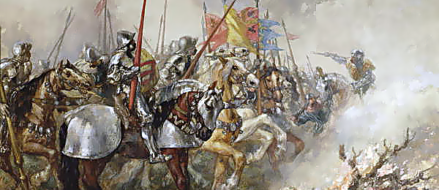
My previous installations of the “Pages of War” discuss how war affects literature of the time. You’ve probably heard it before: “We few, we happy few, we band of brothers.” And the following lines are quite popular among the western warrior community: “For he to-day that sheds his blood with me / Shall be my brother…” […]

Pages of War: T. S. Eliot and ‘The Waste Land’

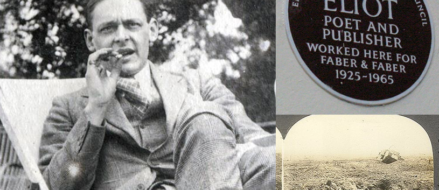
Read part one of this series here.  Part two. T. S. Eliot has often been criticized for his poetry’s inaccessibility to the average person, and “The Waste Land” is no exception.  It’s easy to read and think, “this guy is really just showing off how smart he is”–his Latin inserts, obscure Shakespeare and ancient Greek […]

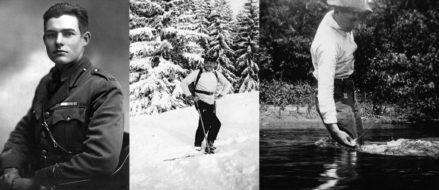
Pages of War: ‘In Our Time’ by Ernest Hemingway

One of my favorite aspects of Ridley Scott’s Black Hawk Down was the departure from unrealistically long machine gun bursts and grenades erupting into ridiculous fireballs, and a distinct lack of overly-dramatic crying and shaking of fists to the sky.  It has a visceral, primal tone to it as the quiet protagonists are firing single […]