
Earlier this year, SOFREP reported that, before Linnington was sworn in, there were internal reports written by staff members in the old bureaucracies that detailed the shift away from Southeast Asia task elements in DPAA to support WWII by fiscal year 2019. Linnington’s public advocacy of SEA has been roundly applauded by the League of POW/MIA Families and most veterans groups, including the SOA.
A mandate by Congress in 2009 has led to key officials emphasizing WWII cases in recent years in an effort to boost the count of missing service members returned to America annually. Congress mandated the Pentagon to develop the capacity and capability to identify up to 200 missing-in-action service members per year by 2015—a number that officials have admitted cannot be met this year.
Since that Congressional mandate was written, there has been a lot of pressure to increase the number of missing personnel identified and recovered annually. There has been a tendency to work on cases from WWII and Korea, where individual sites held more remains, increasing the number of service members identified on foreign soil as well as recovering more service members’ remains, while deemphasizing SEA. That has ended with Linnington’s early announcement of making SEA a priority, while finding other means to work on WWII and Korean War cases.
Linnington told people at the monthly briefings that DPAA officials are exploring strategic partnerships with non-government agencies and groups that will help DPAA greatly increase its capacity and capabilities, helping to carry out its mission worldwide through joint efforts with partner nations, non-profits, and even private organizations. He pointed out the success earlier this year of Florida-based nonprofit History Flight Inc. that worked with DPAA to recover 36 WWII Marines who were killed in the Battle of Tarawa in November 1943, including Medal of Honor recipient Lt. Alexander Bonnyman Jr.
Linnington said he wanted to expand collaborative efforts with private researchers to large non-government organizations, including universities and foreign government agencies via voluntary, non-contractual and contractual agreements. Such efforts will allow DPAA to expand its capacity to search for European WWII losses while preserving the capacity to continue to pursue the challenging recoveries in SEA. He pointed out that DPAA has contractors working with agency officials in the Hurtgen Forest in Germany, the Solomon Islands, and in Palau.
Mills-Griffiths reiterated the importance of Linnington announcing General Fogleson’s visits to Moscow, where Fogleson met with the Russian co-chairman, General Colonel Valery Aleksandrovich Vostrotin. She said the two co-chairmen outlined their hope for renewing and restoring the work of the USRJC, and noted the importance of the new Russian office of the USRJC located in the embassy of the Russian Federation, which was opened in July. That office will be headed by Maxim N. Alekseev, whom Mills-Griffiths describes as “an impressive Russian official with a diverse background and record of experience” in the POW/MIA arena.
She added, “If Russian leaders decide to cooperate seriously, Moscow can contribute much. Key archival records could be provided. Potential firsthand witnesses include former Soviet personnel who served in northern Laos and Vietnam during the Vietnam War.”
What she didn’t say was that in recent years, there have been short productions on the Internet where Russians who fought in what they called “The secret war in Vietnam” have surfaced publicly. It is the first public acknowledgement of their service during the war, and it pays homage to comrades killed in action. They said approximately 3,000 Russians served in their version of the secret war, mostly working and training communist North Vietnamese troops in flying MIG fighters and manning anti-aircraft weapons and rocket systems that shot down American aircraft over North Vietnam and in Laos along the Ho Chi Minh Trail.
Last, but certainly not least, Linnington said the three-year hiring freeze has finally ended. In the months ahead, the DPAA will be hiring more anthropologists, archeologists, researchers, team leaders, and lab personnel.
There are more than 600 military personnel and civilians assigned to DPAA. These resources are always subject to change based on funding and the priorities of the DPAA director.
- Field activities: with 239 civilian and military personnel who deploy on investigations/recovery missions, explosive ordnance disposal technicians, medics, field communications, and forward-based personnel.
- Support and administration: 162 personnel, logisticians, policy officials, operations planners, finance specialists, and external communications staff.
- Research and analysis: 113 personnel including historians, analysts, researchers, and archivists.
- Forensics: 88 people including anthropologists, archaeologists, odontologists, lab and evidence technicians, and a medical examiner.
Last month, the Honolulu Star Advertiser newspaper quoted DPAA Deputy Director, Army Brig. Gen. Mark Spindler, predicting that during this fiscal year, which ends September 30, DPAA will make 200 or more identifications. For fiscal year 2015, there were 80 identifications made of service-member remains.
Spindler was quoted saying, “Right now we’re focusing (on Southeast Asia) in the near term, even though the cost is high.” Spindler, who was appointed in September, said the DPAA under Linnington will develop a “campaign plan” as part of a long-term plan where “we know that we are going to shift probably in our main focus, out of Southeast Asia and into the Pacific and World War II into Europe.”
Lisa Phillips, president of World War II Families for the Return of the Missing, told the Star Advertiser that more money should be spent on WWII recoveries. She also contended that money should be spent “wisely” on known remains locations, such as WWII and Korean War remains. However, the Star Advertiser reported, “Even though the bulk of the DPAA’s field operations budget was devoted to Southeast Asia in 2015, identifications from Korea and World War II eclipsed the Vietnam War tally.”
DPAA overall budget for 2015 was $130 million, of which $45 million were committed to field operations, with $32.7 million going to Vietnam War recovery efforts.
Welcome to the competing pressures that Linnington and the men and women of DPAA address daily.
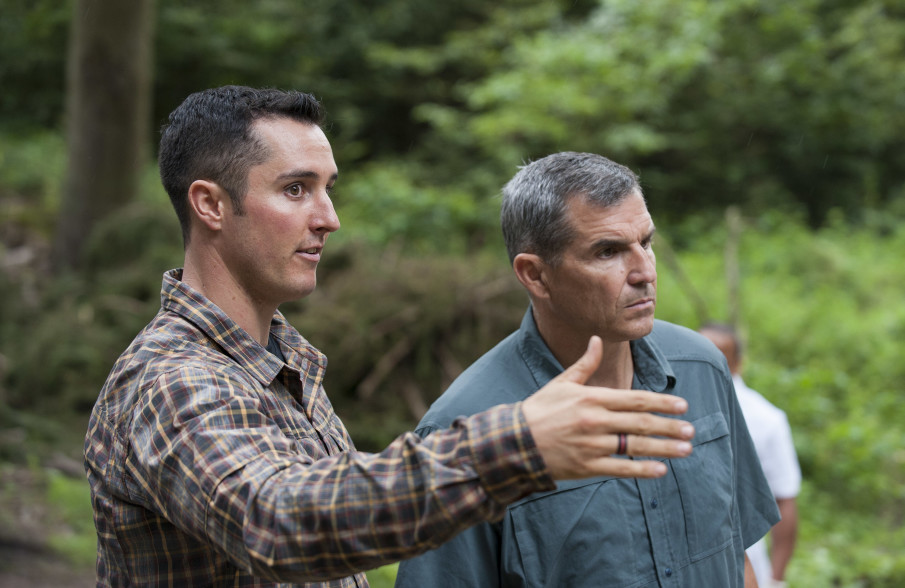
(Featured image: U.S. Army Capt. Gary Taylor, left, and retired LTG Michael S. Linnington.)








COMMENTS