
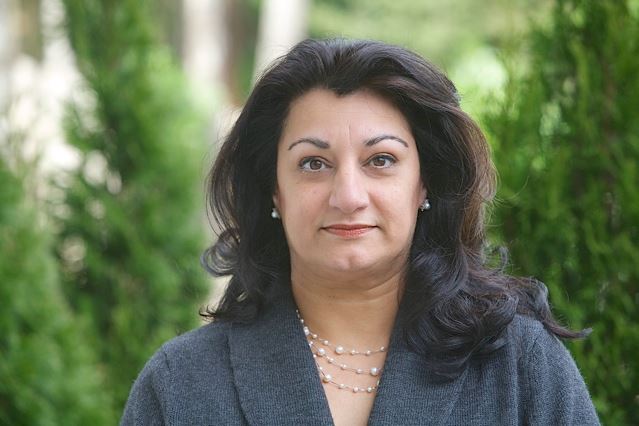
“You tell a person that they’re a victim, and that being a victim is not their birthright. Then you tell them about how the ‘other’ victimizes you, and finally, you tell them that they have a right to do something about it.” Dr. Maan said.
She went on to explain that the current Defense Department mindset places a large emphasis on using what’s known as “counter-narratives.” When Russia claims Syrians shot down 71 inbound missiles in this month’s offensive, the Defense Department issues a statement refuting it with facts — but the endeavor can be self defeating. The counter-narrative strategy lends credibility to the false narratives presented by opponents simply by addressing them, effectively expanding the reach of the initial (opponent’s) point just to provide America’s counterpoint.
Dr. Maan posits that America needs to go on the offensive, offering its own narratives and addressing the goals behind enemy campaigns, rather than taking on their statements in a form of dialogue. Refuting a statement does nothing but create a debate, but shining a light on motive can delegitmize an entire disinformation campaign.
It’s important to remember that when it comes to managing narratives, the truth only matters if it wins out. Most people around the world aren’t at the site of a terror attack in Paris or an alleged intercept between U.S. and Russian fighters. Instead, they’re left to decide between narratives presented to them. When faced with such a decision, most people will choose the one that flatters their identity through any one of a number of processes like confirmation bias.
“Many of my colleagues think that the way to inoculate domestic audiences to propaganda is to teach critical thinking,” Dr. Maan said. “I think critical thinking is important, but the logistics of mass education are daunting and teaching critical thinking takes time.”
While educating the masses in critical thinking is a worthwhile and necessary endeavor, Dr. Maan believes you can curtail the effect bad actor narratives have on the American public by addressing the way narrative works in our own efforts. When an enemy narrative engages a person’s identity in a flattering way, America’s response needs to tell them why they are trying to manipulate their perceptions.
And then, as Dr. Maan puts it, we need to remind the recipient that “they’re better than” letting such an effort manipulate them for someone else’s gain.
While critical thinking education could be the long term solution to America’s growing problem with competing (and often intentionally fabricated foreign) narratives, Dr. Maan offers a simple question that can do the trick in the meantime:
“It’s not just about asking ‘is this true or false?’ Ask yourself who benefits from you understanding things in this way.” She said. “Narrative is never neutral. It’s always strategic, and always benefits someone.”
Dr. Maan and her Narrative Strategies team provide tailor-made training for American and allied military efforts, though even she reluctantly admits there’s a greater interest in the field from the international community.
The United States remains reluctant to directly address the power manipulated perception can have on the nation — that is, as a whole. Individual elements, like SOCOM, have already sought Dr. Maan’s expertise as a means to better address narratives as a threat, and Dr. Maan hopes that’s the beginning of a new trend. After all, the majority of her colleagues are special operations veterans and former intelligence professionals – few could be better equipped to help deliver a better understanding of these issues to America’s defense apparatus.
“I can talk about soft power and non-kinetic approaches all day from an academic standpoint, but these veterans, who have used the kinetic approach in the military and understand that managing the narrative can be a more effective long term solution, provide the endeavor with even more credibility.”
Dr. Maan’s new book, “Narrative Warfare,” is on sale now, and can be found here.
Image courtesy of Narrative Strategies







COMMENTS