Life

Do Good Guys Cheat to Win? When Working from Behind the 8-Ball Changes How You Think

When the other side operates without limits, adapting and getting creative isn’t abandoning your principles, it’s the only way to get within striking distance of a fair fight.

A retired cop pulled me aside after an interview a while back. Thirty years on the job. Good guy. Respected career. He shook my hand, leaned in, and said something I didn’t expect.

Advertisement

“I always thought undercover work was kind of like cheating.”

I didn’t know what to say at first. I just nodded and thanked him for watching.

But that comment stuck with me. Rolled around in my head for weeks. And the more I thought about it, the more I realized… he wasn’t entirely wrong. Undercover work is a different game. But if it’s cheating, I’d like to talk about what we’re cheating against.

Advertisement

Let’s start with the basics.

Law enforcement and warfighters operate under rules. Lots of them. Use of force continuums, rules of engagement, case law, policy, oversight, review boards, body cameras…The Geneva Convention. Hell, even CIA officers and undercover agents work with restrictive rules.

Advertisement

These aren’t bad things. They exist to protect citizens, maintain accountability, and keep the people who carry badges and rifles from becoming the very thing they’re fighting against.

But the trade-off is that the other side doesn’t have any of that.

Terrorists don’t file use-of-force reports. Gang members don’t read Miranda warnings. Cartels don’t worry about excessive-force complaints or what a jury might think of their tactics three years from now.

Advertisement

They pick the time. They pick the place. They set the ambush. And when it goes bad, they get to vanish.

Good guys show up after the 911 call.

A retired cop pulled me aside after an interview a while back. Thirty years on the job. Good guy. Respected career. He shook my hand, leaned in, and said something I didn’t expect.

“I always thought undercover work was kind of like cheating.”

I didn’t know what to say at first. I just nodded and thanked him for watching.

But that comment stuck with me. Rolled around in my head for weeks. And the more I thought about it, the more I realized… he wasn’t entirely wrong. Undercover work is a different game. But if it’s cheating, I’d like to talk about what we’re cheating against.

Let’s start with the basics.

Law enforcement and warfighters operate under rules. Lots of them. Use of force continuums, rules of engagement, case law, policy, oversight, review boards, body cameras…The Geneva Convention. Hell, even CIA officers and undercover agents work with restrictive rules.

These aren’t bad things. They exist to protect citizens, maintain accountability, and keep the people who carry badges and rifles from becoming the very thing they’re fighting against.

But the trade-off is that the other side doesn’t have any of that.

Terrorists don’t file use-of-force reports. Gang members don’t read Miranda warnings. Cartels don’t worry about excessive-force complaints or what a jury might think of their tactics three years from now.

They pick the time. They pick the place. They set the ambush. And when it goes bad, they get to vanish.

Good guys show up after the 911 call.

That’s the 8-ball.

Early in my police career, while working in a high-crime area, I received a call about a man fleeing through an alley with a wheelbarrow full of tools he’d just stolen from someone’s garage.

I was first to get to the scene and quickly located the dude. I announced myself and gave chase through overgrown alleyways and hopped a couple of fences before catching up. But instead of surrendering, he charged me with fists swinging. His decision, not mine. It was on.

I was training intensively in street combatives at the time and immediately got the advantage…Until the knife came out.

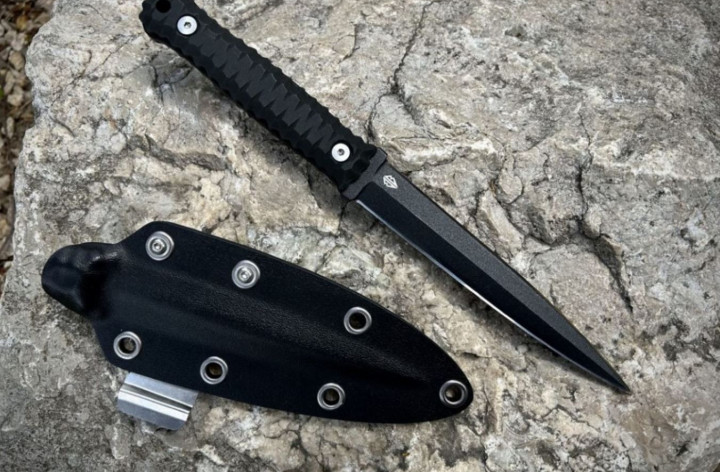
When he realized he was about to lose this “fair fight” and be arrested, he escalated by pulling an 8” blade out of nowhere. I still managed to subdue him without getting cut and without either of us dying over some half-assed tools. But as slick as he was brandishing that thing, that consequence could have been realized.

What most people don’t think about is that mf’er escalated on his terms. He went from punches to deadly force instantly, forcing me to respond from my list of rules I was sworn to. That’s the use-of-force continuum; only allowing the good guys to escalate one degree of force beyond what the perp presents… Hardly an advantageous way to win a street fight.

Operators know that thinking and consciously analyzing moves during combat will get you killed. This is why they train until most of those decisions become intuitive. Not to mention every move gets reviewed, documented, and second-guessed by people who weren’t there.

He had no rules. I had a flowchart.

Multiply that by a thousand, and you’ve got the Global War on Terror.

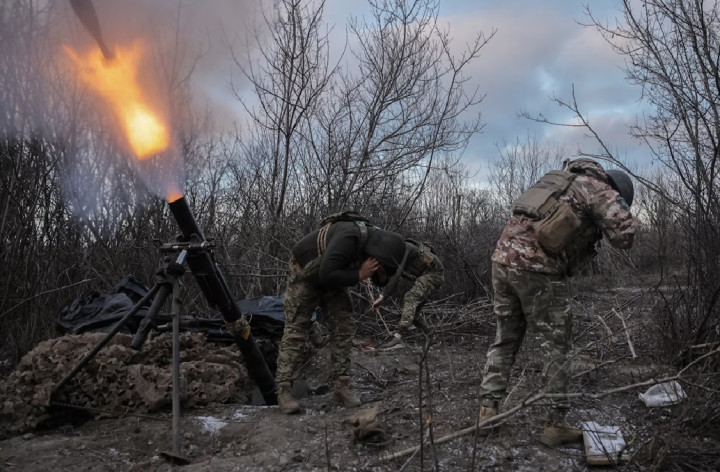
Our guys overseas operated under rules of engagement that often meant they couldn’t fire until fired upon. Meanwhile, the enemy dressed like civilians, hid in mosques, used kids as shields, and detonated themselves in crowded markets.

There’s no Geneva Convention remedy for a suicide vest.

So how do you combat that? How do you gain an advantage when the other side won’t even acknowledge that rules exist?

You get creative.

This is where intelligence operations, undercover work, and recon operations come in.

It’s the art behind the war.

When you can’t outgun them, you outthink them. You get inside their world. You learn how they move, how they communicate, and who they trust. You become the thing they never see coming.

That’s not fighting dirty. It’s fighting smart when the deck is already stacked against you.

This isn’t just about badges and rifles:

Those of you reading this who weren’t cops or soldiers have been behind the 8-ball, too.

A business competitor who undercut you with tactics you’d never stoop to; A legal battle against someone with deeper pockets who could bleed you dry with motions and delays; A custody fight where the other side lied freely while you stuck to the truth; An online mob that attacked from anonymous accounts while you stood there with your real name attached.

You played fair. They didn’t. And you lost ground because of it.

In principle, the righteous path is to stay above it and keep your hands clean. Win with integrity or lose with dignity. But it doesn’t feel so noble when you’re watching someone with no rules walk away with everything.

I’m not at all saying you should ever abandon your principles. I’m saying recognize that “fair” is a concept only one side is honoring… and that refusing to adapt isn’t noble, it’s a strategy for losing.

A Key Caveat:

Before you get creative, take an honest inventory of yourself first.

A few years back, twelve of my employees conspired with one of my protection clients and walked off with a multimillion-dollar contract. I trusted them, paid them handsomely, and yet they blindsided me… thought they could run the show without me. Within a year, they’d all been fired because it turns out stealing a business and running a business are two different skill sets. Not to mention the overt lack of integrity it took to pull off.

Karma handled that part. But karma doesn’t teach you anything.

What I told my team, and what I had to do myself, was honestly consider what we could’ve done better, even if we may have been only a fraction in the wrong and played by the rules. What did we miss? What did we ignore? What could we have seen coming? What could we have worked harder on?

Since that mess, I’ve restructured my entire operational process to ensure it never happens again. That’s how you or your organization maintains integrity through a situation like that. Not by hyper-focusing upon the negative and playing perfect. By owning your slice, however small, and using the lessons to build something they can’t take next time, you leverage creativity with integrity.

So yes, absolutely get creative. Adapt. Stop being predictable. But do it with clean hands and honest eyes. Otherwise, you’re not leveling the field. You’re just becoming the other guy.

So, here’s where I landed after that retired cop’s comment:

If playing by a strict set of rules while your enemy plays by none is the standard… then intelligence work, undercover operations, and tactical creativity aren’t cheating.

They’re the only way to get within striking distance of fair.

It doesn’t abandon principles to recognize that when you’re fighting people who acknowledge no limits, sometimes the most ethical thing you can do is stop being predictable.

The bad guys will always have the advantage of the first move. The creative arts are how we take the second one back. The question is whether you’ll look in the mirror, adapt, and move closer to fair…or just lose politely.

Tegan Broadwater spent 13 years with the Fort Worth Police Department, including two years assigned to the FBI working deep undercover inside a violent Crip organization. That operation, detailed in his book Life in the Fishbowl, resulted in 51 convictions. He has since founded Tactical Systems Network, an armed security & protection firm primarily staffed by veterans, is a creative writer and musician, and hosts The Tegan Broadwater Podcast. All book profits benefit children of incarcerated parents. Learn more at TeganBroadwater.com


Advertisement

What readers are saying

Generating a quick summary of the conversation...

This summary is AI-generated. AI can make mistakes and this summary is not a replacement for reading the comments.