
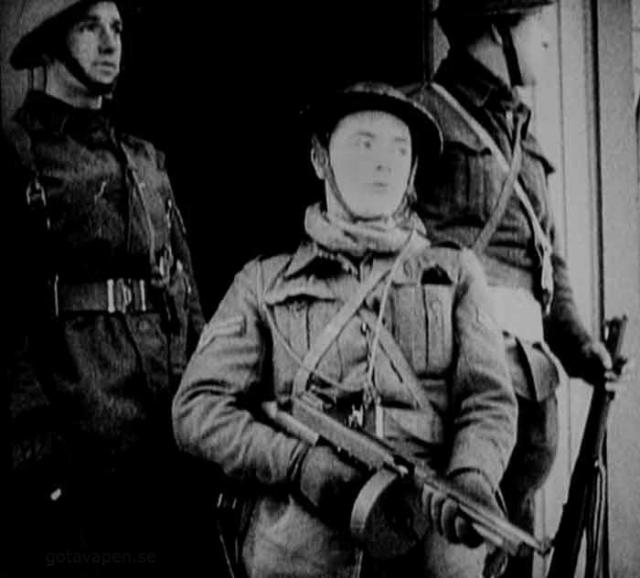
The Commandoes were evenly portioned out between the two transports and targetwise. No.3 was assigned Stamsund and Henningsvar, and No.4 Svolvar and Brettesnes. They were so equipped besides their primary outfitting of rifles, light machine guns, submachine guns and hand grenades, with enough rations to sustain them for two days in case unexpected trouble arose, such as encountering a larger force than the anticipated 200-man garrison.
For the next three days, the tiny armada plied heaving seas and howling winds. Most onboard the transport ships fell ill and resided in misery in their cramped confines suffering from seasickness. To make matters worse, On the final day before launching, a German reconnaissance plane peaked out of the clouds and spotted the vessels. Tensions rose and stomachs continued churning as they pressed on with many a worried mind envisioning a fierce a welcome for them the moment they set foot on dry land.
No one in authority, however, ever suggested they turned back. And just a little longer, in the waning hours before daylight on March 4, they began to see their destination as tiny lights from the harbor twinkled in the wintery haze of the frigid air. The ships began taking up station, and the Commandoes rousted from their bunks, trying to ward off their dizzy stomachs.
Metallic clicks of magazines being inserted and bolts locking in weapons resounded throughout the hold. Then, lines formed and a hurried shuffling of boots was heard leading them to their assigned debarkation points on deck. Covers were removed from the boats and cables from davits hooked, slowly lifting them over the side. Cargo nets unfurled down to them and numbers began calling out, signaling groups of men to step down the rungs in an orderly fashion and take station in their craft. Coxswains’ started engines, and the LCAs began to slink away into the paleness of dawn and towards the sliver of barren beaches beginning to outline on the horizon.
The misting breath of men joined the putrid diesel smoke emanating from the boats, and ice quickly formed in the creases of their clothing as the coast grew. In a few minutes they felt the hulls start to scrape the sand, and chunks of ice parted at the bow. With the Coxswain’s call the engines throttled back, and the men clenched their teeth, gripping weapons tighter as the landing craft broached the beach sooner than expected due to ice buildup. The quick stop urged them over the sides, weapons instinctively pointing for that first sign of an enemy uniform as they ran towards their objectives.
They sped past curious Norwegians, who said nothing as the heavily armed men swarmed around them and through several doorways in sight. Here they came upon their first Germans, wide-eyed in horror and a state of shock at what confronted them. They quickly laid down their weapons and raised their hands. Other Germans were found in houses either sleeping in their bunks or eating breakfast when the Commandoes burst through the door. Not a one reached for a weapon.
It was this way at all four harbors. No resistance and sudden surrender from the first minutes of their landing on through the securing of the facilities, and the house-to-house searches to the boarding of the cargo ships. Surprise was absolute.
Engineers immediately went to work setting up explosives inside buildings, against the huge fish oil tanks, docks and inside the holds of ships. During this time, the Commandoes began to communicate with the locals who, until they heard the language, thought this was simply a German exercise. They offered information on 60 collaborators who were rounded up and placed with their growing tally of German prisoners, which finally ended at an impressive 225. Realizing it was safe, more locals emerged from their houses bringing hot coffee, smiles and praises of gratitude, which served to make a sunny though unusual morning all that much brighter for the Commandoes, giving them time to think about what a huge success they might have lucked into.
Placing the explosives continued for hours up until midday, when the first charges were detonated and the order to evacuate was issued. But before leaving, some of the Commandoes did manage to have a little fun with the enemy. In a telegraph office in Stamsund, one sent a telegram directly to Adolf Hitler in Berlin, which read, “You said in your last speech German troops would meet the British wherever they landed. Where are your troops?” Even more bold was a bus ride by some to a seaplane base, where they disarmed the Germans, said a few words and left. Outraged, the German commander later sent a message to Hitler complaining about the “unwarlike” behavior of the British.
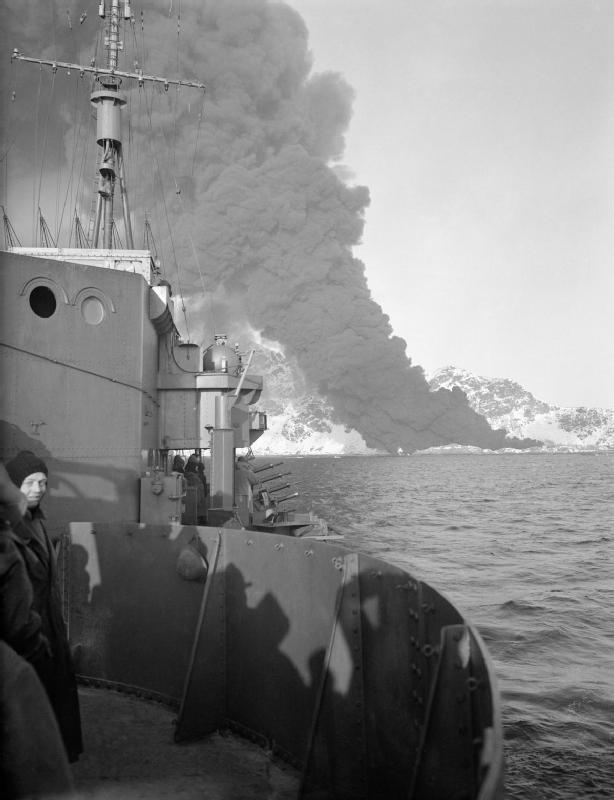
LCAs made countless trips ashore, picking up not only the Commandoes but their 225 prisoners, 60 collaborators and an impressive 314 volunteers, including 8 women for the Free Norwegian Forces. Once all were aboard, they could see the full results of the raid. On land, huge fireballs rolled into the sky topped by columns of black smoke. Against burning docks, cargo ships were aflame as well, their keels ripped open in great gashes, sinking and rendering them unsalvageable.
The destruction was massive. 800,000 gallons of fish oil was now ablaze, as well as 11 factories and five ships on their way to the bottom. A coup was also scored when a search of a trawler had found something most unexpected: a set of parts for the German Enigma coding machine, which would prove to be a great boost to Britain’s code breakers.
None of the Commandoes had suffered any casualties, except one, who accidentally shot himself in the thigh with a revolver. All in all, as the ships turned for home, it had been a remarkable day, with some of the British even disappointed there had been no resistance, instead wanting to prove themselves in battle.
In any case, they made their mark on behalf of their country letting Europe, and especially, Adolf Hitler know that the British people remained defiant and steeled in their in their resolve to behave like a coiled snake, striking whenever possible, to give hope to the enslaved millions living under a jackboot just a channel away.








COMMENTS