

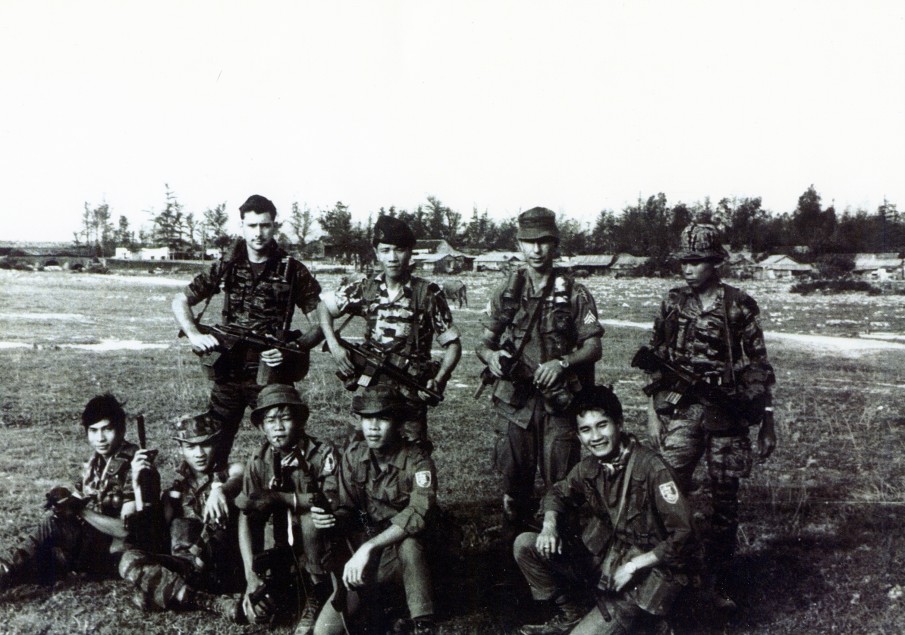


Another SF soldier said, “When I went through [the final phase of training] at Ft. Bragg, I learned about the SOG teams running missions across the fence without any conventional support while suffering a high casualty rate, but regardless of the odds, they pressed on. Their legends gave us a high standard of conduct, a goal to strive for as a soldier.”
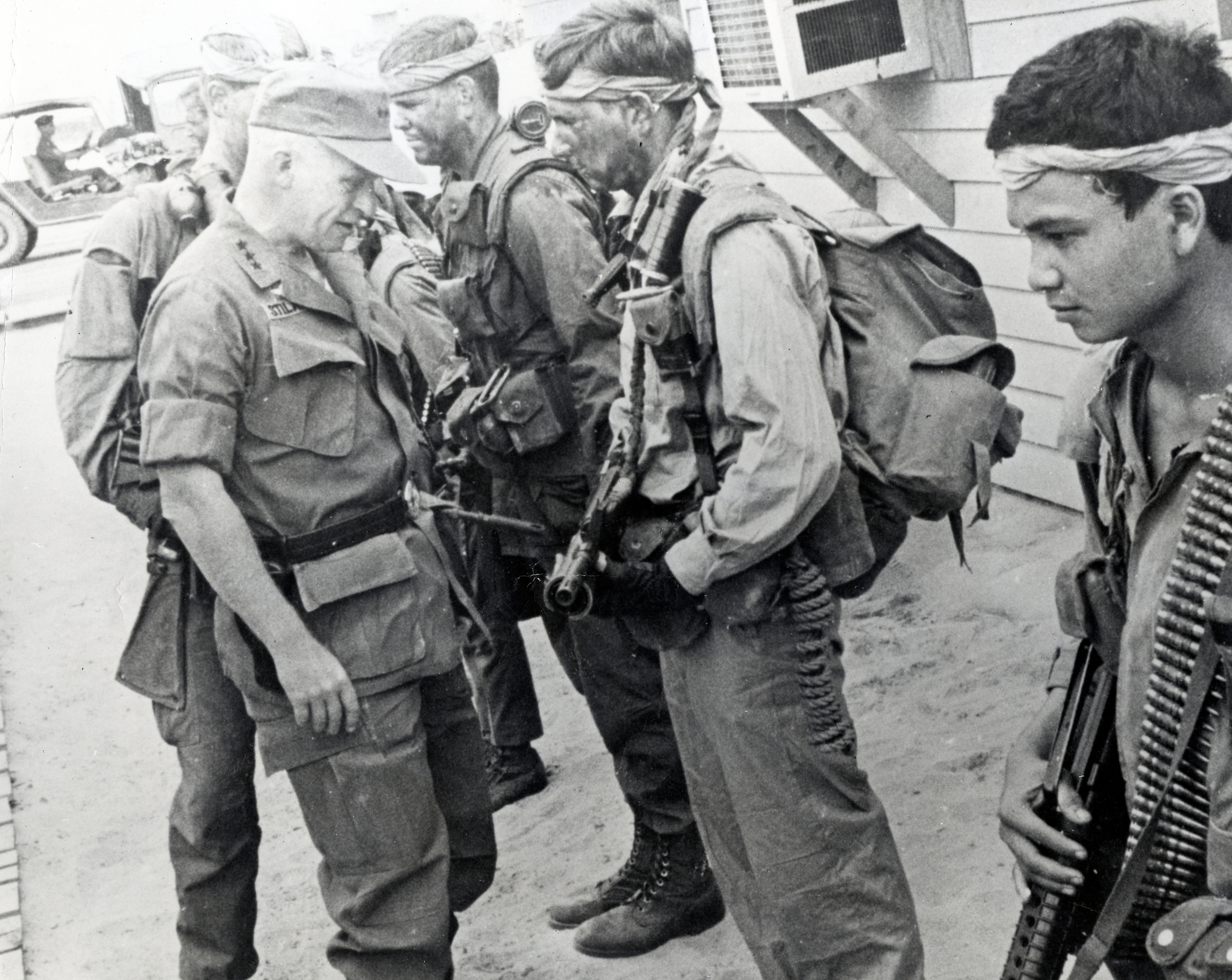
Forty-eight years ago, Ron Owens went through the unique Special Forces unconventional warfare training at Ft. Bragg, went to Vietnam where he served with SOG, and today is wrapping up many years of training SF men in the final phase of training called Robin Sage.
Owens didn’t know that a few A Teams today are wearing SOG patches. “That just blows me away,” he said. “The thought of teams today wearing what I would call a badge of courage is both remarkable and challenging. The remarkable part is that they have somehow pieced together, as we did, the lineage of SF and took it forward. Many of these men, 50/50 officers and NCOs, know about and understand the basics of ‘Jedburg concepts’ of the OSS (Office of Strategic Services) and MACV-SOG. I cannot say with certainty that a lot of the other teams have had us ole SOG DOGS with them.” It’s challenging to sustain the level of unique Special Forces training required of Green Berets today and tomorrow.

During those classes and field exercises, Owens said that he and other trainers have “tried to honestly represent those I served with, and not encroach on the truths of all the men in SOG and Mike Force and Delta, LRRPs, etc. I have tried to use common sense and logic and most of all, integrity,” all critical elements in Green Beret training.
Doug L. LeTourneau, who ran missions with SOG Recon Teams Idaho and Virginia in ’68-’69, said it was heartwarming to learn that some contemporary A Team members are wearing SOG recon patches.
“When I got out of the Army,” he said, “I went to work. I used my GI Bill to earn my pilot’s license, both fixed-wing and rotary, and then got on with life. I thought about SOG, the men, the deadly missions, but never reconnected with anyone for more than 30 years.
“I’ve read all of the books on SOG and appreciate our links to past successes with the OSS during WWII, spec ops in Korea and during the Cold War, but that was always at a distance. When I learned that today’s Green Berets were wearing our team patches, it made me proud not just because they had my team patches, but proud to get to know them. Today’s Green Berets, heck, they’re taller, faster, and smarter than our generation, and today’s soldiers fight under horrific, life-threatening rules of engagement. I’ll salute those young Green Berets until my dying day.”
One A Team wearing SOG Recon patches felt a critical link to SOG in a combat warrior posture: Six-man SOG teams often came up against extreme odds, sometimes battling hundreds of enemy soldiers. A 3rd Special Forces team member said that his A Team’s deployment “got very kinetic;” they ran into extremely large units of Taliban and al-Qaeda terrorists—again, a small team against overwhelming enemy forces.
“The patches quickly grew into something bigger,” he said. That team member contacted Tobin, who put him in touch with several SOG recon men who began sending the team care packages, SOG stories the team hadn’t heard before, and “Through those emails, we reached a handful of guys and the response was overwhelming. We bonded with them. We also gave patches to our attachments; this really helped them feel like part of the team, which cannot be understated, especially in the kind of dynamic [hostile] environment that we were in. This relationship, no question, helped. All the guys cherished it with complete sincerity.”
The A Team member noted that, despite long firefights usually against a force that highly outnumbered them, that team suffered no casualties. After they returned from the tour of duty, some team members called the SOG patches their “shields.” Some of them traveled to Iowa to see ailing SOG Recon Team Leader John McGovern. “That meant a lot to us,” he said.
Of course, it must be noted the SOG patches weren’t approved official Army apparel. And, of course, someone in the chain of command involving that team—someone who sits behind a desk writing reports and giving orders without going to the field to face the adversary or to experience the on-the-ground tempo of combat in Afghanistan—complained about the “unauthorized” patches.
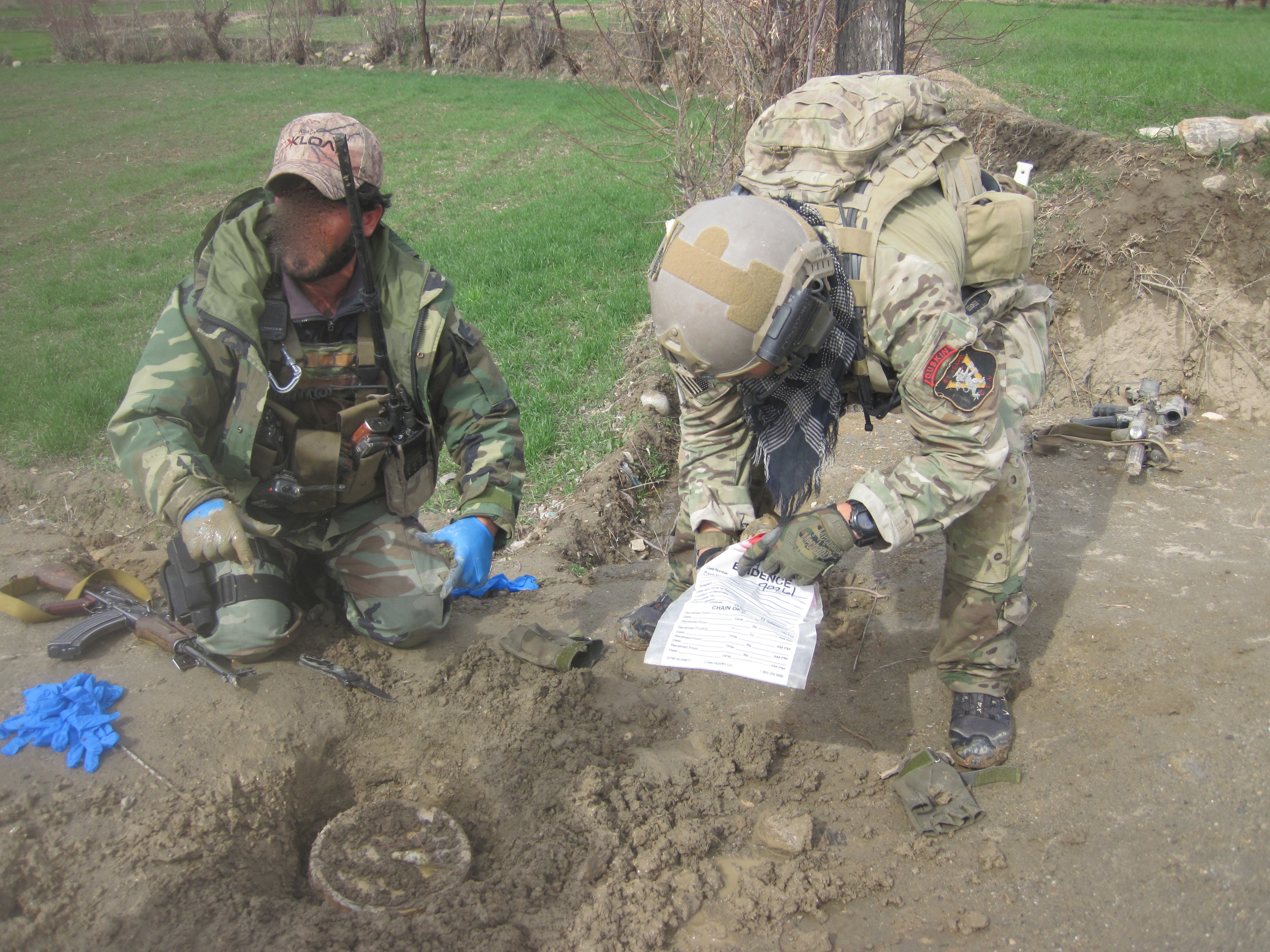
After experiencing the initial disappointment of some stay-behind REMF complaining about their SOG patches, the team went to a sergeant major and explained the situation, noting the bond that had formed between this team and SOG soldiers. The sergeant major gave them the nod to continue wearing them, which gave the team one more high for the day. Of course, they had to be removed when they returned stateside.
The camaraderie between a few modern-day A Teams and SOG soldiers is unique and reflective of generational respect that is learned and earned over time.
Owens shared with SOFREP a few closing remarks that he gives to classes explaining the unique nature of Special Forces:
“For most of you, those with the lights turned on, you realized the mistakes you made. For those of you who made them, you corrected them and moved on. For those of you who did not, you would find me center mass challenging you to make the right decision. I never had to come back for a third time.
“This is not for fame or glory. It’s not for that green beret. It’s the fact that you are becoming the silent and deadly “Quiet Professionals” that came before you. You see, a torch is being passed on to you and you must carry it forward with the honor and integrity it deserves. I will not wish you luck, for luck is for the ill prepared! I will say to you, ‘Travel well, young warriors. Travel well.’”
And, as this A Team packs for another deployment, Tobin echoed the sentiments of all previous generations of Green Berets to today’s elite soldiers:
“Vaya con Dios, compadres. We are here to support you, pray for you, and will be ready to welcome you home.”
(Featured image shows members of SOG Recon Team Virginia as they pause for a photo op outside the small village of Phu Long, north of FOB 1 in Phu Bai, during the fall of 1968. The Green Berets on this team were, in the back row from the left: Doug LeTourneau and Gunther Wald, third from left. Wald’s remains were returned to the U.S. in 2011, when he was buried with full honors at Arlington National Cemetery along with fellow Special Forces soldiers from RT Maryland, Don Shue and Bill Brown, who went missing in action in Laos Nov. 1, 1969.)








COMMENTS