Close-quarters battle (CQB) or close-quarters combat (CQC) is a type of fighting in which small units engage the opponent with personal weapons at a very short range. In the typical CQB/CQC scenario in an urban setting, the attackers try to implement a very fast, violent takeover of a vehicle or structure controlled by the defenders, who usually have no easy way to withdraw. CQB/CQC demands a rapid assault and a very in-depth training background. Ultimately, it’s not about who runs faster, but who’s able to think fastest and most clearly.
Welcome. Now that I have your attention, clear your mind of everything you’ve learned and keep an open mind. The only backpack I’m asking you to take with you on this journey is your own experience—something that no one can take away from you. So sit back, think, and learn. This is just the first of a series of articles on mastering close-quarters combat that I’m hoping to throw at SOFREP on a regular basis.
Recognizing room structure during close-quarters combat
Anatomy is a branch of science concerned with the structure of living organisms. When we look at the structure of a room, there is not really a whole lot to see. That is, until you begin to imagine it from the eyes of a soldier or police officer. Room structure dictates the way one may enter and clear the room. This article will look to break down the room into critical segments and describe their tactical significance, giving the reader a unique look into what rooms look like to someone working within a tactical environment.
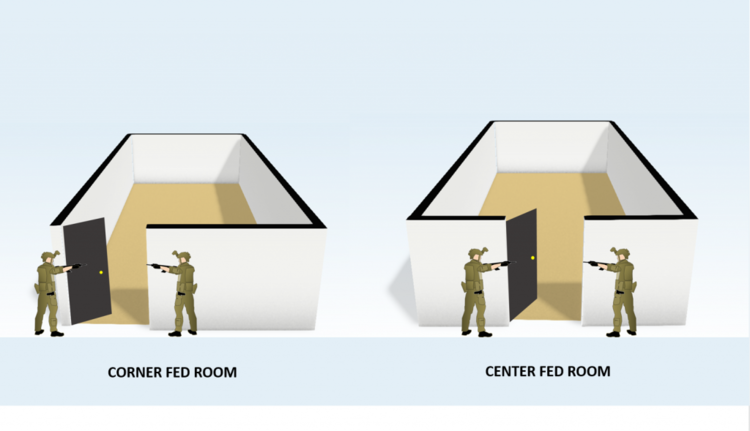
Let’s start off with some simple concepts. The first concept will examine the placement of a room’s opening. One opening is found in, or close to, the center of a room. The other opening is found in a corner of a room. One is a center-fed room and the other is a corner-fed room. An opening can be anything from an artificial hole created by an explosive or other means, a doorway, or a window. As long as you can fit in it and make it into an entry point, that opening will provide the first vision of what’s inside the room.

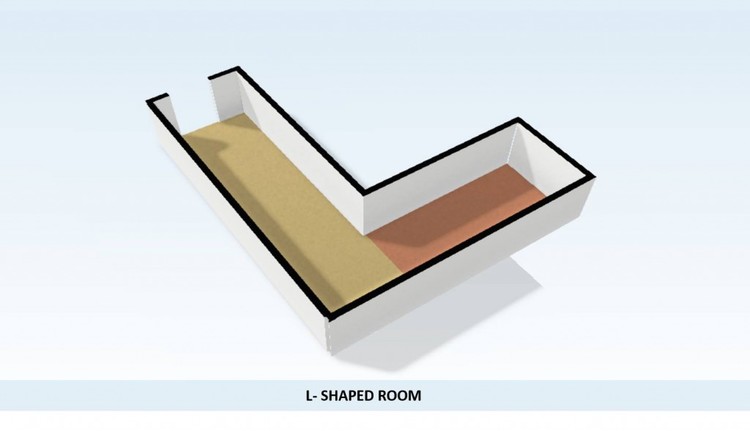
Now, you may be wondering, what difference does the location of the entrance make? As we slowly expand into more concepts, they will interconnect, and you will see that simple delineations lead to a clearer understanding of the tactical environment. In fact, they can be the difference between life and death, as I will demonstrate to you later in this series. So what next? Now that we have the door or opening placement worked out, let’s look at the types of rooms you may encounter. For simplicity’s sake we will examine three simple structures: the box-shaped room, the linear room, and the L-shaped room.

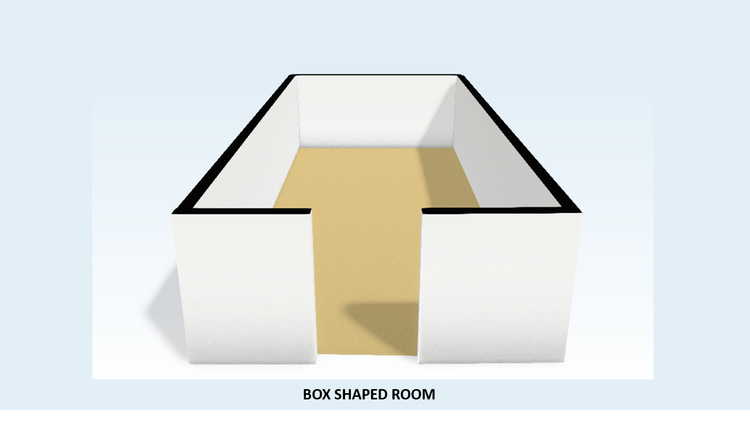
The box-shaped room can be simply called a box room. It is usually a square-shaped room with four corners. This is the most common type of room we encounter in tactical training environments. In real life, however, there are many irregular shapes and oddities that become apparent when clearing a building. Such spaces are deemed irregular rooms.
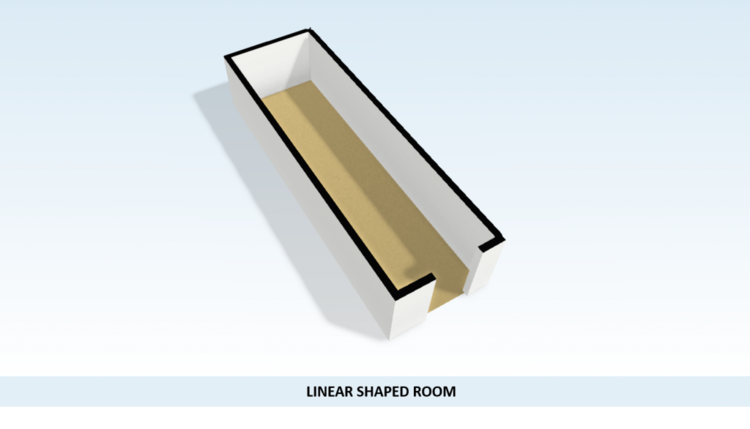
A linear room is an elongated span in a building. This is usually a hallway, tunnel, or other elongated area. It is a decisively fatal layout. You may think an area that is straight and long is easy to clear, but it is not. There are usually many follow-on rooms spanning off a linear room, since it often acts as central architecture to a building. This often creates oversight and neglect for many CQB teams, exposing operators to many angles as they progress through this area. If a firefight occurs here, it almost always devolves into a one-on-one gun battle decided by who “wins the angle” and engages first. They are often known as ‘linear danger areas’ for this reason.