
One of the dirty little secrets that the government of the United States prefers to ignore is the bustling trade between Latin America and the Republic of Cuba. That is how the fifty-year-old U.S. embargo is evaded. U.S.-made goods are shipped to Panama’s Free Trade Zone, and then conveniently transshipped to Cuban end users. America is powerless to stop this arrangement, and frankly it does result in increased sales of U.S. products. There is a more disturbing aspect to this scenario; some of the goods purportedly destined for Cuba are themselves transferred to other vessels and sent directly to Iran. A number of Panamanian companies have been sanctioned by OFAC after evidence of their illicit activity became known to U.S. law enforcement agencies. So, are your clients’ U.S.-manufactured products being used in Iran? Are any of them classified as dual-purpose goods that could be used to advance Iran’s WMD or ballistic missile programs? If so, is your bank potentially exposed to draconian fines and penalties?” [3]
These are very interesting points that can lead to many possible conclusions as to what is happening on the drug trade and terrorism fronts, as well as how this has begun to affect our southern neighbors and how our own system is being used against us.
In 2010, frontpagemag.com discussed the ties between the FARC rebels and Venezuela, Brazilian drug gangs, and Hezbollah, and explained further that even though the FARC has no interest in the U.S. itself, it does have interest in the drug trade that supplies the Mexican drug cartels and a willingness to conduct business with other terror organizations.
The instability in Mexico is directly benefitting Hezbollah, which is now tied to the Venezuelan government and possibly the FARC. The smuggling routes used by the Mexican drug lords are being utilized by Hezbollah, using the same criminal weapons smugglers, document traffickers, and transportation experts as the drug cartels. The terrorist group has a long history of engaging in drug trafficking in order to fundraise.
“They [Hezbollah] are doing the same thing in Latin America that they are doing in the Middle East, particularly in Lebanon, and providing medical and social services,” Dr. de Berliner said.
She also mentioned that the FARC is working with Chinese gangs in the tri-border area of Argentina, Paraguay, and Brazil. These gangs could potentially buy and upgrade the FARC’s semi-submersibles and use them in their human-trafficking efforts, allowing them to potentially insert operatives into the U.S.
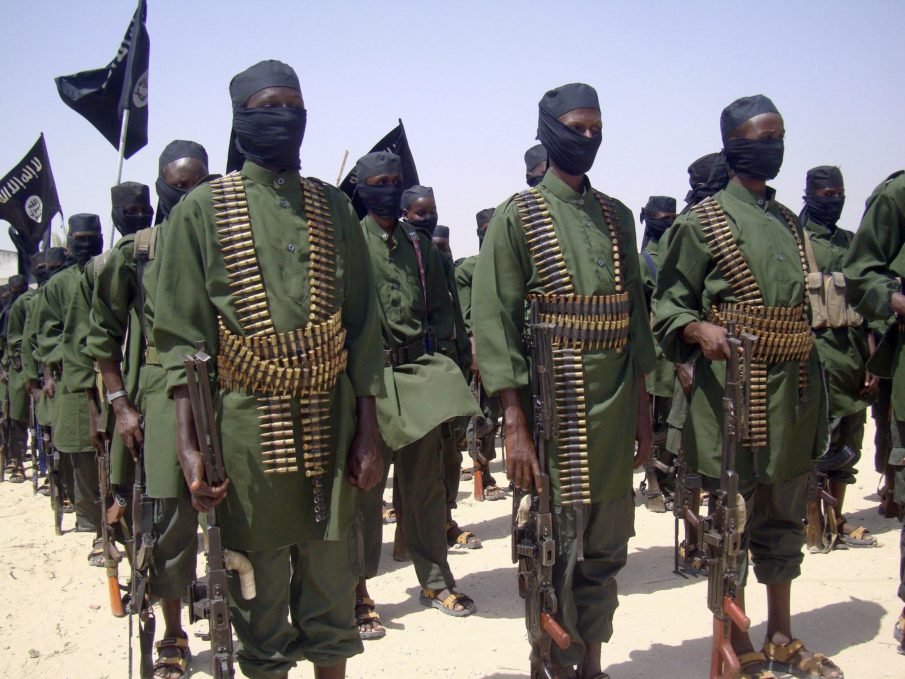
Al-Qaeda likely benefits from the FARC’s new ventures, and could conceivably pay them, or the Mexican drug lords, to help them smuggle operatives.In fact, al-Qaeda’s affiliate in Somalia, al-Shabaab, has apparently been caught doing so, as someone connected to the group oversaw the smuggling of 270 Somalis into the U.S. through Mexico. [4]
FARC has already begun using al-Qaeda members in West Africa in order to deliver drugs to Europe. Three members of al-Qaeda have been arrested in West Africa and were extradited to the U.S. in December. The DEA’s director of South America’s Andean region says, “All of the aircraft seizures that have been made in West Africa, and we’ve made about a half a dozen of them, had departed from Venezuela.”
Furthermore, the country of Uruguay has legalized marijuana, which seems harmless, however its neighbors have not, so this fuels an already active trade that has been long suspected of funding Hezbollah in the region. [5] It is also common knowledge that Hezbollah had at one point a training camp in Paraguay supporting EPP. [6]
After President Obama penned an agreement with Uruguay in which the latter would receive eight or more Gitmo detainees as political refugees [7] in May of 2014, narco-terror issues became a more visible issue to many in the region. (The Paraguay matter is a different story that I will go into depth on in a future article.)
So now I ask, what should our focus be on? At this point, it is my opinion that we have a much larger security issue at stake than the social issues being touted along the southern border. And after decades of ignoring the southern hemisphere and withdrawing from involvement, we have inadvertently created a much larger security threat. Handing over of the Panama Canal at the time seemed like the thing to do, however, is it really secure? What would this do to the world economy if it were ever shut down—even for a couple of days—or if a dirty bomb was detonated or even just located? How long would it take to clear the canal? How can this be prevented?
Is our isolationist attitude and noninvolvement really working for us with our neighbors in the south whose social issues are becoming ours as well? These issues are facilitating possible terror threats that are increasingly apparent, yet nothing is being done.
These are all things we need to ponder, and it is my belief that we don’t have much time to do so. We need to be involved and active. If you are not present, your interests will not be looked after. The world is no longer a place where what happens somewhere far away has no effect on us at home; we are all interconnected by the internet, trade, and modern transportation.
References:
- Frontpagemag.com 2010/Wordpress.com 2012.
- The anonymous informant.
- Nov 2013 with Mr. Kenneth Rijock’s view point on the Worldpress.com website.
- Frontpagemag.com /Dr. de Berlinerand the Washington Examiner
- Local press organizations, Reuters/CNN Dec 11 2013 Uruguay first Latin country to legalize marijuana.
- Aljazeera article chasing terrorism/ Paraguayan Official anonymous (Ministry of Interior)/Article by NBC Hezbollah builds Western Base, is about sympathizers and members of Hezbollah in Paraguay.
- mercopress.com May 13 2014/ also published in numerous local press releases, and subject of a Paraguay security briefing. Again, an anonymous source.








COMMENTS