
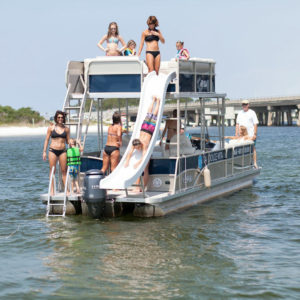
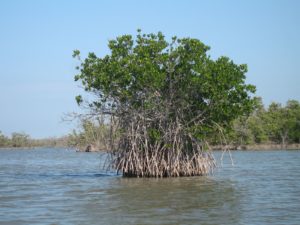
I’ll start at the bottom: pretend my picnic pontoon boat, because I am so overcome with sloth as I am so often inclined to be, has a robotic navigation system that is controlled completely by GPS-directed waypoints that I fully programmed into it Friday night, so that my autonomous drone pontoon boat can chug me at five miles per hour to my favorite mangrove patch, where I can eat my twelve sandwiches.
Key to the concept here, is my pontoon boat is going on that picnic with or without me and my sandwiches. Whether it is the case that I was inadvertently ripped from my sleek craft by centrifugal force in a G-turn, or I just didn’t want to get up that morning and go. As it were, put on your glass slippers, Cinderella… because you’re going to the ball!
Notch that scenario up in dignity a bit. Now my autonomous surface drone is programmed with Geo coordinates (ha ha, you see what I did there?) by the Coast Guard to respond to a man-overboard event, or some other sea rescue scenario: launch, pickup, Return to Base (RTB).
What say ye? Am I so far out in left field that I am back in right field? Sooo happens, that I worked on a joint NASA and Red Cross 1/12 scale VTOL (helicopter) drone venture. The odd couple you say? The Red Cross’ percent of the venture was for the drone to fly to a directed way point, drop a payload, and RTB. The payload, was a survival kit with intent to deliver support to a victim in survival posture, over land or sea.
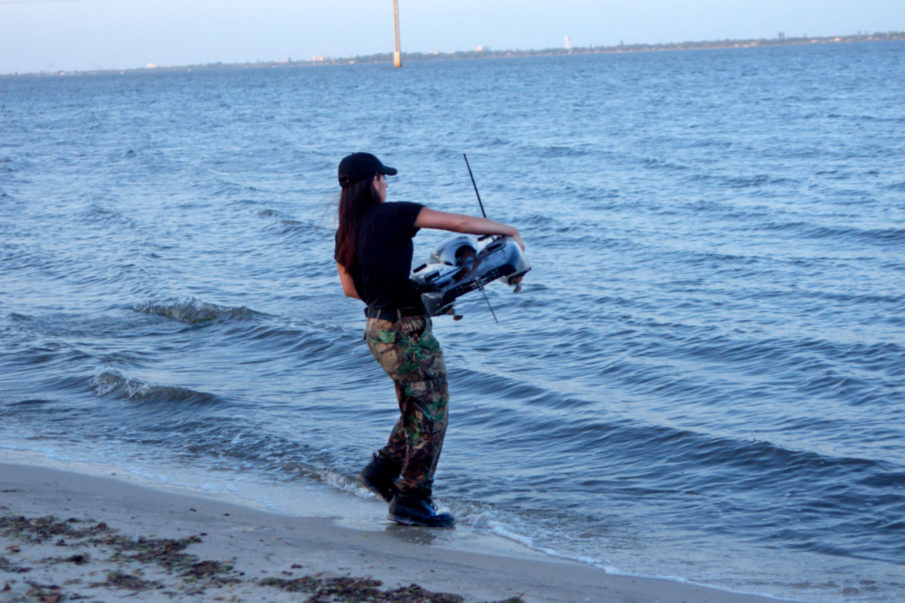
It is then with a great sense of self-indulgence, that I present a relevant and state-of-the-art (etat d’art) technology in maritime surface vessel drone systems; this is where ‘we’ are at with this realm of drone technology: Maritime Tactical Systems (MARTAC) Man-Portable Tactical Autonomous System (MANTAS). You see this cat MANTAS is a baaad muthuah—shut yo mouth—I’m just talkin’ about MANTAS…
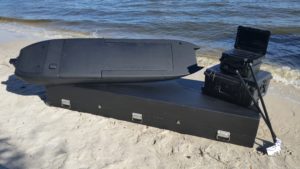
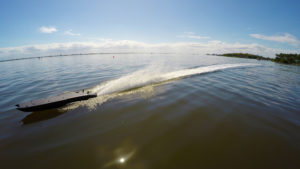
Note immediately that my creepy crawling, 12 sandwich-carrying pontoon boat concept is now built for speed, patterned after some of the globe’s sleekest and fastest hydrodynamic hulls. Seven years, in fact went into the design of the MANTAS vessel and Command and Control system (C2). That is the minimum drone package requirement to comply and compete in this race; a deployment device, and a controlling device, often in drone parlance called a Ground Control Station (GCS).
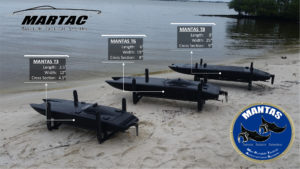
The MANTAS’ scalability is rather shocking; from three-foot, to a juggernaut-ish 50 feet. While payload weight maximums are kept at company privacy, suffice it to say that at 50 feet stem to stern, and unspecified draft, that is a whole lot of sandwiches.
The smaller three-foot craft has a comfortable cruising speed of ~25 knots, and a dash (burst, sprint) speed of an eye-watering ~65 knots! Moreover, MANTAS zero to burst speed duration is ~3 seconds. Imagine how fast that could get me to my favorite laurel patch? My intended reading of War and Peace would just have to wait.
Key to Autonomous Systems are the sensor packages/payloads; I mean, it’s all about what drones take out and bring back in terms of data collection and transfer as a measure of their capabilities. MANTAS frames can carry them all, and I can just mention a few sensors that are candidates:
Optical sensors in all wavelengths of the EMS (FLIR, IR)
Radiometric sensors that measure Alph, Beta, Gamma, Neutron and X-ray
Ground penetrating radar such as Synthetic Aperture Radar (SAR) that can see objects buried under ground and detect minute disturbances in surface soil, such as tire tread marks and foot prints, acoustic and seismic sensors
Rewind to the expectation of maritime applications both in times of war and peace for this sort of vessel. Ok without looking at the MARTEC spec sheet, I can throw out a few:
As mentioned search and rescue
Security patrol, littoral and harbor
Hydraulic surveys both open water and hinterland riverine
Intelligence Surveillance Reconnaissance (ISR) operations (big one)
Scout and flank support for large manned vessels
Ok now, the ‘biggy’ in my book is the wartime SOF potential. My favorite bring—and God bless the USAF and CIA for weaponizing their Predator and Reaper class drones— you guessed it, an armada of weaponized MANTAS bearing down on the Hun in the thick of night, confusing them so well to start shooting at each other.
When I heard Predator/Reaper were fitted for Hellfires for the first time I high-fived an imaginary bro who wasn’t standing next to me. So the plan is, we outfit the goliath 50- foot up-scaled MANTAS model with… torpedoes, mines, rockets, sledge hammer, board with a nail poking out of the end of it, thatch rakes hidden in tall gras… any combination of deadly weaponry and launch those bad boys remotely from our living rooms, but during a commercial, right? Right in, right out… no Green gets hurt.
https://youtu.be/5SjZPh1sm1w
I realize I may come across as flippant, but I am rather pleased and charged over this modern maritime wizardry. Some of the questions that always cross my mind when I am seeing a drone for the first time are:
How fast can it go? We answered that
How long can it last? This system is self-recoverable with solar power panels
How much payload/data sensor collection suite can it carry? Reserved as company private
How durable is it? This system baseline is of Kevlar construction
What if it capsizes? This bad mother can right itself; turn itself back upright again
Dangerously close to cool-guy capabilities saturation; well, like beer: you know you’ve had enough, but you can always stay for one more. These vessels come in two variations that both have underwater operations capability: the Unmanned Surface Vessel (USV), and the Unmanned, Underwater Vessel (UUV). Stay with me here, because this is pretty slick!
USV can make a shallow water excursion to nearly two atmospheres absolute of pressure seawater; that is, nearly 33 feet of depth. Thats right, one minute it is skimming the surface like a swan, and the next it’s plunging down like a freaking Cormorant—where the hell did that thing go? In my mind, that is truly and extraordinarily powerful capability
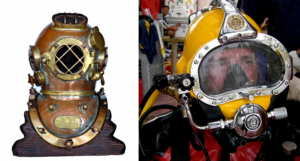
But wait, the UUV can dive down to a hard hat burial depth of 100 meters. Don’t bother waiting for me to change that figure from meters to feet; it is in fact meters, or over 300 feet, or TEN atmospheres of absolute pressure in seawater.
To give you a metric to gage by: air, that is the air we breath at roughly 20% oxygen (O2) and 80% worthless nitrogen (N2)… at a depth of 297 feet seawater is poisonous to breathe for humans, due to the adverse affect that the partial pressure of oxygen (PPO2) has on the Central Nervous System (CNS) of the brain!
Who have I lost so far; raise your hands. I warned you in the beginning that I was a sea-faring man, or at least… you know the rest.
Ok we are done here. Am I impressed? Yes I am. Should I be the one to impress? Sure, why not? Ok I take that back, I am a qualified person to try to impress with avant guard drone technology dammit! I don’t poo-poo the peace time application of these MARTAC systems, but absolutely drool in reverie over the military SOF possibilities. I love it… take a day to fully program and wind up a MANTAS, hit enter, and watch it rooster tail its way into a crimson sunset, on its way to complete a complex set of tasks like the Global-freakin-Hawk. We’ll watch reruns of the Love Boat on TV and pack down some macaroni and cheese sandwiches (3.) awaiting the victorious return of the MANTAS.
Geo sends
1. Refers to a CQB line up of assaulters outside the entrance of a target building. Second-to-last man slaps helmet three time indicating to command that the team acknowledges comms and is ready to violently enter
2. Refers to a deep sea utility diver rig. Such divers wear a full head helmet called a ‘hard hat’ rather than a mask. Incidental ruptures in their tethered surface air supply while at extreme depths (especially in the younger
years of such diving) can cause a rapid and explosive decompression. Such sudden and massive pressures can push a divers entire body into his helmet, his hard hat.
3. A deadly food combination consisting of mac-n-cheese packed between two slices of bread, then breaded and deep fried. 15 such sandwiches have enough calories to generate a violent energetic reaction with enough force to sink a pontoon boat.








COMMENTS