

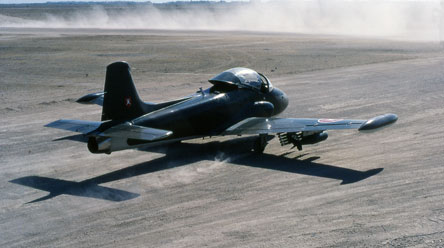
Quickly another problem appeared. The abandoned airstrip started to crumble under the weight of the Hueys and Skyvans. Watts decided to relocate the base a further 7000 yards to the west. This triggered a funny incident. One of the firqats refused to go without rest.
Another, however, dusted-off the hike’s fatigue and volunteered to what would be an incursion on their rivals’ area. Inter-service rivalry and bragging rights aren’t the privileges of only professional militaries!
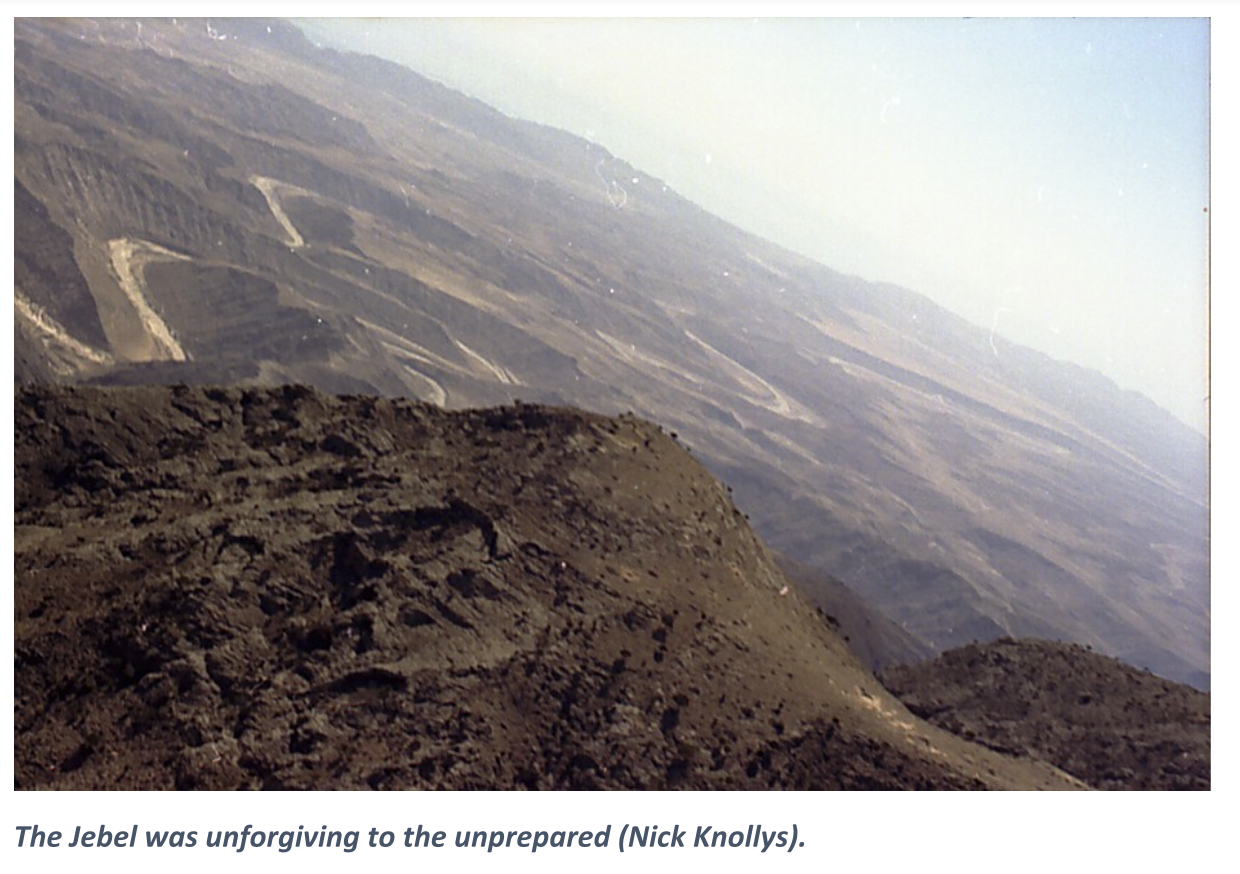
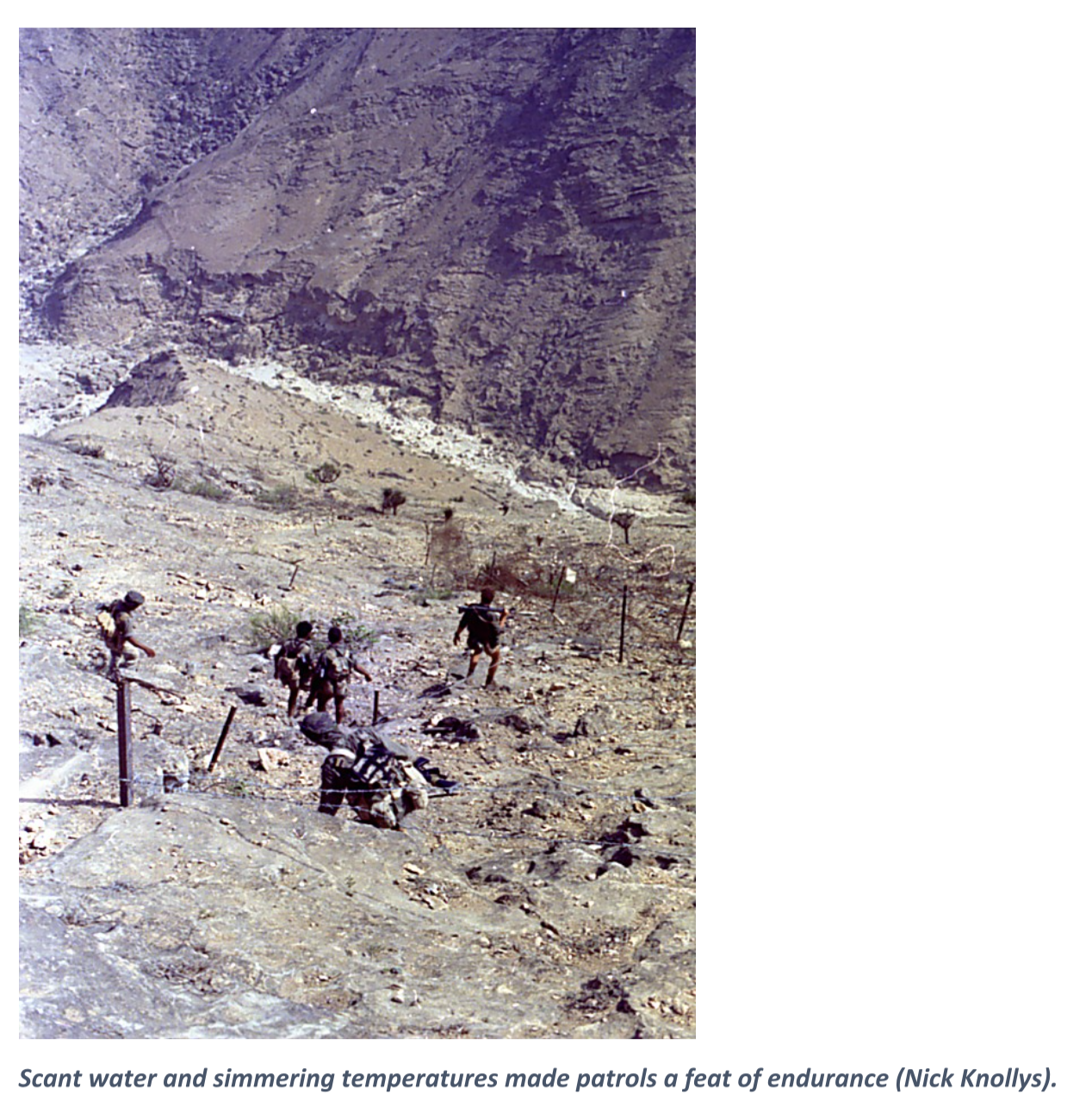
Watts divided his SAS into two groups, each with its own firqats. This time, however, their march wouldn’t be unopposed. The adoo had now recognized the danger to their rear and were hunkering for a fight. Five days of intense combat for the initiative followed. The lack of water and the unforgiving mountains offered little consolation to either side.
On October 4th, one of the main force’s groups met the decoy force on a small hill. The adoo attacked the following night. They fought in close quarters, and both sides liberally hurled insults and grenades alike. Pork Chop Hill, as the hill became known, was almost overrun several times. Only air support and infantry grit held it.
By October 9th the battle was over. And the adoo faded to the shelter of their cave complexes.
The two SAF companies, meanwhile, hadn’t been idle. They established a firm base, christened the White City; it even had 25-pound artillery guns for support. Watts moved his headquarters there. Now it was time to exploit the operation’s successes and oust the remaining adoo from the area. The force on top of Pork Chop Hill, which dominated the battlespace and the adoo’s supply routes, was in a perfect position to do so. But not everyone agreed.
Operation Jaguar had begun during the month of Ramadan—one of the most sacred religious events on the Islamic calendar when good Muslims abstain from drinking and eating throughout the day. Initially, this had been a problem since all the forces involved, bar the British, were devout Muslims. But postponement wasn’t an option—the Jebels’ civil development had to begin. The Sultan, as the religious head of state, and the senior cleric of Dhofar, therefore, issued an absolution to any fighter who fought the holy war against the adoo. It had worked. That is, up until now. On the most critical stage of the operation, three firqats from the Pork Chop Hill force decided to observe Ramadan. A furious Watts flew to them, but nothing could sway them. In a heated tribal council, his bluff of withdrawing the SAS BATTs was called since the firqat leaders knew that he depended on them as much as they depended on him.
Pork Chop Hill had to be abandoned.
And yet, Operation Jaguar wasn’t meant to end on a negative tune. Operating from the White City, a firqat that hadn’t stopped fighting, along with a SAF company, had been exploiting their gains and pushing the adoo hard.
A defensive line, Leopard Line, manned by SAF reinforcements and consisting of three strongpoints, was formed further west. It would be the anvil for the White City force’s hammer. Any adoo caught in between would have to surrender or die. The communists assaulted Leopard with mortars and recoilless artillery but to no avail. It wasn’t until December that the remaining adoo conceded defeat and scattered to other parts of the Jebel.
And although their supply caravans would continue to slip through Leopard, their number was negligible. With the serious fighting ending, it was time for Operation Jaguar’s main aim, the civil development of the cleared area, to begin. An information campaign was launched to reassure the villagers that the government forces were there to stay. SAS Civil Action Teams (CATs) were flown in to do their hearts and minds wonders. As any reasonable people would’ve done, the Dhofaris were waiting to see which horse was winning the race before committing their support. And now, with a permanent foothold on the Jebel, the government looked like a stud.
A scheme was devised to further ingratiate the population. Acting on the urging of their firqats, who had a considerable stake in the scheme since this was their turf, the government decided to set up a cattle and goat market as a sign of permanence and support (livestock was Dhofar’s chief commodity). One thousand four hundred goats were sold in that village alone. And in a ludicrous operation, 500 cattle were moved from the Jebel down to the plain, with air and artillery support and skirmishes between adoo and firqat picket forces along the way. But it was well worth the trouble since it verified the government’s power and newfound concern for Dhofar’s prosperity. The cattle-drive was soon a hot topic in every village. Hearts and minds.
Despite its lost potential, Operation Jaguar was a great success. And although it revealed the firqats’ limitations, the government’s presence on the Jebel added a considerable number of ex-adoo and villagers to the firqats. Dhofaris were warming up to their new Sultan.
And yet the adoo were far from defeated. They decided to strike where it would hurt the most: at a lone SAS garrison in a small fishing village.
Mirbat.








COMMENTS