
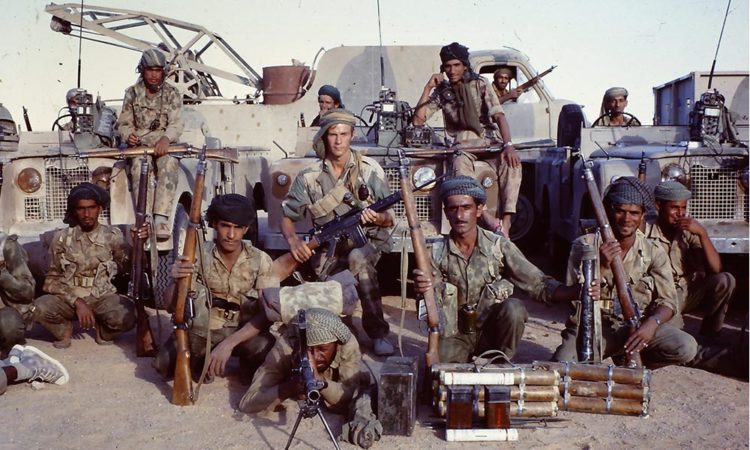
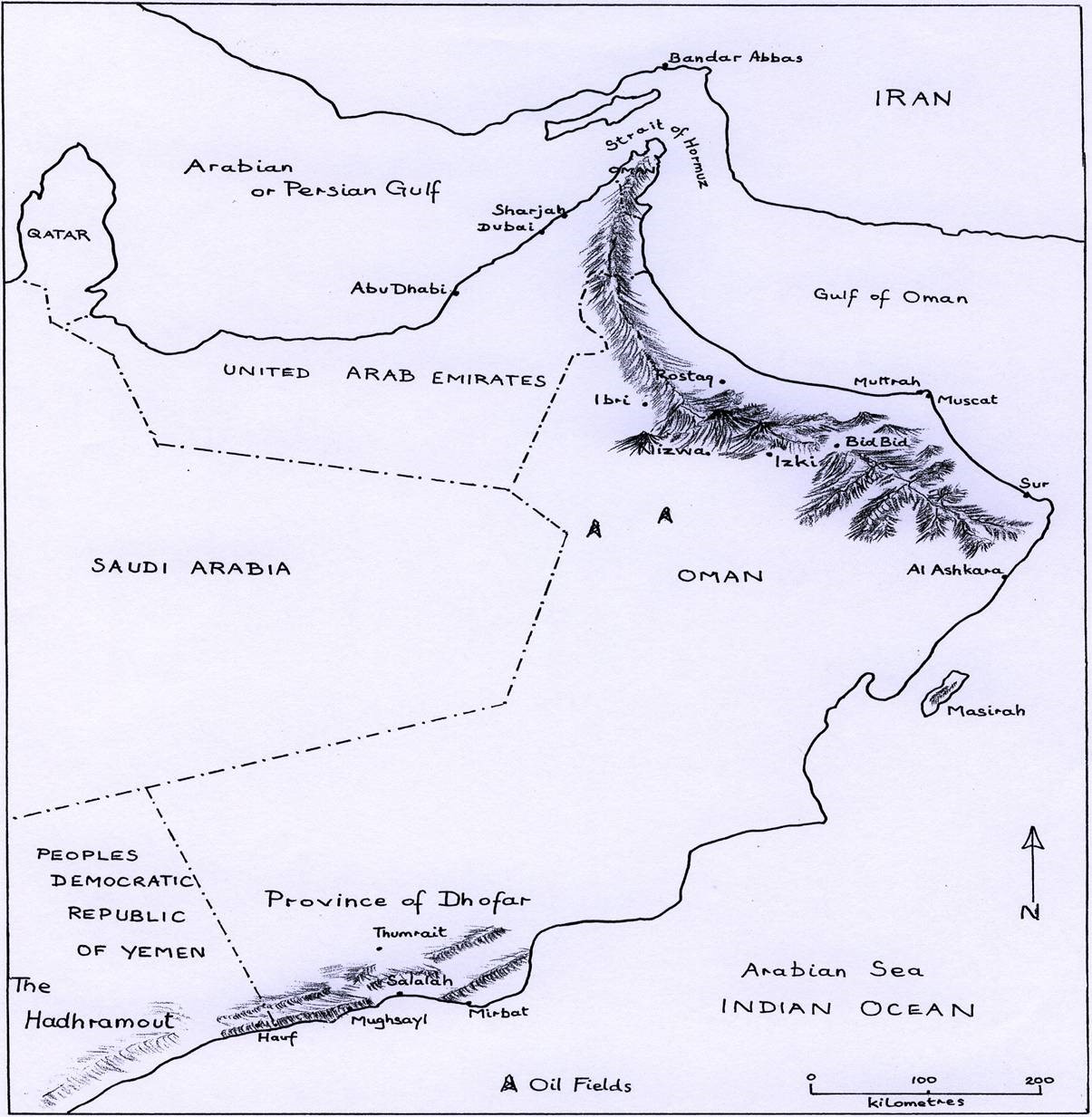
Then the order to advance came. A forward operations base was pitched inside the Jebel, a few miles from the main rebel strongholds. The Squadron was divided into two groups: the North group, consisting of 16 and 17 Troops, would infiltrate and assault the rear of the enemy position, whilst the South group, consisting of 18 and 19 Troops, would stage a diversionary attack from the front.
But then disaster struck. During a day recce patrol, an SAS corporal from the South group was killed by a sniper. Lesson learned: move only by night. The troops attacking from the rear, meanwhile, scaled the Jebel unopposed from the Persian Steps, an ancient path they had discovered with some help from their local donkey guides.
Similarly with Delta Force’s pattern whilst hunting Osama bin Laden in the 2001 battle of Tora Bora, once on top, some men secured the position, whilst others made the treacherous descent to fetch more supplies.
They were soon joined by their South group colleagues. Subsequent special reconnaissance patrols avoided contact because of their feeble numbers and precarious position — were they to be discovered, they would be trapped and vanquished. But a forward observation post established two miles in front of the main position was compromised and attacked. After a fierce fight, they overcame the rebels. But the men were puzzled — how did the rebels discover them despite all their precautions? They soon found out how: The previous night, a patrol had upended some rocks on its way back, and the next morning a rebel noticed it. This was a worthy enemy.
As December followed November, the SAS continued to tighten the noose. They moved their base on higher ground, called Cassino, and received heavier weaponry (mortars, Carl Gustav antitank recoilless rifles, and Browning heavy machine guns). A night attack on a strong rebel position resulted in hand-to-hand fighting inside the maze of caves. Grenades and Carl Gustav rockets were used to silence resistance. And despite the defenders’ advantage, there were no SAS casualties.
Six weeks had passed since D Squadron landed in Oman. And now it was time for the final assault. The rebellion’s leadership and its remaining fighters were cornered in the villages of Kamah and Saiq. A plateau called Sabrina overlooked their positions from the North.
But the exhausted troopers of D Squadron couldn’t do it by themselves. Thus, A Squadron was also redeployed from Malaya in January 1959. Commanded by Major Johnny Cooper, one of Stirling’s originals and an SAS plank owner, the Squadron followed the same regimen of rapid acclimatization that its sister squadron had followed six weeks before.
The night of 25/26th January was chosen for the final assault. The assault was superbly planned. RAF planes had spent the two past weeks scouring the skies above Sabrina and the villages, photographing every known road and goat path. Local donkey-handlers were fed false information, knowing that it would slither its way to the rebels’ ears. The plan was simple: A Squadron would occupy Sabrina from the rear, whilst D Squadron would attack Kamah from the front. The two Squadrons would then meet and advance towards Saiq. D Squadron, meanwhile, would launch diversionary night attacks to keep the rebels wondering.

On the morning hours of the 26th, A Squadron troopers strapped with 120lb bergens began their climb to Sabrina. It was a cold night, and the men, who sweated profusely, began to shiver. They knew that once daylight came, the temperatures would spike, ensuring a perpetual trial of endurance. “We went up to the top,” recalls a trooper, “and it was so cold that the water froze in our canteens. But the sun was up at 0639, and it was boiling hot. The climate was extreme.” It was only because of their SAS fitness that they could still fight. The small rebel force on Sabrina didn’t expect company. And a short, violent firefight silenced them.
Despite an injured trooper, the SAS force was otherwise intact. A Troop was left behind to secure the position and direct air support, and the rest of A Squadron joined D Squadron’s attack on Kamah on the plain below.
Although it was getting dark, D Squadron attacked. The rebels were routed. Only Saiq, the rebellion’s last bastion, was now left. An 8,000ft cliff, however, stood in between the SAS and the 1,500 remaining rebels. “Nevermind that,” they thought. With virtually no rest since the operation began the previous night, the SAS, with D Squadron on the van, began the arduous climb. “It was tough climbing straight up the cliff above.” explains General de la Billière, who was a lieutenant at the time and later became Director of Special Forces and Commander-in-Chief of British forces in the Gulf War, “Two soldiers went ahead to warn of potential enemies and to make sure that the squadron didn’t lose time by going wrong. It was a pretty daunting task. All wore very heavy packs, and we knew that we must continue the climb through the night, without the possibility of real rest and the chance of an invigorating cup of tea.”
Apparently, the rebels didn’t expect such superhuman endurance, for their sentries were asleep. A grave mistake as they were quickly killed.
But as A Squadron was following D Squadron’s climb, daylight caught them. By now the rebels were awake, and two troopers were killed when a sniper’s bullet ignited a grenade in one’s backpack. Breaking contact, they sped to their comrades’ position outside Saiq. There, they dug in and requested RAF air resupply. Three Valetta transports flying from Bahrain, parachuted some containers. The rebels, seeing parachutes dangling from the sky, thought that they were paratroopers and fled to Saudi Arabia. And in this rather anticlimactic way, the Jebel Akhdar Rebellion ended.
It had taken the SAS ten weeks to subdue the rebellion. At the cost of only three men killed and few wounded, they had succeeded where the British Army had failed for the previous two years.
“We were able to show to the army at large,” explained Lt. Col. Deane-Drummond, who received the DSO for his leadership, “that the professionalism of the SAS soldier can be applied anywhere, worldwide.” And with a rather small bill, as well.
London was exultant.
The Special Air Service is superfluous.
Yea, right.








COMMENTS