

But now it appears that some Europeans see a future in an enduring common defense. Russian machinations in Ukraine and the Baltics have alarmed many, especially on the eastern fringes of the continent. With Britain, the loudest critic of a common European army, on the exit and President Trump’s unease with NATO, they believe that a new approach is needed.
“The times in which we could completely depend on others are on the way out.” The German Chancellor Angela Merkel recently told an election crowd. “We Europeans have to take our destiny into our own hands,” she added.
The innuendo towards the US and UK is clear.
But can it work?
The very nature of multinational operations says no. To be combat effective, a unit needs political will. The more nationalities you’ve under a single command, there more crowded the decision-making process becomes, and thus, the more restrained your force is to the point of being virtually combat ineffective and capable only for administrative or humanitarian tasks.
The many failed UN peacekeeping missions, Somalia, Rwanda, and Srebrenica, to name a few, and some NATO partners’ records in Afghanistan attest to that.
Even though the Romanian and Czech units will join the German army, Germany will only be able to deploy an integrated unit with the junior partner’s accord.
It appears, therefore, that these integrations are a political attempt to safeguard European unity in the face of increasing doubt about the future of the European Union. Despite the defeats of Eurosceptics in France, the Netherlands, and Austria, no one can deny that Project Europe is having an identity crisis.
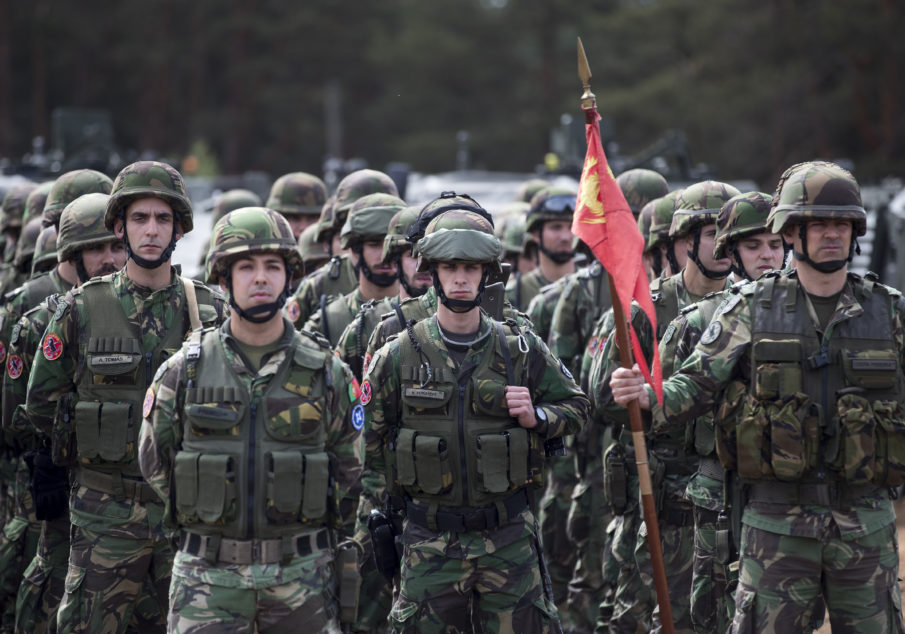
Featured image of Lithuanian NATO troops courtesy of AP








COMMENTS