Pentagon, Lockheed Move to Triple Patriot Missile Production to Meet Global Demand
Lockheed Martin and the Pentagon reached a framework agreement to sharply expand production of the Patriot PAC-3 Missile Segment Enhancement (MSE) air-defense missile as the United States accelerates weapons manufacturing to meet rising global demand.
Under the plan, announced this week, Lockheed would boost annual output from about 600 missiles to roughly 2,000 through a proposed seven-year contract, though no price was disclosed.
A new era of rapid defense delivery! We’ve reached a framework deal with the U.S. government to fast‑track annual PAC-3® MSE production from approximately 600 to 2,000 over seven years. Our tooling, test equipment and 13,000+ supplier network boosts supply‑chain resilience. pic.twitter.com/CNEvsGz5Lc
— Lockheed Martin (@LockheedMartin) January 6, 2026
The effort reflects a Defense Department strategy shift aimed at rebuilding US stockpiles and supporting allies, particularly Ukraine, which has relied heavily on Patriot systems against Russian attacks.
The move follows concerns that short-term contracting limited the ability to surge production and exposed vulnerabilities amid wars and growing tensions with China.
Pentagon leaders said the agreement, which also targets supply-chain stability, is intended to provide industry with the long-term certainty needed to rapidly scale production of critical defense systems.
Aldrich Ames, CIA’s Most Damaging Spy, Dies in Federal Prison at 84
Aldrich H. Ames, the former Central Intelligence Agency (CIA) officer whose espionage for the Soviet Union and later Russia caused the deadliest intelligence breach in US history, died on Monday, January 5 at a federal prison in Cumberland, Maryland, according to the Bureau of Prisons.
Ames, who was 84, spied for Moscow from 1985 until his arrest in 1994, motivated primarily by financial troubles, and provided the names of nearly all CIA and allied agents operating against the Soviets. His actions led to the execution of at least 10 intelligence sources and the collapse of hundreds of operations during the Cold War’s final years.
Breaking news: Aldrich Ames, the CIA officer whose spying for Moscow was the most damaging breach in the agency’s history, reportedly causing the deaths of at least 10 recruited CIA or allied intelligence agents, died at 84. https://t.co/oHw3FtuosF
— The Washington Post (@washingtonpost) January 6, 2026
Arrested in the United States, prosecuted in federal court, and sentenced to life in prison without parole, Ames admitted to betraying national trust while downplaying the broader impact of his actions. His death closes the final chapter on a case that reshaped US counterintelligence practices and exposed deep institutional failures within the CIA.
Denmark, Greenland Seek Talks With US as Trump Revives Greenland Takeover Push
Denmark and Greenland are seeking an urgent meeting with US Secretary of State Marco Rubio after President Donald Trump reiterated his intention for the United States to take over Greenland, escalating tensions between NATO allies.
The dispute intensified this week after the White House said US military action remained an option, prompting Denmark and several European leaders to reject the idea and reaffirm Greenland’s sovereignty.
Greenland, a self-governing Danish territory and part of NATO, sits in a strategically critical Arctic region that Trump says the US needs to control to counter threats from China and Russia.
‘Not acceptable in the civilised world’: Greenland residents react to Trump comments.
“You don’t know if he should be taken seriously or not,” says Kunuk Evaldsen, a business owner in Nuuk, Greenland, following comments made by US President Donald Trump in which he repeated his… pic.twitter.com/UTytLcX3Mw
— AFP News Agency (@AFP) January 7, 2026
Danish Prime Minister Mette Frederiksen warned that a forced takeover would effectively end NATO, while European leaders and bipartisan US senators cautioned that coercion against an ally would violate treaty obligations.
Ukraine’s Allies Outline Postwar Security Guarantees
Ukraine’s allies met in Paris on Tuesday to advance a framework of international security guarantees intended to protect the country after a ceasefire in its nearly four-year war with Russia.
Leaders from Europe and Canada, joined by US, NATO, and European Union officials, agreed that Ukraine’s military would remain the first line of defense, backed by long-term foreign military aid and potential multinational support forces.
🇺🇦🇫🇷🇬🇧 Ukraine, France, and the UK signed a declaration of intent to deploy multinational forces in Ukraine post-war. Macron stressed Russia violated all its peace deals in the past 15 years, calling for real guarantees. Ukraine’s army will remain key to defense, 800,000 strong,… pic.twitter.com/oQkT6JCDQL
— NOELREPORTS 🇪🇺 🇺🇦 (@NOELreports) January 6, 2026
The talks focused on how deterrence would work once fighting stops, including continued arms supplies, training, and monitoring of any ceasefire, though no troop deployments or binding commitments were announced.
Ukrainian President Volodymyr Zelenskyy said progress was made but stressed that details on force size, financing, and oversight still require national approvals.
Iran Army Chief Warns of Preemptive Action as Protests and US Pressure Mount
Iran’s Army Chief, Major General Amir Hatami, warned Wednesday that Tehran could take preemptive military action in response to escalating rhetoric from abroad, an apparent reference to US President Donald Trump’s warning that the United States would intervene if Iran violently suppresses protesters.
Hatami spoke as nationwide protests, driven by economic hardship and political grievances, entered their 11th day across much of Iran, with at least 36 deaths reported by human rights groups.
Iran’s army chief warned the United States and Israel against interfering in domestic protests, saying demonstrations were normal but attempts to turn them into unrest showed foreign involvement, state media reported.
Major General Amir Hatami said any outside intervention would… pic.twitter.com/lfuvNYDPVi
— Open Source Intel (@Osint613) January 7, 2026
The Iranian government moved to ease public anger by increasing cash subsidies for basic food items, even as inflation and a collapsing currency continue to drive up prices.
Hatami said Iran views foreign threats as serious and claimed its military readiness has increased since last summer’s war with Israel.
Netanyahu Urges Calm After Teen Killed at Jerusalem Protest Over Military Draft Law
Israeli Prime Minister Benjamin Netanyahu called for restraint after a bus driver struck and killed a teenage yeshiva student during a protest Tuesday night in Jerusalem against proposed legislation to draft ultra-Orthodox men into the military.
The victim, identified as Yosef Eisenthal, died after a public bus ran him over as protesters blocked a roadway and clashed with police. Authorities arrested and questioned the bus driver, who told investigators he was attacked by demonstrators before the incident, and police said they are investigating the death.
🇮🇱UPDATE: Yosef Eisenthal (14-year-old teen) was killed, and three (3) injured on 06 January, after an Israeli Defence Force (IDF) bus drove into protesting ultra-Orthodox Jewish Haredi men at the intersection of Yirmiyahu Street and Shamgar Street, Romema-Jerusalem in Israeli 🇮🇱… pic.twitter.com/sm8p7NMqHQ
— Inside Edge (@4Inside_Edge) January 7, 2026
The protest highlighted escalating tensions between Israel’s government and the ultra-Orthodox community, which has long received draft exemptions dating back to the country’s founding. The debate has intensified amid Israel’s war with Hamas, as many secular Israelis support ending exemptions, while religious parties oppose the move and remain critical to Netanyahu’s governing coalition.
China Bans Dual-Use Exports to Japan as Taiwan Tensions Escalate
China on Tuesday barred exports of dual-use goods to Japan, targeting items that could bolster Japan’s military, as relations between the two neighbors deteriorate amid rising tensions over Taiwan.
The Chinese Commerce Ministry said the ban applies to exports that could serve both civilian and military purposes and warned that individuals or organizations violating the rule would face legal consequences.
Japan’s Foreign Ministry lodged a formal protest, calling the move discriminatory and a departure from international norms, and demanded China withdraw the measure.
Japan’s said that China’s ban on exports of dual-use items to the country was ‘absolutely unacceptable and deeply regrettable,’ as a diplomatic dispute between Asia’s top two economies ramped up https://t.co/CGVmTgklUz pic.twitter.com/9RVxRixCpI
— Reuters (@Reuters) January 7, 2026
The decision comes as Japan expands its military capabilities and signals potential involvement in a Taiwan contingency, while China has staged large-scale military drills around the island it claims as its own.
Sources: News Agencies
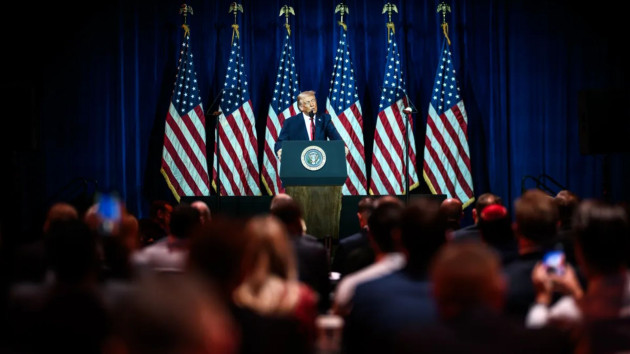
Morning Brief: Trump Touts Venezuelan Oil Deal, Denmark and Greenland Seek Talks With US, China Bans Dual-Use Exports to Japan
Venezuela fallout, Ukraine talks, Iran unrest, and China–Japan tensions rise. Here’s your Wednesday morning brief for January 7, 2026.
Advertisement