

ICE enforces immigration law inside the United States. That is it. They are not border patrol. They do not decide who is legal or illegal. Congress writes the law. Courts rule on cases. ICE carries out removals once the legal process is finished.
Most ICE operations focus on people already flagged in the system. That usually means one of three things. They have a final deportation order from a judge. They were arrested previously and flagged through fingerprints. Or they completed a state or federal prison sentence and are being transferred for removal.
When ICE says it arrested murderers or sex offenders, those people already did their prison time. ICE does not replace courts or prisons. A convicted rapist serves his sentence first. When the state lets him go, ICE takes custody and sends him out of the country. That removes a repeat threat from the community instead of releasing him back onto the street.
This is not new. ICE operated at high tempo under Democratic administrations. Under President Obama, deportations hit record highs and interior enforcement targeted convicted criminals through federal and local cooperation programs. Under President Biden, ICE continued operating, though with narrower rules that limited who agents could pursue. Deportations never stopped.
The current political fight is not about whether ICE exists. It always has. The fight is over how loudly some activists want to pretend criminals and immigration violators are the same thing as families working construction, farming, or cleaning hotels. They are not.
ICE does not roam neighborhoods looking for people mowing lawns. It works off records, warrants, court orders, and prison releases. When operations scale up, more non criminal violators get caught in the net. That is a function of volume, not intent.
Violent offenders remain the top priority.
That is why moderate Democrats are pushing back. They understand something simple. A country enforces its laws.
Removing criminals after due process protects citizens and immigrants alike. Killing ICE does neither.

Nigeria Terrorists Abduct, Execute IDP Loggers in Borno Ransom Case
Islamic State–linked militants abducted ten displaced men in northeastern Nigeria in December, executed five of them when ransom payments fell short, and released the remaining captives only after families sold off what little they had left to pay, underscoring the routine targeting of vulnerable civilians in Borno State.
The abduction occurred on December 11, 2025, in Mafa Local Government Area, Borno State. Ten internally displaced men from Gome village entered the Maiwa bush to cut trees for charcoal, one of the few income options left after Boko Haram forced them out of Marte Local Government Area roughly 15 years ago. Armed fighters believed to be from ISWAP or a splinter faction ambushed the group and marched them for three days to a forest camp holding roughly 50 militants.
Among the captives were brothers Jidda Hadu, a married father of six, and Mohammed Hadu, a single man in his mid-20s. According to survivor testimony reported by HumAngle Media, the kidnappers initially demanded ₦30 million per person, roughly $21,000 USD each. After families pleaded and explained their poverty, the demand was reduced to ₦7 million total, about $5,000.
The families managed to raise less than ₦1 million, roughly $700, over two weeks. The militants responded by executing five captives, including Jidda Hadu, and used one victim’s phone to confirm the killings. At least seven people were reportedly killed at the camp during the same period, including other abductees held there.
Following the executions, the ransom demand dropped to ₦1 million per person, about $700 each. Families sold jewelry and personal belongings to raise the money.
After 21 days in captivity, five men, including Mohammed Hadu, were released.
Mohammed described being chained, beaten, and tortured, with leg wounds from restraints and repeated threats of execution.
After release, the men walked to Bama, were questioned by local militia members, held overnight at a military barracks, and then transported to Maiduguri and Konduga. No rescue operation was attempted despite reports to nearby security outposts.
The attack fits a broader pattern in Borno State, where armed groups routinely kidnap loggers and quarry workers for ransom. Displaced communities lack farmland, jobs, and meaningful security, forcing civilians into dangerous bush areas to survive. Local leaders continue to call for access to land and basic protection, warning that aid dependency alone will not stop the killings.
Why Trump Wants Greenland and Why NATO Is Pushing Back
President Trump’s renewed push to acquire Greenland has triggered sharp resistance from NATO allies and now tariff threats from Washington, but the dispute makes more sense when read from the ground up rather than as a trade spat.
From Trump’s perspective, Greenland is a national security asset hiding in plain sight. The island sits astride the Greenland-Iceland-UK gap, the cold water choke point Russian submarines and long-range bombers must cross to threaten North America. Control of that space matters more as Moscow modernizes its Arctic fleet and China expands its polar research footprint.
Greenland also provides ideal geography for missile warning and missile defense systems aimed at Arctic flight paths, a priority Trump has repeatedly tied to future homeland defense plans. The United States already operates Pituffik Space Base there, but Trump sees full control as a way to remove political limits and expand air, naval, and space operations without negotiating permissions.
There is also an economic layer, even if it is secondary. Greenland holds large deposits of rare earth elements, lithium, and graphite, materials critical to weapons systems and energy infrastructure and currently dominated by Chinese supply chains. Trump has framed Greenland less as a mining play and more as long term strategic real estate, but the resource angle strengthens his argument that the island will only grow more valuable as Arctic ice recedes.
NATO countries do not dispute Greenland’s importance. Their objection is about method, not mission. Denmark administers Greenland and is a founding NATO member.
Any forced transfer, coercion, or unilateral takeover would cross a red line that the alliance is built to prevent. NATO functions on mutual sovereignty. One member seizing territory from another, even under the banner of security, would paralyze the alliance and invite endless legal and political chaos around collective defense obligations.
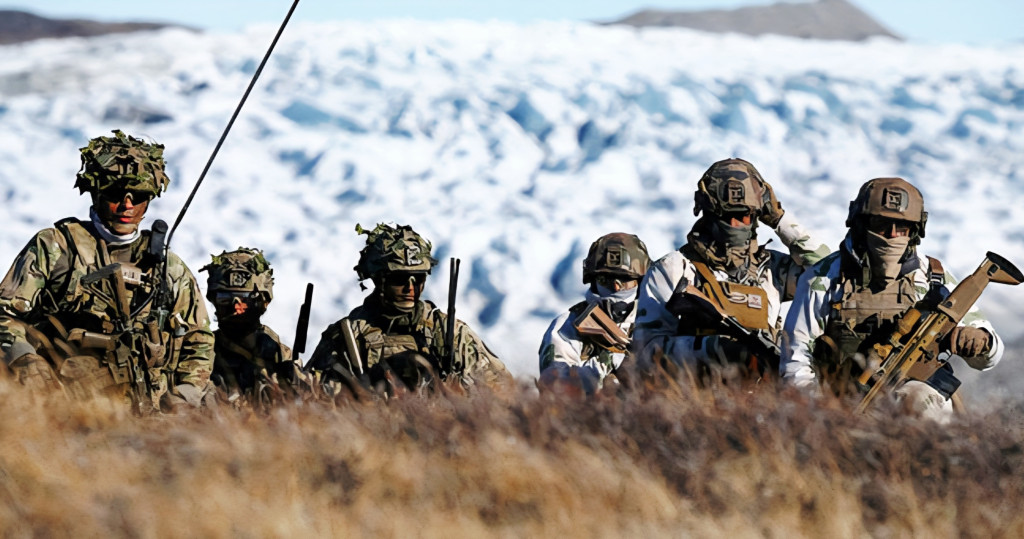
European leaders also see dangerous precedent. If the strongest NATO power can pressure a smaller ally into giving up territory, alliance guarantees start to look optional. That is a gift to Moscow and Beijing, both of which argue that Western security commitments are transactional and temporary. The recent movement of European troops and patrols to Greenland was not about defending it from Russia or China. It was about signaling that Denmark would not be isolated or bullied inside the alliance.
What those governments want instead is expanded American leadership without American ownership. Allies broadly support more U.S. basing, more joint exercises, additional surveillance aircraft, and stronger Arctic maritime patrols under existing treaties. They want Washington fully engaged, just not rewriting alliance rules by force or threat.
Trump’s response to that resistance has been economic pressure. He has publicly warned that NATO countries opposing his Greenland push could face tariffs, escalating if they continue to block a deal. In Trump’s view, allies cannot expect U.S. protection while refusing what he considers a reasonable security demand. Tariffs are his leverage tool, meant to force negotiations where diplomacy stalled.
European leaders have pushed back hard, publicly and in unison, treating Trump’s tariff threat as coercion against an ally rather than normal bargaining. France’s Emmanuel Macron said “no amount of intimidation” would change Europe’s position on Greenland’s sovereignty, and he framed the pressure campaign as a direct hit on alliance norms. The UK’s Keir Starmer also rejected the approach, saying Greenland’s future is for Greenlanders and Denmark to decide, not something to be forced by trade penalties. Reporting on the backlash shows the tone is not quiet diplomacy. It is leaders drawing a line in public to keep the issue from becoming a precedent inside NATO.
The European Union is also signaling it may respond as a bloc if tariffs land, warning the dispute could spiral into a broader trade fight that damages transatlantic coordination in the Arctic and beyond. At the same time, the optics are being complicated by Washington itself: U.S. lawmakers have moved to reassure Copenhagen that Congress is not aligned with any forced acquisition plan, undercutting the idea that tariff pressure represents a settled American consensus. In practical terms, this growing pushback is tightening the political box around Trump. Every new statement from European capitals shifts the story away from “Greenland’s strategic value” and toward “how far allies will go to resist economic pressure over sovereignty.”
The result is a slow burn crisis rather than a headline spike. Greenland is strategically vital, and everyone involved knows it. The fight is over whether securing it strengthens NATO or tears at the seams that keep the alliance intact.








COMMENTS