World

Morning Brief: President Trump, NATO, China, and Nigeria: Tough Love, Hard Power, and What Comes Next

President Trump’s tough-love approach is forcing allies to grow up, adversaries to move faster, and the United States to confront the real costs of pressure as NATO strains, China postures, and America quietly expands its footprint in places like Nigeria.

An Open Letter to World Leaders: “I Hate You, Dad!”

Over the past year, allied leaders and foreign media have been making the same argument. Confidence in U.S. leadership is sliding. Approval of Washington across Europe, Canada, and parts of Asia has dropped sharply. The complaint is the same: America has become unpredictable and harder to trust as a security partner.

Advertisement

Much of that reaction centers on the second term of President Donald Trump. Like an angry dad who finally opened the credit card statement, he cut foreign aid, reduced or froze military assistance in some theaters, imposed tariffs on partners, and publicly called out allies for leaching off the United States. The message was not subtle.

Start paying rent or pack your bags.

From one angle, American frustration is understandable. For decades, many U.S. allies underinvested in defense while relying on American power to cover the gap.

Advertisement

Washington carried the deterrence burden.

Washington moved the troops. Washington supplied logistics, intelligence, global mobility, and the occasional body bag. Allies enjoyed stability while letting their own capabilities atrophy. That dependency became a strategic liability.

Advertisement

Pressure produced results. Defense spending across Europe surged.

Ammunition lines restarted. Militaries that had drifted toward ceremonial readiness rediscovered field manuals and production schedules. President Trump’s demands acted as an accelerant, especially inside NATO, where years of polite nudging accomplished about as much as a strongly worded email.

But… and here’s the butt…

Advertisement

The primary driver of allied rearmament was Russia’s full-scale invasion of Ukraine.

That was Mom’s chancla.

The war shattered assumptions about European security. It exposed stockpile shortfalls, industrial weakness, and a level of complacency that only exists when someone else has been covering your rent for 70 years. President Trump’s pressure worked because reality showed up with her flip-flop.

There is also a cost side that America First arguments sometimes wave off. Trust is operational capital in an alliance. When allied publics view the U.S. as unreliable, their governments pay a higher political price for basing U.S. forces, approving forward deployments, sharing intelligence, and backing escalatory decisions in a crisis.

Declining approval numbers create friction at the political and command level. That friction shows up at the worst possible time.

The teenager metaphor still fits, but it cuts both ways. Some allies slammed the front door when the allowance got cut. They also started paying rent. That part is healthy.

The risk comes when the parent assumes the kid has nowhere else to go. Prolonged distrust sends them looking for another couch to sleep on. Different suppliers. Different planning assumptions. A little more distance, even while they’re technically still “on the team.”

Strong coalitions need capable partners. They also need predictability. Transactional leverage works best when paired with a clear sense of where the relationship is going. Discipline without reassurance hardens independence. Discipline with structure produces alignment.

The lesson here is not that pushing allies was wrong. It’s that pushing by itself is incomplete.

Pressure forces maturity. It can also break the relationship.

Kicking the kids out may teach responsibility. Leaving the door unlocked makes sure they come home when the streetlights come on.

General Dagvin Anderson confirmed this week that some forces have been dispatched to Nigeria. Image Credit: ARISE News

Nigeria: Small U.S. Footprint Emerges After Trump’s ISIS Strikes

The United States has inserted a small military team into Nigeria, extending a counter terror push that began with President Donald Trump’s December Tomahawk strike on Islamic State linked camps in the country’s northwest. What started as a one night message is turning into a low visibility U.S. Nigeria security partnership.

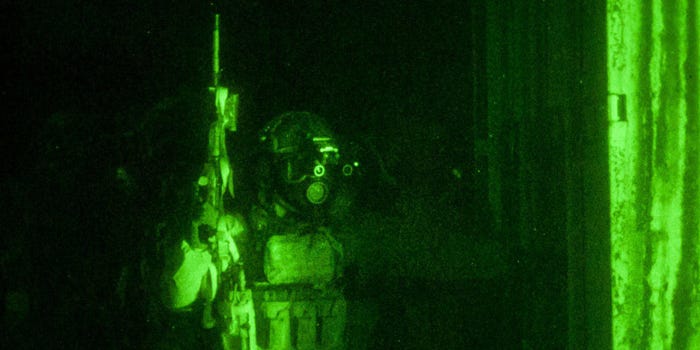
General Dagvin R. M. Anderson, commander of U.S. Africa Command, confirmed this week that some forces have been dispatched to Nigeria under a new understanding between Washington and Abuja. He described the element as a small team bringing unique capabilities, language that points to enablers and specialists rather than a conventional combat force. Nigerian Defence Minister Christopher Musa separately acknowledged that U.S. personnel are on the ground but refused to discuss numbers or tasking.

The deployment follows Trump ordered cruise missile strikes in late December on what U.S. and Nigerian officials identified as ISIS affiliated targets in Sokoto State. Those strikes killed an unspecified number of militants and marked the first time U.S. long range weapons have been used openly inside Nigeria. Trump later warned that more action was possible if attacks on Christians and other civilians continued, putting Nigeria’s jihadist factions on notice.

Even before the ground team arrived, U.S. intelligence collection over Nigeria was already surging. Since at least late November, a contractor operated Gulfstream ISR platform out of Accra, Ghana, has been flying regular tracks over Nigerian territory, feeding targeting data and pattern of life reporting into the growing effort. That airborne picture will likely fuse now with U.S. advisers sitting alongside Nigerian planners in Abuja and theater commands.

For American and Nigerian troops at the sharp end, the question is how far this footprint goes. A small advisory cell and offshore ISR can remain politically deniable.

A deeper role in planning and enabling strikes on Nigerian soil, especially if U.S. operators move closer to the fight, would signal a new chapter in America’s long, often hidden war against jihadist networks in West Africa.


China’s state television shows a computer simulation of the planned space aircraft carrier “Luanniao.” Image Credit: CCTV

China Unveils Sci-Fi Space Warship Concept Amid Near-Space Arms Race

Beijing has revealed plans for a massive orbital aircraft carrier called Luanniao that could dominate near-space warfare. State media released a dramatic computer-generated video on Tuesday showing the triangular spacecraft cruising at the edge of the atmosphere. The design deploys swarms of unmanned Xuan Nu fighter jets and unleashes hypersonic missiles in simulated combat scenarios. At nearly 800 feet long, Luanniao would dwarf any current warship if built, carrying up to 88 drones for air superiority and precision strikes.

Aviation Industry Corporation of China unveiled the concept as part of its Nantianmen or Heavenly Gate initiative to integrate air and space operations. Developers claim the carrier could enter service within 30 years, powered by advanced propulsion systems yet to be perfected. The platform would loiter above contested regions, launching drones to overwhelm enemy defenses and firing glide vehicles at Mach 10 speeds. Chinese outlets portray it as a game-changer against U.S. carrier groups and Taiwan contingencies.

Defense analysts remain skeptical. Peter Layton, a fellow at Griffith Asia Institute, dismissed the proposal as propaganda. He told the Telegraph that no existing technology supports sustained operations at 100,000 feet altitude. Enormous fuel demands and immature engines make it unrealistic today. Layton compared it to Star Wars imagery meant to intimidate rivals.

The reveal fits China’s pattern of bold aerospace announcements. Recent tests of fractional orbital bombardment systems and reusable spaceplanes signal intent to contest the final frontier militarily. U.S. Space Force leaders have warned of Beijing’s rapid progress in counter-space weapons. Luanniao serves as psychological warfare, projecting invincibility while real programs advance in secrecy.

Western militaries now face pressure to match near-space capabilities. Concepts like U.S. Blackjack satellites and Loyal Wingman drones aim to counter such threats. As great power competition escalates, Beijing’s space carrier vision underscores the blurring lines between sky and orbit.

Advertisement

What readers are saying

Generating a quick summary of the conversation...

This summary is AI-generated. AI can make mistakes and this summary is not a replacement for reading the comments.