Advocacy organizations representing trafficking survivors argue that the case illustrates systemic weaknesses in how elite-linked crimes are pursued. They contend that civil litigation has filled gaps left by stalled or abandoned criminal processes.
The White House has reiterated that investigations must remain evidence-based and insulated from political pressure. Officials say no new prosecutorial actions have been announced in connection with the release.
Broader Implications
For federal institutions, the renewed attention centers less on individual reputations than on credibility. Epstein’s prolonged ability to operate despite documented allegations continues to fuel public skepticism toward law enforcement and judicial systems.
The release of additional records remains possible as civil litigation continues. Any further disclosures are expected to proceed through the courts rather than executive action.

Russia Scrambles as Starlink Access Is Disrupted
Russian military and civilian users have reported widespread disruptions to access to Starlink, complicating communications in occupied Ukrainian territory and along Russia’s western military districts.
The outages follow reported enforcement actions by SpaceX, which operates the satellite network. Western officials and open-source analysts say terminals operating outside authorized geographic zones appear to have lost service.
Russian authorities have not acknowledged the scope of the disruption. State media has described the issue as a technical malfunction. Russian military bloggers and pro-Kremlin commentators have instead reported sudden connectivity losses affecting logistics, drone operations, and frontline coordination.
Ukraine forced Starlink to cut off Russian troops.
After Kyiv’s request, SpaceX blocked unregistered terminals, disrupting Russian frontline communications and drone control. Russian military bloggers report widespread outages — NYT 1/ pic.twitter.com/oTM7Jh3AzE
— Tymofiy Mylovanov (@Mylovanov) February 7, 2026
Dependence on Commercial Satellite Networks
Starlink has become a central component of modern military communications. Ukraine has relied on the system since the early phase of Russia’s full-scale invasion. Russian forces, despite sanctions and formal restrictions, have also made extensive use of Starlink terminals acquired through third parties.
That reliance has created exposure. Unlike state-owned military systems, commercial satellite networks remain subject to corporate policy decisions and regulatory enforcement. U.S. officials have repeatedly raised concerns about unauthorized use of American technology by sanctioned actors.
SpaceX has previously stated that Starlink service is not authorized for offensive military operations and that steps are taken to prevent misuse in restricted regions. The company has not publicly detailed the latest enforcement actions.
Operational Effects on Russian Forces
Analysts assess that the disruptions are unlikely to produce immediate battlefield reversals. Russian forces have adapted to degraded communications before and continue to employ encrypted radios, civilian cellular networks, and legacy systems.
Even so, the loss of Starlink imposes friction. Data transmission slows. Drone reconnaissance becomes less reliable. Coordination among dispersed units degrades in real time.
In a conflict defined by sensor integration and rapid targeting cycles, even short delays can carry operational costs.
Strategic Significance
The episode highlights a broader shift in warfare. Commercial infrastructure now plays a decisive role in military effectiveness. Control over access has become a strategic lever short of direct military engagement.
For Moscow, the disruptions reinforce long-standing concerns about reliance on Western technology. Russian officials have accelerated efforts to develop domestic satellite alternatives. None currently offer comparable coverage or performance.
For Washington and its allies, the incident illustrates how regulatory and corporate actions can shape battlefield conditions without direct escalation.

Ukraine Reports Continued Pressure Along Eastern Front
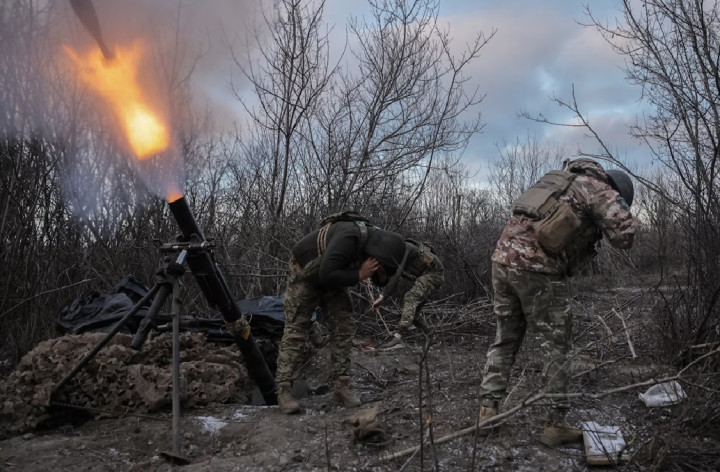
Ukrainian military officials report sustained Russian pressure across several sectors of the eastern front, with fighting concentrated near long-contested towns and logistical corridors.
According to reporting by Kyiv Post, Russian forces have increased artillery fire and infantry assaults while probing Ukrainian defensive positions. The pattern reflects Moscow’s continued emphasis on incremental advances rather than large-scale maneuver.
Ukrainian commanders describe repeated small-unit attacks supported by massed fires. Casualties remain high. Territorial changes remain limited.
Ukrainian forces have liberated the town of Prydorozhne after heavy fighting for two weeks.
— WarMonitor🇺🇦🇬🇧 (@WarMonitor3) February 9, 2026
Force Posture and Adaptation
Ukraine continues to rely on layered defenses, counter-battery operations, and drone reconnaissance to blunt Russian advances. Western-supplied systems remain central to those efforts. Ammunition constraints persist, though recent deliveries have eased pressure in some sectors.
Russian units appear to be rotating depleted formations more frequently. Analysts interpret the practice as an effort to sustain pressure while managing attrition. The approach favors endurance over speed.
Drone warfare remains central to operations on both sides. Reconnaissance and strike drones are deployed at scale. Electronic warfare continues to disrupt their effectiveness. Adaptation cycles have shortened as both militaries adjust tactics in near real time.
Political and Strategic Context
The fighting continues amid renewed international debate over long-term war aims. Ukrainian officials maintain that territorial concessions remain unacceptable. Russian leadership continues to state that its objectives are unchanged.
Diplomatic channels remain open but inactive. No substantive negotiations are underway. The front lines continue to define political realities on the ground.
For Kyiv, sustaining Western military and financial support remains critical. For Moscow, maintaining pressure supports a narrative of inevitability and endurance.
Outlook
Absent a major shift in resources or strategy, analysts expect the conflict to continue along its current trajectory. That means grinding combat, localized advances, and sustained attrition.
Strategic outcomes remain tied less to dramatic breakthroughs than to logistics, production capacity, and political will.

U.S. Issues New Guidance for Vessels Transiting Strait of Hormuz
The United States has issued updated maritime guidance for commercial vessels operating near the Strait of Hormuz, citing persistent tensions with Iran and an elevated risk environment.
The advisory urges shipping companies to review onboard security measures, maintain heightened situational awareness, and coordinate closely with naval authorities. It does not restrict transit through the strait but reflects concern that miscalculation or localized incidents could escalate.
Regional Security Conditions
Roughly 20 percent of global seaborne oil shipments pass through the strait. Any disruption carries immediate economic consequences. U.S. officials say recent intelligence assessments point to sustained risk rather than a single imminent threat.
In recent months, vessels have reported close approaches by Iranian naval units, temporary detentions, and electronic interference. None have produced prolonged disruptions, but U.S. officials describe the pattern as destabilizing.
Iranian authorities have accused Washington of exaggerating risks to justify a continued naval presence. Tehran maintains that it seeks stability while asserting its right to defend territorial waters.
Commercial and Military Implications
For shipping operators, the guidance reinforces existing risk calculations. Insurance premiums remain elevated. Some companies continue to adjust routing and transit timing to limit exposure.
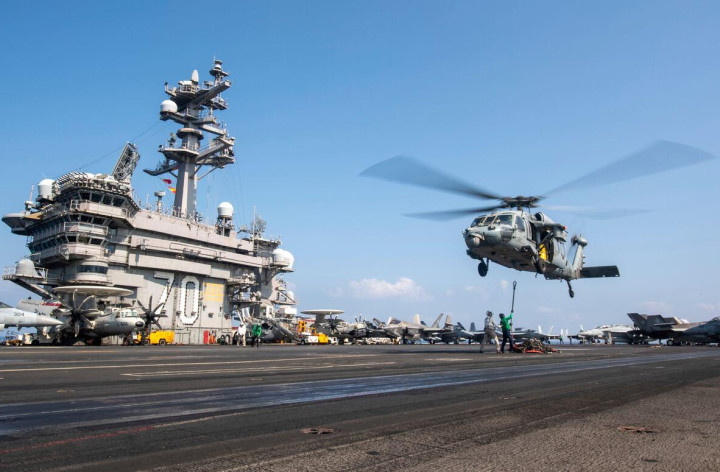
U.S. naval forces remain forward deployed in the region, conducting patrols and coordinating with allied maritime task forces. Officials emphasize that the posture is defensive and aimed at preserving freedom of navigation.
The advisory signals continued vigilance rather than imminent confrontation. It reflects the persistence of unresolved tensions in a waterway central to global energy markets.


COMMENTS