

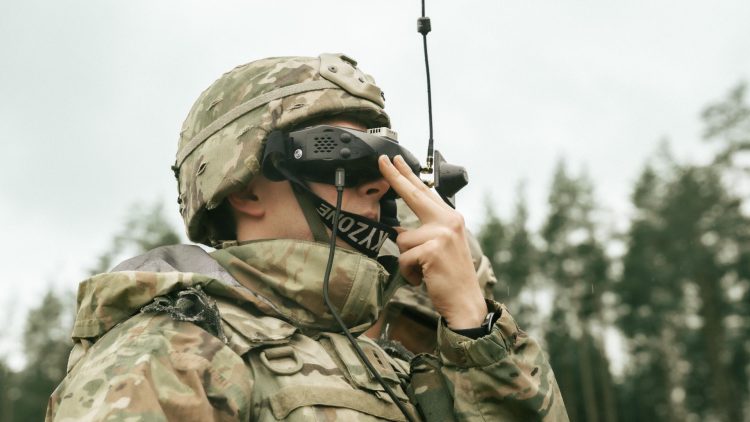
In a scene that felt closer to sci-fi than training, Army paratroopers made history with the first drone-on-drone kill. On August 27, the Department of Defense confirmed the milestone, highlighting how quickly the Army is adapting to drone warfare.
The strike occurred earlier this month at the Unmanned Aerial Systems (UAS) and Launched Effects Summit at Fort Rucker, Alabama, where the 173rd Airborne Brigade teamed with the Pennsylvania National Guard and Army engineers.
Chief Warrant Officer 2 Nate Shea, Pennsylvania Army National Guard, piloted a first-person view (FPV) drone fitted with a Claymore mine against a fixed-wing uncrewed aerial system flown by Chief Warrant Officer 2 Andrew Topits of the 173rd.
After lining up behind the target and calling “Arming,” Shea detonated the charge, destroying the aircraft in midair.
First Lt. Francesco La Torre, who oversaw the exercise, compared the moment to a scene from Star Wars, describing it as more like Darth Vader downing rebel pilots than Luke Skywalker’s famous trench run.
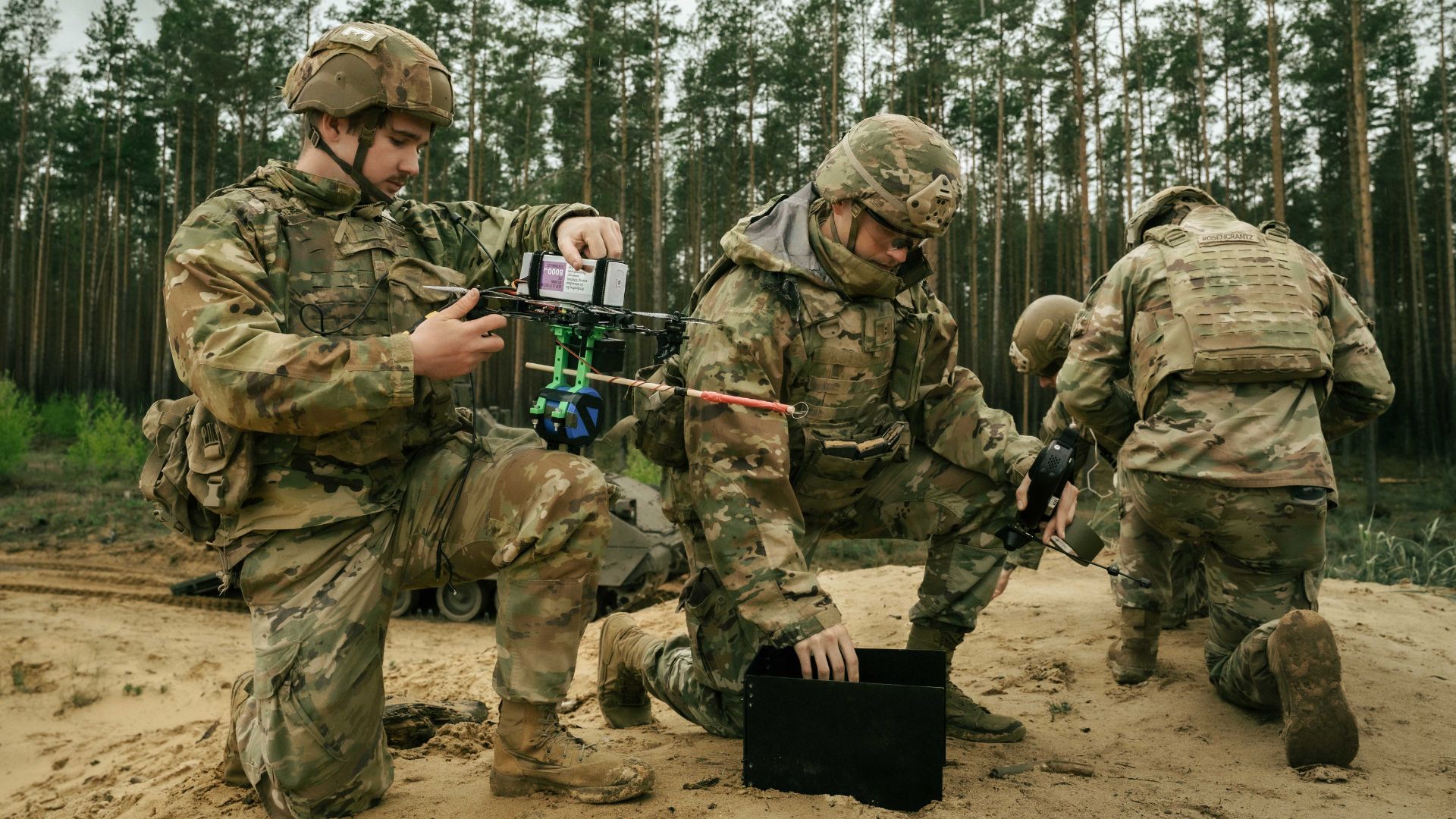
The success followed weeks of preparation. Operators flew daily for hours in changing weather to build muscle memory and learn how to engage fast-moving aircraft.
Shea practiced with inert mines while Topits studied the fixed-wing platform in advance.
Soldiers also spent time soldering, reassembling, and troubleshooting drones on the spot to keep systems running.
La Torre credited this mix of technical skill and persistence as critical to mission success.
First Drone-on-Drone Kill: Significance of the Achievement
For conventional units, destroying an aircraft with a small drone was once unimaginable.
The demonstration proved that low-cost systems, combined with existing munitions, can perform a wide range of tasks, from offensive strikes to defending units against aerial threats.
La Torre emphasized that innovation does not need to come from the top, arguing that junior leaders and paratroopers now have the tools and knowledge to develop solutions in the field.
“Every year, the Army produces leaders at all levels who are better educated now than ever before. At the end of the day, rank is immaterial when it comes to problem-solving,” La Torre said.
The Army is treating drones as a top priority.
Leaders are pushing to increase access to both drones and counter-drone technologies across formations.
Lessons from Ukraine, where drones are used extensively for reconnaissance and attacks, have accelerated American efforts.
The Army is also exploring 3D printing for drone parts, expanded training programs, and mass experimentation with both offensive and defensive systems. These steps are designed to make drone warfare an integral part of how the US military prepares for future conflicts.
Complications, Challenges, and Guiding Principles Going Forward
Drone warfare presents its own difficulties. Operators face unstable video feeds, missing repair parts, and environmental limits like heat and humidity.
In combat, it can be hard to tell friend from foe. Electronic warfare, such as signal jamming, complicates operations, and new systems like fiber-optic drones or artificial intelligence (AI)-enabled platforms make defenses harder.
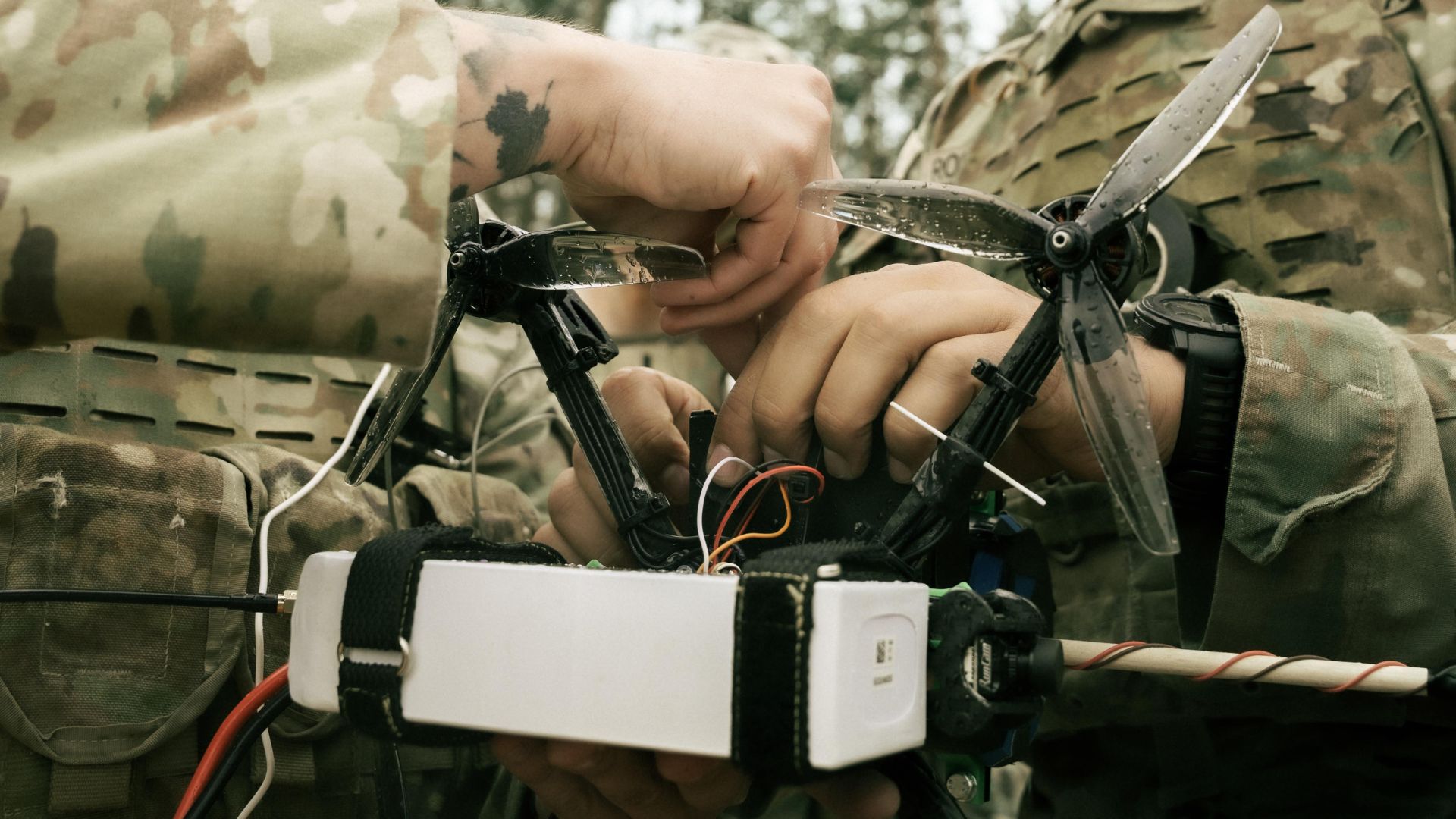
Drones may be cheap, but using them effectively requires constant adaptation.
The Army is now channeling lessons from the Fort Rucker exercise into new training programs, including a lethal UAS course designed to serve as a hub for experimentation and education.
Leaders stress that safe and repeatable training is key, and that progress must be scalable so other units can adopt the same practices.
The goal is to move beyond theory and base decisions on real data and hands-on results.
“We also must make sure everything we do is exportable to other units so they can do the same,” La Torre said.
For La Torre and his team, the success shows how far the Army has come in a short time.
Just a year ago, this kind of exercise was a distant goal. Today, it is evident that conventional units can meet modern challenges with creativity, technical skill, and persistence.
The first drone-on-drone kill is not just a headline but a sign of how the Army is reshaping its approach to warfare.








COMMENTS