

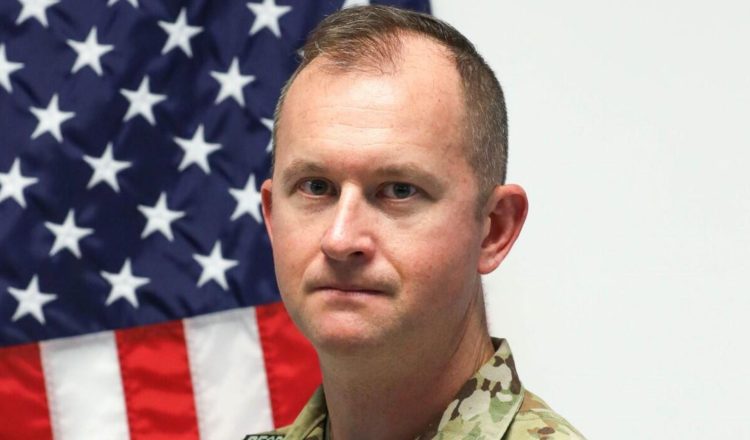
This latest crash is another gut punch for Fort Campbell, which has seen its share of aviation mishaps over the years. In 2023 alone, two HH-60 Black Hawks collided during a night mission, killing nine. That same year, five soldiers from the 160th Special Operations Aviation Regiment were lost in the Mediterranean during a refueling training op. It’s a pattern no one wants to admit exists, but the numbers don’t lie. Training accidents are becoming uncomfortably common. It’s a dangerous job, yes—but “dangerous” isn’t supposed to mean “frequently fatal.” Something has to give.
For now, the Army says they’re investigating. They always do.
Until we get answers, all we know for sure is that Chief Warrant Officer Wright left behind a legacy of grit, professionalism, and commitment to the mission. His loss is more than a line in a safety report—it’s a hole in the formation that won’t be easily filled. And while the Army pushes forward with business as usual, the people who flew with him, fought alongside him, and called him a friend will carry the weight of that evening for a long time to come.
A Pattern of Peril: Fort Campbell’s Troubled History
Fort Campbell, the beating heart of the 101st Airborne Division and home to some of the Army’s most elite aviation units, has built its legacy on being hard, fast, and lethal from above. But there’s a darker side to all that high-speed readiness: a long history of helicopter crashes that have cost the Army dearly in both lives and confidence.
The base’s bread and butter—air assault operations, often under cover of darkness—demands complex and dangerous flying. That kind of training comes with risk, and Fort Campbell’s track record shows just how high the stakes can be.
The most recent tragedy, the June 2025 crash that killed Chief Warrant Officer 2 Dustin K. Wright, adds yet another name to a list of losses that stretches back decades. Just two years earlier, in March 2023, two HH-60 Black Hawk helicopters collided during a nighttime training mission. All nine service members on board were killed. It happened in clear weather, with pilots wearing night-vision goggles—conditions that should have made for a routine flight. Instead, it became one of the deadliest non-combat aviation disasters in Army history.
The hits don’t stop there. In 2018, another Apache helicopter went down during a training exercise, killing both crew members. The year before, four pilots were injured in yet another training mishap.
Go back to 2015, and you’ll find two more pilots lost in a similar accident. This pattern of wreckage isn’t confined to recent years, either. In 1996, two Black Hawks clipped rotors and crashed, killing at least five soldiers. But the worst of them all came in 1988, when two HH-60 Black Hawks collided during nighttime maneuvers, claiming the lives of seventeen servicemen. That disaster remains the deadliest non-combat Black Hawk crash in U.S. Army history.
What ties these incidents together isn’t just geography—it’s mission. Fort Campbell’s units train hard and often, usually in the kind of high-risk, no-room-for-error scenarios they’d face in combat. It’s what makes them sharp. But it also pushes machines, and the men who fly them, to their limits. The Army knows this, and every few years, another crash triggers an investigation, followed by safety stand-downs, reviews, and the usual promises to “do better.” Yet the body count keeps ticking upward.
Army-wide, Black Hawks alone have racked up over 40 Class A mishaps in the last decade—those are the big ones: deaths, destroyed aircraft, millions in damage. Those crashes have resulted in 44 fatalities. The Apache, though less common, has proven similarly deadly when something goes wrong.
The Wright crash fits squarely into this broader context. Another routine training mission. Another seasoned aviator lost. Another open-ended investigation. Nobody’s drawn a straight line between all these events, but the pattern is hard to ignore. There’s no single boogeyman to blame—sometimes it’s equipment failure, sometimes pilot error, sometimes bad luck. But taken together, these incidents point to a dangerous tightrope walk between preparation and peril.
At Fort Campbell, every crash echoes across the aviation community. Pilots and crews know the risks better than anyone, but knowing doesn’t soften the blow. Each wreck scratches deeper into the fabric of the force, and every fatality demands answers. Until those answers translate into safer skies, the cost of readiness will keep being paid in blood and steel.
The Broader Implications: Training, Safety, and Accountability
The frequency of such incidents raises questions about the balance between rigorous training and safety. Military helicopter pilots undergo extensive training to handle the multifaceted demands of flight, including operating multiple controls simultaneously, navigating with night-vision equipment, and managing communications. Despite these precautions, accidents continue to occur, often with fatal consequences. It’s a dangerous profession.
As investigations into the latest crash continue, the military community and the public await answers. The goal is not only to determine the cause of this specific incident but also to implement measures that prevent future tragedies.
Honoring the Fallen
Chief Warrant Officer 2 Dustin K. Wright’s death is a dark reminder of the sacrifices made by those in uniform, not only in combat but also in preparation for it. As the Army and the nation mourn his loss, there is a collective call to action to ensure that training exercises are conducted with the utmost safety, honoring the commitment and lives of service members like Chief Wright.








COMMENTS