

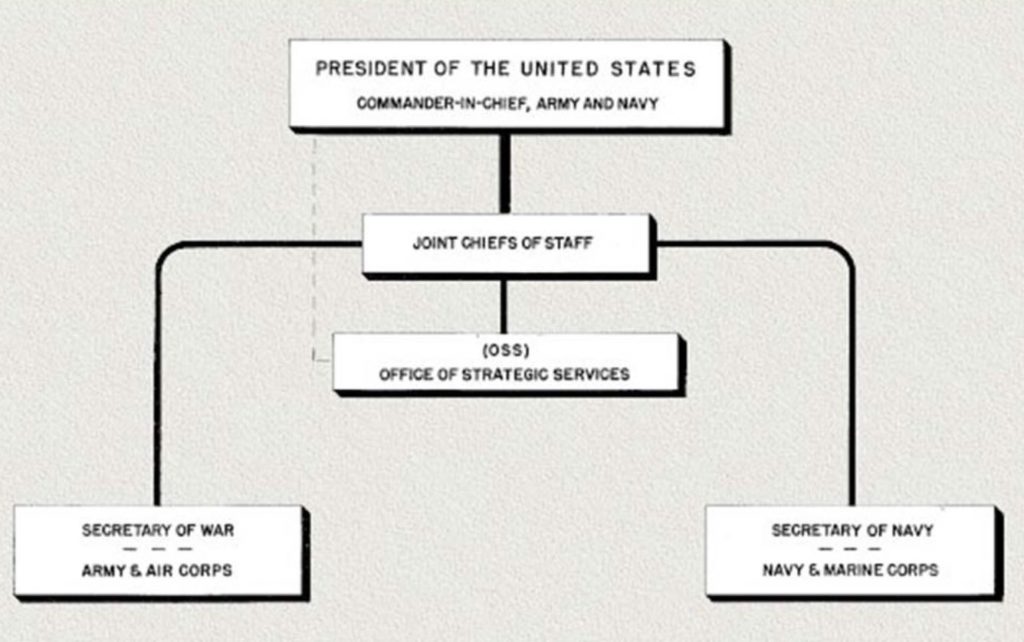
As ordered, a Wehrmacht firing squad carried out the order, killing all 15 American service members. Their bodies were unceremoniously dumped into a mass grave.
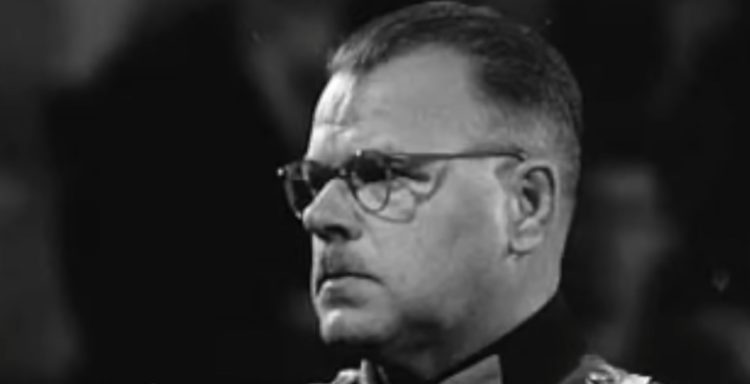
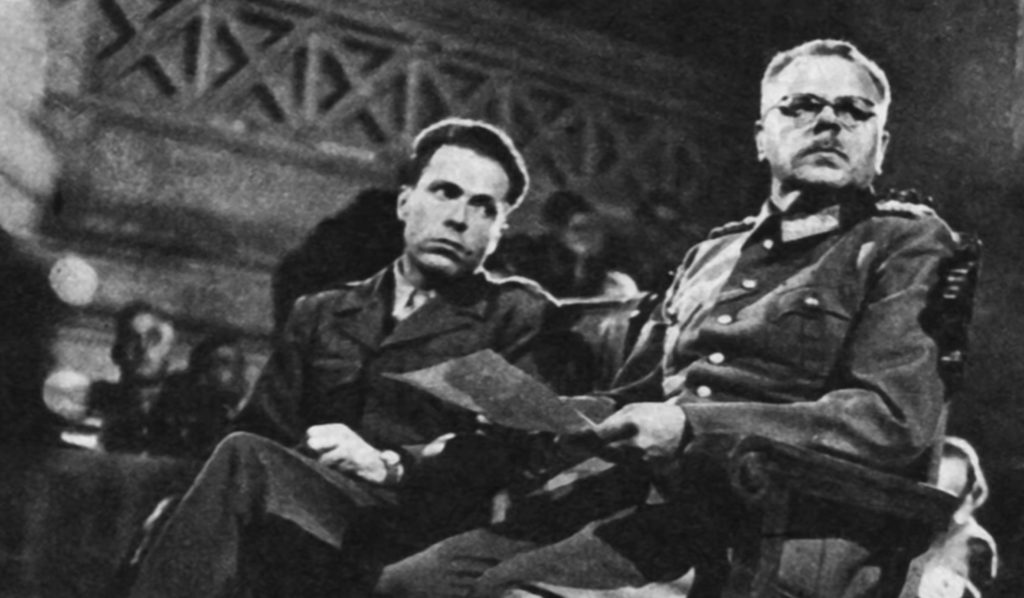
General Dostler’s life carried on as usual. He survived the war but was later captured by American forces and was held in Rome in 1945. The Nazi officer faced a possible death sentence at a military commission appointed by US General Joseph T. McNarney, the Army’s commanding general in the Mediterranean Theater.
Unlike the 15 soldiers he had executed, General Dostler had his day in court. The prosecution saw the case as clear cut: The men were wearing US military uniforms and were on a legitimate military mission when captured. They were entitled to be treated as prisoners of war. Their execution without a trial violated a rule of international law enacted during the 1929 Geneva Conventions.
A Fair Trial
The defense argued that by the stealthy nature of the mission, the OSS members were spies rather than legitimate combatants. Further, they stated that the Americans were not wearing distinctive military insignia that could be identified at a distance and thus were improperly uniformed and not entitled to POW status. That line of defense proved weak and was of little help to Dostler, who American prosecutors reminded that even spies were lawfully entitled to a trial to determine their fate.
The defense had another trick up its sleeve; they argued that Dostler’s oath of obedience to Adolf Hitler required him to obey the October 1942 Führerbefehl (leader order), which proclaimed Allied commando units to violate the Geneva Convention and ordered German units encountering such groups to “exterminate them without mercy wherever they find them.”
Hitler’s order insisted that even if commandos “appear to be soldiers in uniform,” they must be killed and not be allowed to surrender. Finally, the ruling stated that if Allied commandos fell into German military hands “through different channels (for example, through the police in occupied territories),” they could not be kept, even temporarily. Instead, military personnel were to immediately deliver the commandos to the Sicherheitsdienst, the “security service” of the SS. I’m no lawyer, but it sounds like Hitler’s harsh edict violated several laws of war.
After taking the stand, Dostler continued with the party line and testified that he had no choice but to order the execution of the Americans because they were captured while carrying out a commando raid, and his oath to Hitler required him to obey the Führerbefehl, even if that order violated international law. It was the old “I had no choice but to carry out an illegal order” excuse, and the prosecution wasn’t buying it.
“Death by Musketry”
On October 12, 1945, the military commission found Anton Dostler guilty after a four-day trial. In the archaic terminology of Army courts-martial, his colorful sentence was “to be shot to death by musketry.”
The convicted General was allowed to live another 50 days. His execution was carried out in the Italian city of Aversa. When the time came, Dostler was delivered to the 12-man execution party shortly after sunrise. It was just after 0800 on the first of December, 1945. As is the tradition, the officer in charge read aloud the heads of the condemned. Dostler was granted a brief moment with a Roman Catholic chaplain.
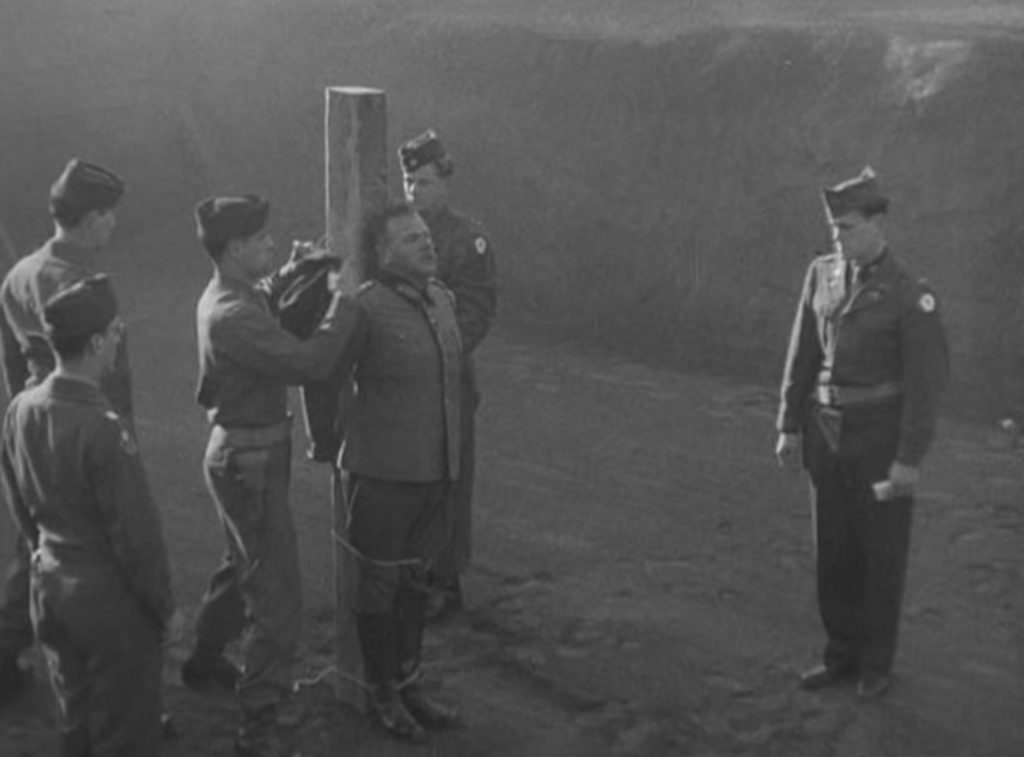
Three soldiers tied the General to a post with his arms behind his back. Next, a medical officer placed a black hood over his head and attached a four-inch white target over Dostler’s heart.
The firing party took their positions from a distance of 50 feet from the prisoner. The officer in charge gave the command to fire. The shots rang out in unison. Dostler’s body slumped forward, dead.
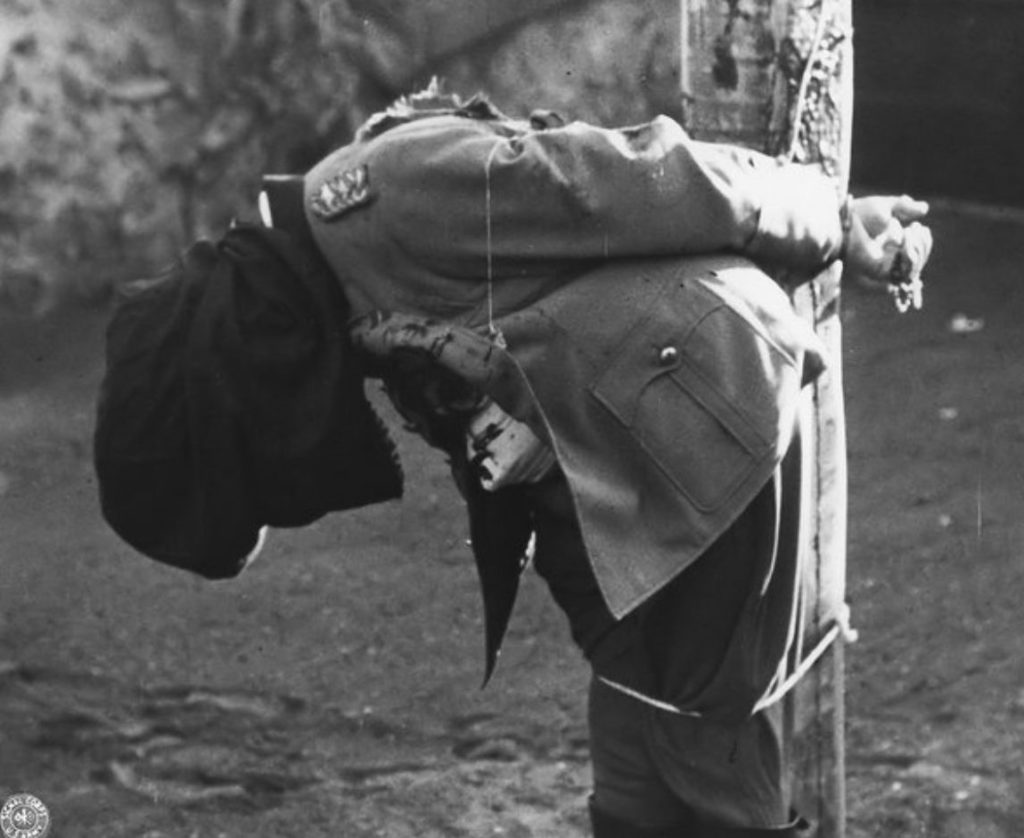
The firing squad turned their backs on his body as a medical officer went forward and officially pronounced him dead. Of all the Nazi war criminals to be executed, Dostler was only one of two to be shot to death by musketry; the rest were hanged. The other German to face a firing squad was Curt Bruns. Bruns had also been convicted of ordering the end of American POWs.
This article has been reviewed and updated by the SOFREP News Team.








COMMENTS