
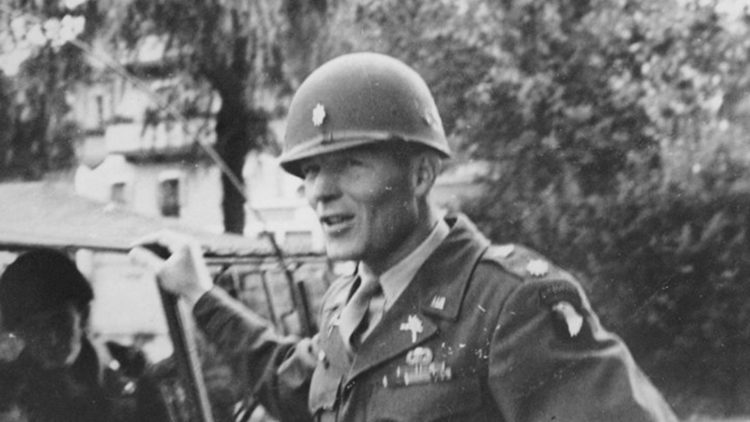
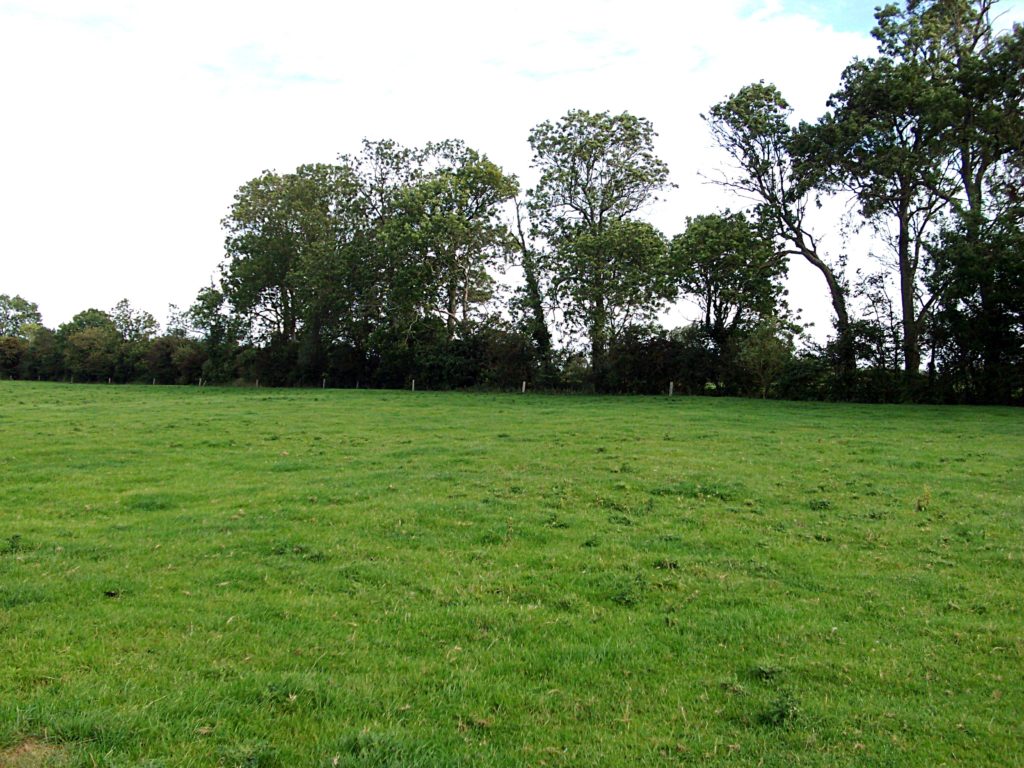
Dick Winters set up two pairs of M1919 .30 caliber machine guns that would provide covering fire and support for the assault. Two more soldiers, including SGT Carwood Lipton, were positioned to lend more support. Lipton climbed a tree that afforded a perfect view of the German positions but left him dangerously exposed.
Once the American machine guns opened up on the German MG42s, three men led by Compton moved to the flank of the German position and took it out with grenades. This allowed Winters and the assault team to enter the trench. While the trenches allowed the German troops easy access to resupply the guns, they also protected Winters and the assault team from heavy machine-gun fire coming from Brecourt Manor. Instead, the machine-gun fire passed over their heads and forced them to crouch in the trenches.
Winters and the assault team took the first gun. They spiked it using TNT and captured German potato masher hand grenades. As they were prepared to move to the second gun in the trenches, Winters spotted two Germans setting up another MG42 inside the trench that would have blocked them from moving forward. He shot both of them and moved forward.
At the second gun position, Winters spotted a small radio and map room; the map pinpointed the artillery positions in the entire Cotentin Peninsula.
They took the third gun, but not before a machine gun burst, killing PFC John Halls, who was on the 506th basketball team coached by Winters. Halls was portrayed in the miniseries as having been killed by a mine.
In his journal, Winters wrote, “John D. Halls was with me on D-Day he was killed charging for the third cannon, by an undisclosed machine gun nest. He was a good basketball player and a good soldier.” Winters’ account was confirmed by Easy Company veteran David Webster in his book Parachute Infantry.
After they took the third gun, Winters’ assault team was augmented by 2LT Ronald Spiers and men from D Company. They assaulted and took the fourth gun. Since the small group of men didn’t have the strength to assault Brecourt Manor, Winters ordered a withdrawal.
Four men were killed in action during the engagement. Halls was killed in the assault of the third gun; Warrant Officer Andrew Hill was killed when coming across the assault as he was looking for the 506th HQs.
Spiers lost two men: SGT “Rusty” Houck from F Company and another paratrooper from D Company. “Popeye” Wynn from Easy Co. was shot in the buttocks during the assault.
Onwards to Brecourt Manor
After returning to 3rd Bn. HQs, Winters turned over the German map to the Regiment S-2 CPT Lewis Nixon. Nixon raced the three miles down to Utah Beach and turned it over to the higher HQs.
The 4th Division was so pleased with this intelligence coup, that they turned over two of their first tanks ashore to the 506th. Those two tanks assisted in the assault on Brecourt Manor.
The commander of the 506th, Colonel Robert Sink, recommended Winters for the Medal of Honor.
However, the Army, for whatever reason, decided that each division could only recommend one soldier for the Medal of Honor for actions performed during the Normandy invasion. That honor went to LTC Robert Cole who led the charge to secure four bridges.
Winters was awarded the Distinguished Service Cross. “Buck” Compton, Sergeant William “Wild Bill” Guarnere, and Private First Class Gerald Lorraine were awarded the Silver Star.
The Bronze Star was awarded to:
- Sergeant Carwood Lipton
- Private Robert “Popeye” Wynn
- Private Cleveland Petty
- Private Walter Hendrix
- Private Donald Malarkey
- Private Myron N. Ranney
- Private Joseph Liebgott
- Private John Plesha
- Corporal Joe Toye
- Private First Class John D. Halls (KIA)
- Sergeant Julius “Rusty” Houck (KIA)
In his interview for History Channel, Winters said with the hint of a smile, “We eliminated all of the guns firing on Causeway #2 for any troops trying to come in from the beach… they could have caused an awful lot of casualties, and delayed the landings. As it was, the casualties were very, very light.”
“Of which we are very proud.” —Winters
A Pivotal Moment on D-Day
The German forces at Brecourt Manor, caught off guard by the audacious attack, were ill-prepared for the flanking maneuver and aggressive tactics employed by Easy Company. Their defensive strategy focused on frontal assault, proved ineffective against the Americans’ innovative approach. The swift and decisive action of Winters and his men overwhelmed the defenders, leading to the battery’s neutralization.
From a strategic standpoint, the assault on Brecourt Manor was a resounding success. The elimination of the German artillery battery directly impacted the Utah Beach landings, clearing a crucial path for American forces to advance inland.
By silencing the guns that threatened Causeway #2, Easy Company played a pivotal role in ensuring the success of the D-Day invasion and minimizing American casualties.
While the German defenders suffered a tactical defeat, the assault on Brecourt Manor ultimately highlighted the resilience and adaptability of the American paratroopers. Facing a seemingly insurmountable task, they overcame obstacles, improvised solutions, and ultimately secured a victory that significantly contributed to the liberation of France and the eventual Allied triumph in World War II.
The legacy of Easy Company’s heroism at Brecourt Manor serves as a timeless testament to the indomitable spirit of those who fought for freedom on D-Day.
This article has been reviewed and updated by the SOFREP News Team.








COMMENTS