May 7, 1945, marked the end of Nazi Germany. Victory in Europe was more than a win—it was the dawn of a new world order.
Read the full article for more on:
Important insights and detailed analysis
Expert commentary on current events
Breaking developments and updates
Updating summary...
Victory in Europe: The Moment Europe’s Nightmare Ended
SOFREP News Team
Speed
1x
Listen
COMMENTS
May 7, 1945, marked the end of Nazi Germany. Victory in Europe was more than a win—it was the dawn of a new world order.
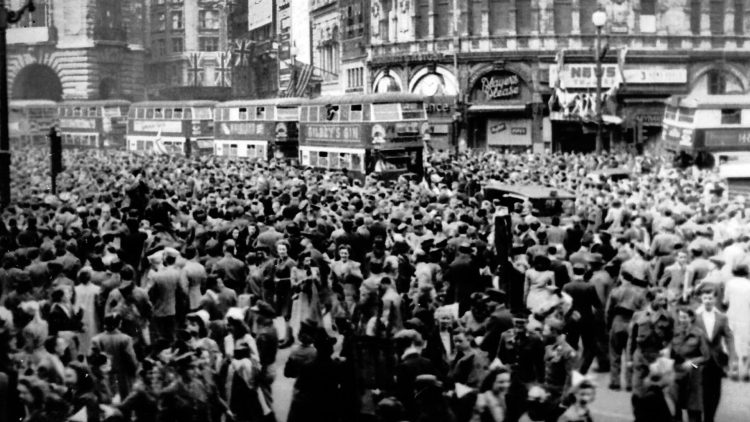
Supporters celebrate V-E Day in Piccadilly Square, May 8, 1945. (Wikimedia Commons)
On May 7th, 1945, the guns fell silent across Europe. After years of brutal combat, mass devastation, and unimaginable loss, Germany officially surrendered to the Allied forces. The long, blood-soaked road to victory had reached its climax. The end of the war in Europe—the moment when the Third Reich crumbled and Nazi Germany faced its reckoning—had arrived. For the soldiers, sailors, and civilians who had endured, this was the day they had fought for.
Advertisement
Victory in Europe Day (V-E Day) didn’t come without cost. The skies were still heavy with the scars of war, the cities still smoldering from airstrikes, and the memories of millions lost still haunting every corner of the continent. Yet, May 7th was a day of triumph, of pride, and, for many, relief. It was the moment the Allies’ determination and sacrifice paid off. The end of one war did not mean an end to the global turmoil, but it marked a turning point—one that would change the course of history forever.
The Road to Surrender
The final surrender came just days after Adolf Hitler’s death, a symbol of the collapse of the Nazi regime. On April 30, 1945, Hitler took his own life in his bunker in Berlin, a desperate act that signaled the unraveling of his empire. Berlin had fallen to Soviet forces, and the Allies were closing in from all sides. In truth, the writing was already on the wall for Nazi Germany; their fate had been sealed months earlier at Stalingrad, Normandy, and in the skies above the Reich.
But the fight wasn’t over yet. The final push to break the German resistance was relentless. Allied forces—Americans, British, Soviets—had surrounded Germany, driving forward with unwavering resolve. The German military was exhausted, their resources stretched thin, and morale was shattered.
Advertisement
Despite this, the leadership in Germany refused to accept the inevitable, leading to some fierce, final battles in the heart of the Reich.
The Surrender
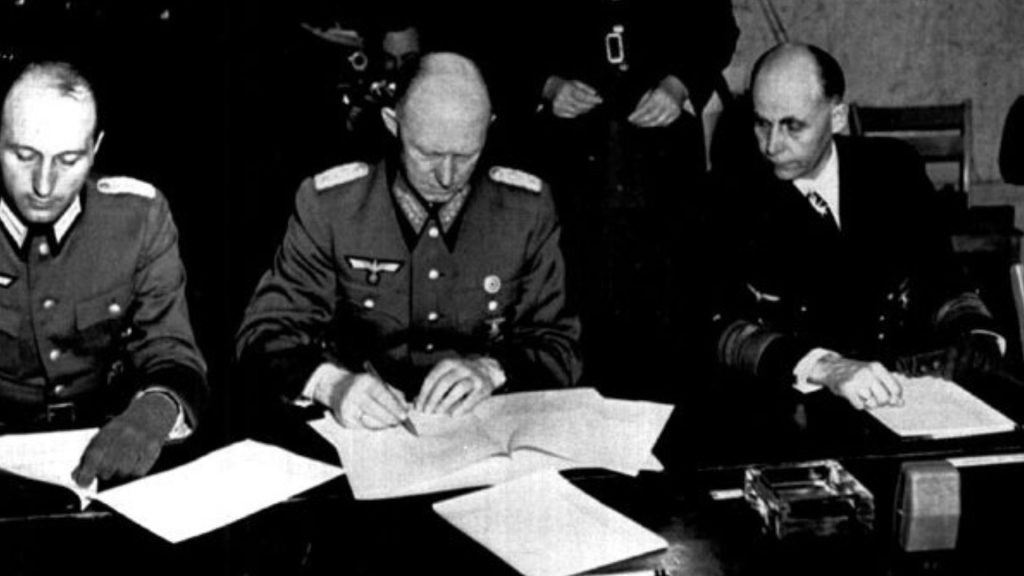
On May 7, at 2:41 a.m. in Reims, France, General Alfred Jodl, representing the German High Command, signed the instrument of unconditional surrender on behalf of Nazi Germany.
Advertisement
The surrender was unambiguous—no terms, no negotiations. The war in Europe was over. The signature marked the beginning of the end for Hitler’s nightmare across the continent.
Gen. Alfred Jodl signs Germany’s unconditional surrender on May 7, 1945, in Reims, France, ending the war in Europe. (UPI)
General Dwight D. Eisenhower, the Supreme Commander of the Allied Expeditionary Force, was there, overseeing the formal act. Eisenhower, a man who had seen the full toll of this war on his soldiers and the world, understood the weight of the moment. His presence at that signing wasn’t just symbolic—it was a powerful representation of the Allied effort to rid the world of fascism.
A Day of Triumph and Reflection
But the surrender did not immediately mean peace. On May 8, 1945, as news of the surrender spread across Europe, crowds erupted into jubilation. In London, Paris, New York, and beyond, people spilled into the streets to celebrate. The war that had destroyed so much had finally come to an end.
Advertisement
But amid the celebrations, there was also a solemnity. The cost of victory had been high. The people who had fought, the ones who had lost friends, families, and livelihoods, understood that victory wasn’t something to gloat over—it was something to honor.
For the soldiers who had stormed Normandy’s beaches, for the airmen who had carried out the relentless bombing raids over Germany, for the civilians who had witnessed the horrors of occupation and war, V-E Day was a moment of reflection.
Yes, they had won, but so much had been lost. This was a day for both joy and remembrance, for relief and mourning.
The war in Europe was over, but it wasn’t the end of the global struggle.
Japan remained a formidable opponent in the Pacific, and the United States would go on to face new challenges in the postwar world. The Cold War loomed large on the horizon. But on May 7, 1945, and the days following, the world could breathe a collective sigh of relief, knowing that the worst of the war was behind them.
The Legacy of V-E Day
Victory in Europe Day was not just the end of a conflict—it was the beginning of a new world order. The Axis powers were defeated, but the world had been forever changed. The Allies, with their shared commitment to freedom, had won, but the devastation left behind would take years to heal. The cities would rebuild, the governments would reform, and the memories of those who gave everything would never fade.
V-E Day is a reminder of the resilience of the human spirit. It is a day to honor the sacrifice of the millions who fought, suffered, and died for the cause of liberty. And as the world continues to navigate its challenges today, the spirit of V-E Day—united against tyranny, committed to peace—remains a vital part of our history.
Advertisement
What readers are saying
Generating a quick summary of the conversation...
This summary is AI-generated. AI can make mistakes and this summary is not a replacement for reading the comments.










COMMENTS