Roosevelt Roads, a former U.S. Navy base in Ceiba, Puerto Rico, has resumed military operations with F-35 stealth fighters and support aircraft, marking its functional return to service for counter-drug and deterrence missions amid rising tensions in the region. This development highlights the strategic importance of the base's location and infrastructure.
Key points from this article:
The F-35 stealth fighters were photographed landing at Roosevelt Roads in September 2025, indicating a functional return to military operations at the former Navy complex.
How the resumption of operations at Roosevelt Roads affects U.S. military posture includes enhanced capabilities for counter-drug operations and regional deterrence against threats from Venezuela.
Why this matters is that the strategic location of Roosevelt Roads allows for rapid response to maritime threats and humanitarian crises in the Caribbean, leveraging its 11,000-foot runway and logistical support.
Updating summary...
A Sleeping Caribbean Giant Awakens: Roosevelt Roads is Back – Now With F-35s
Guy D. McCardle
Speed
1x
Listen
COMMENTS
Roosevelt Roads is awake again—an 11,000-foot spear thrust into the Caribbean, where F-35s and Ospreys turn a once-quiet slab of concrete into America’s forward deck for interdiction, deterrence, and the next storm that dares roll through.
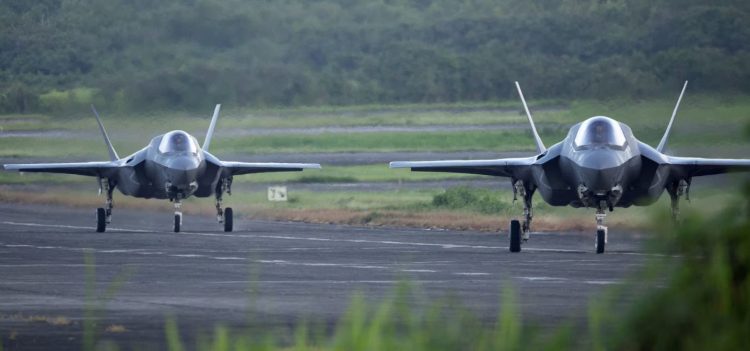
In this September 13, 2025 photo we see two F-35 fighters at the former Roosevelt Roads military base in Puerto Rico. Image Credit: Ricardo Arduengo / Reuters
A sleeping giant stirs
For two decades, Roosevelt Roads was a ghost with an 11,000-foot runway—too long to forget, too useful to ignore. In September 2025, that changed. F-35 stealth fighters were photographed landing at the former Navy complex in Ceiba, with helicopters, Ospreys, and transports cycling through. Pentagon spokespeople haven’t announced a formal force posture change, but aircraft are operating from the field now. That’s not a rumor; it’s on camera.
Advertisement
Ignore the hyperbolic text on the video below; it’s actually some really good aviation footage from the former Navy complex.
How we got here
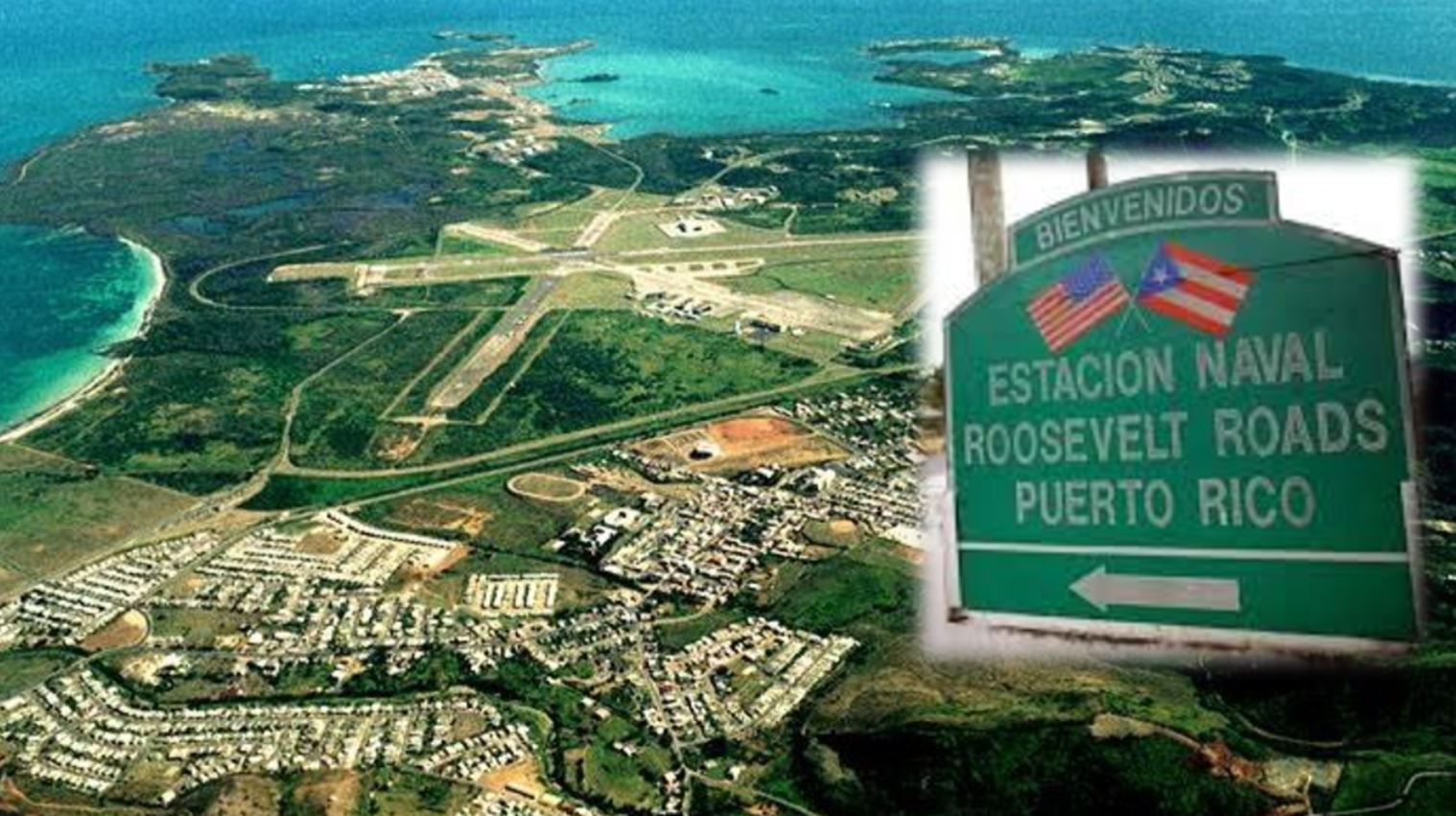
Roosevelt Roads traces its origins to Franklin D. Roosevelt’s 1919 survey of Puerto Rico and was commissioned during World War II. It grew into one of the largest U.S. naval facilities in the Caribbean, a strategic hub for Atlantic and Caribbean operations. The base closed in 2004 amid the fallout from the Vieques range controversy, and much of the airfield transitioned to Puerto Rico’s José Aponte de la Torre Airport—same concrete, new civilian wrapper.
Advertisement
Welcome to Roosevelt Roads. Image Credit: Facebook
After closure, the Navy retained cleanup and environmental oversight responsibilities through the BRAC program and continued holding Restoration Advisory Board meetings with local stakeholders. Those meetings were still on the calendar this year, a reminder that “former base” status never erased the map grid.
So, is the base “reopened”?
Short answer: functionally, yes—operationally active again—without the paperwork trappings of a grand re-commissioning ceremony. The field is supporting U.S. aircraft in a regional posture tied to counter-drug and deterrence missions during heightened tension with Venezuela. Reuters documented five F-35s on the ground at the former Navy ramp, and open-source aviation outlets assessed them as F-35Bs. Official language remains cautious, but the runway is clearly earning its keep.
Advertisement
The new mission set
Think of Roosevelt Roads 2025 (that’s what I’ve taken to calling it) as a flexible forward staging and sustainment node under U.S. Southern Command and Joint Interagency Task Force–South tasking:
Counter-drug operations and maritime domain awareness. The location covers the approaches to the Antilles and Caribbean sea lanes where traffickers move product in fast boats, low-profile craft, and light aircraft. A stealthy ISR-capable fighter brings sensors and reach; rotorcraft and tiltrotors move teams and kit.
Deterrence signaling. Parking fifth-gen jets in Puerto Rico sends a message to regional actors without the overhead of basing them on smaller islands with shorter runways. An 11,000-foot strip and deepwater access were the selling points in WWII; they still are.
Humanitarian assistance and disaster response (HADR) surge. While not explicitly announced, any large Caribbean airfield with military logistics in motion doubles as a launchpad when storms rip through the Leewards and Virgin Islands. The infrastructure—and Customs/CBP hours—are in place to move people and pallets fast.
What’s on the ramp
F-35 (assessed F-35B). Fifth-generation strike fighters capable of intelligence, surveillance, and reconnaissance while holding distant targets at risk. Photos and reporting confirm arrivals to Ceiba on Sept. 14, 2025.
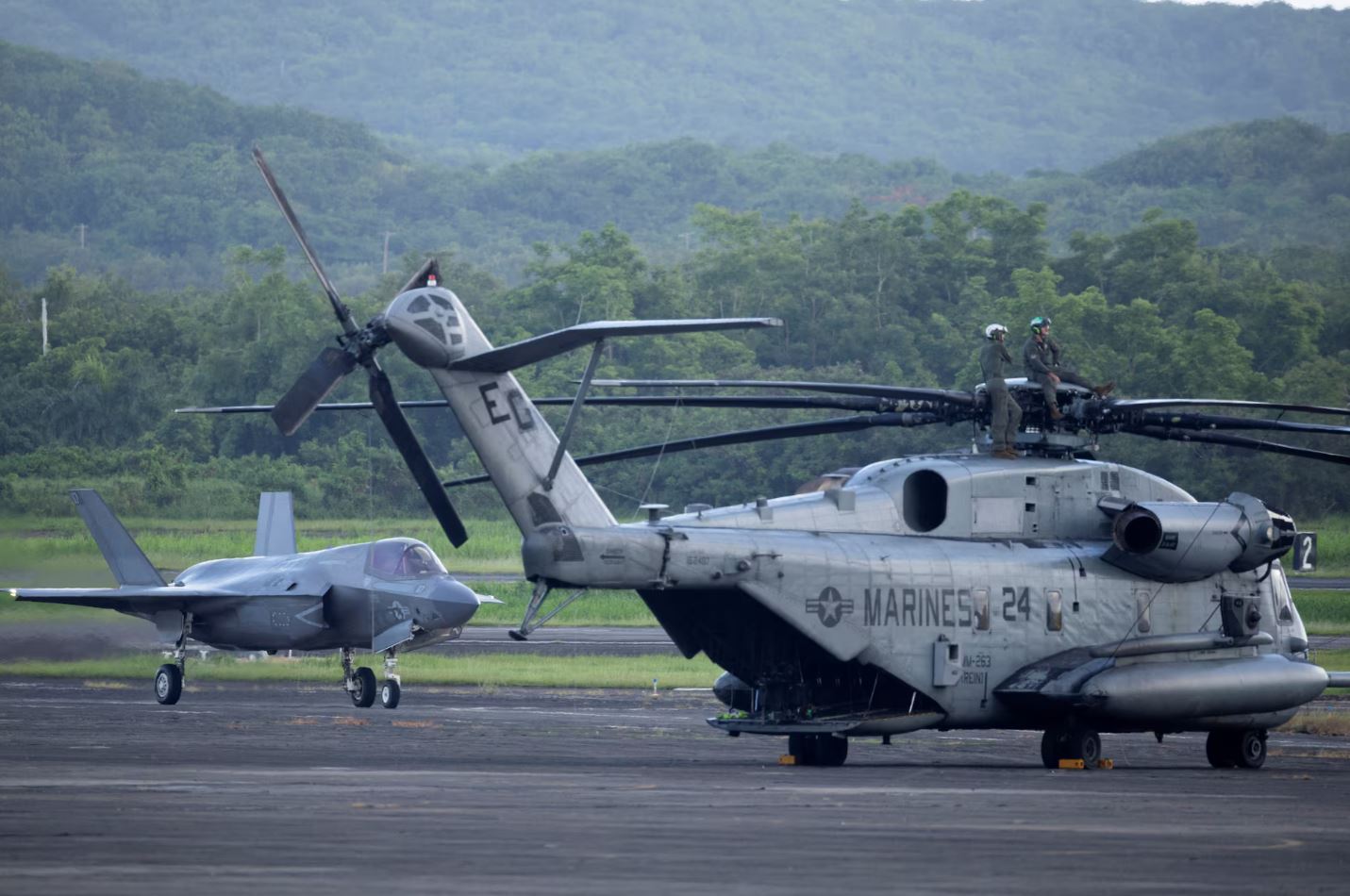
MV-22 Osprey and helicopters. Reuters reporting notes Ospreys and other helicopters working the field—ideal for maritime interdiction support, infiltration/exfiltration, and rapid logistics around the island chain.
Transports. Fixed-wing lifters have been observed moving personnel and cargo—bread-and-butter for any surge posture.
Important nuance: the airfield remains, on paper, José Aponte de la Torre Airport under the Puerto Rico Ports Authority, with published civil data, diagrams, and services. Military use now overlaps with civilian status—practical before formal.
An F-35 fighter sits on the former Roosevelt Roads runway along with a Marine Corps Helicopter. Image Credit: Ricardo Arduengo / Reuters
Why Roosevelt Roads, why now
Geography wins wars and interdictions. Ceiba sits at the hinge of the Mona Passage, Virgin Passage, and the sea lanes feeding the Lesser Antilles—close to where go-fast boats pop up, yet backed by mainland-grade logistics. In an era of gray-zone pressure, a re-awakened Roosevelt Roads 2025 lets the U.S. show up fast with jets that see far and tiltrotors that land almost anywhere. Recent reporting ties the surge to both cartel pressure and friction with Caracas. When the region heats up, the old runway turns into a launch rail.
Advertisement
Bottom line
Whether or not the Navy officially cuts a ribbon, Roosevelt Roads is back in play. The runway that anchored a Cold War fortress is once again launching sorties and moving rotorcraft.
Call it a soft reopen with sharp teeth—fifth-gen jets, tiltrotors, and a mission set tuned for interdiction, presence, and the kind of crisis response the Caribbean demands.
Keep your eyes on SOFREP. I’m sure you’ll be reading lots more about this site in the not-too-distant future.
Advertisement
What readers are saying
Generating a quick summary of the conversation...
This summary is AI-generated. AI can make mistakes and this summary is not a replacement for reading the comments.










COMMENTS