The US Navy is exploring the potential of using 20 robot boats to replace a billion-dollar destroyer, as proposed by Rear Admiral Michael Mattis and his Task Force 66. This 'deconstructed DDG' concept aims to enhance naval warfare by dividing missions among uncrewed vessels at a significantly lower cost, while also providing persistent presence at sea.
Key points from this article:
The US Navy's Task Force 66 is testing the concept of using 20 uncrewed surface vessels (USVs) to replace a single destroyer in various missions.
How the USVs participated in multinational exercises like Baltic Operations (BALTOPS) and Arcane Thunder, demonstrating their capabilities in scouting, logistics, and surveillance.
Why this matters for the Navy's future strategy, as it could allow for a more resilient and cost-effective naval presence amid rising global threats and budget constraints.
Updating summary...
Deconstructing the Destroyer: How Task Force 66 is Testing the Navy’s Robotic Future
Guy D. McCardle
Speed
1x
Listen
COMMENTS
Can 20 robot boats replace a Navy destroyer? Task Force 66 tests a bold vision that could reshape the future of naval warfare.
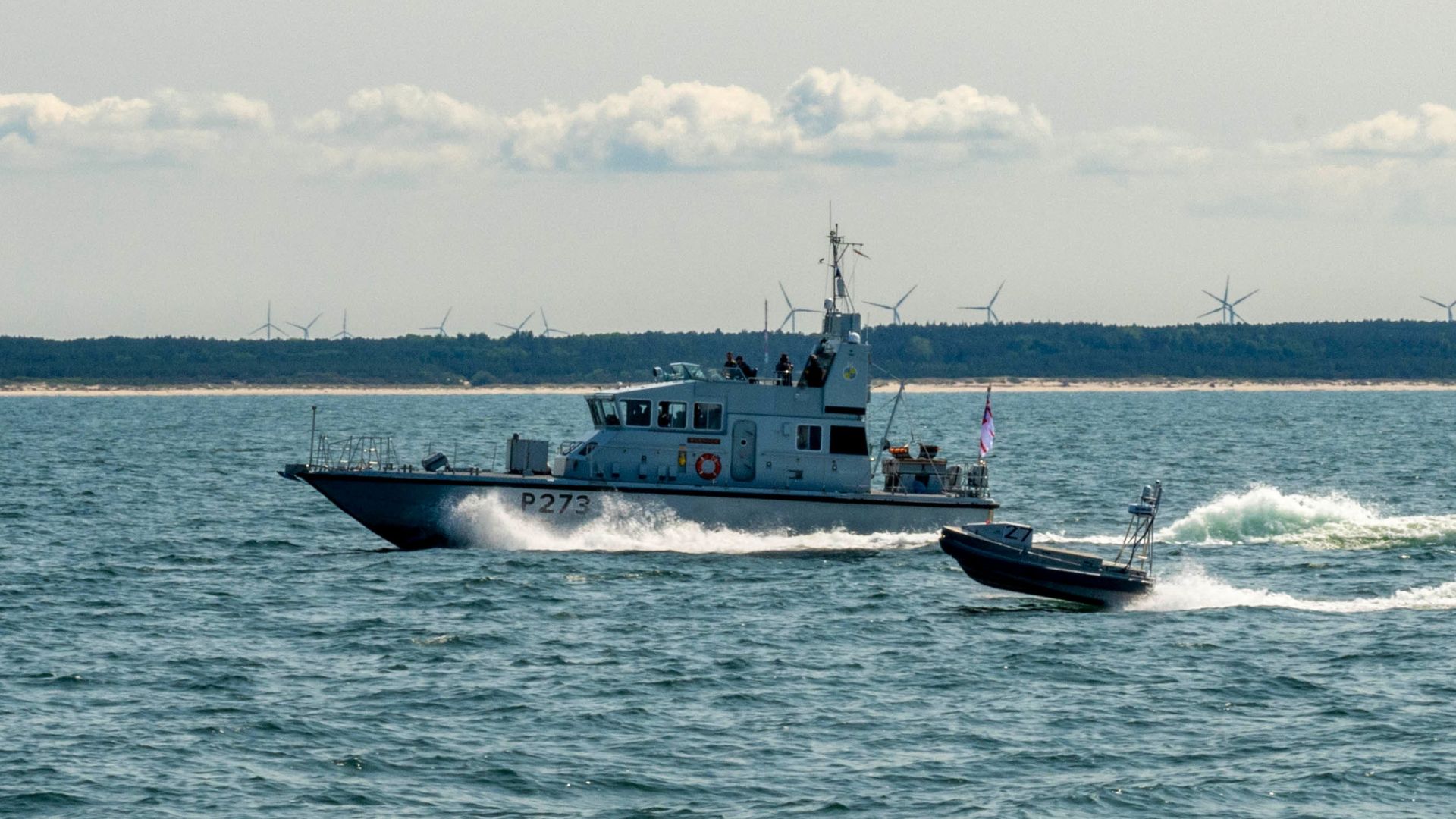
Royal Navy P2000 patrol vessels join GARC units for counter-unmanned surface vessel operations during BALTOPS 2025, June 12. (US Navy)
In an era where speed, cost, and resilience matter as much as firepower, the US Navy is asking a radical question: Can 20 robot boats replace a billion-dollar destroyer? Rear Admiral Michael Mattis and his Task Force 66 (TF66) think the answer might be yes, and the results of their experiments could reshape naval warfare.
Advertisement
Mattis calls it the “deconstructed DDG.” Instead of one exquisitely capable destroyer shouldering multiple missions, a flotilla of heterogeneous uncrewed surface vessels (USVs) would divide the tasks—scouting, logistics, surveillance, even limited strike support—at a fraction of the cost.
“We think that with 20 USVs of different types, we could deconstruct a mission that a DDG could do,” Mattis told a recent audience. “And we think we could do it at essentially 1/30 of what a DDG would cost.”
Testing the Concept at Sea
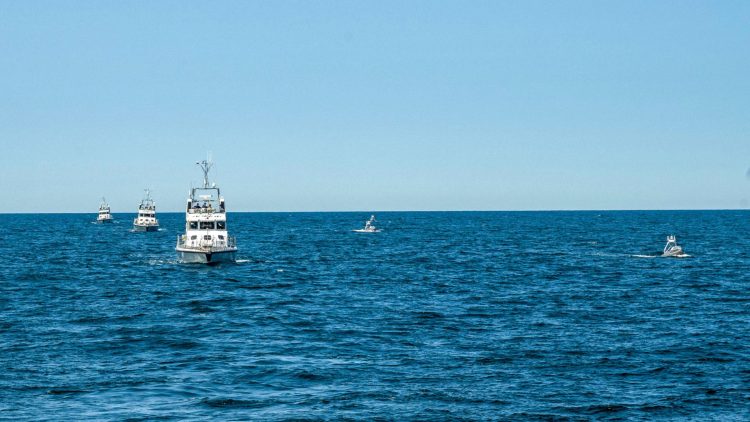
This summer, TF66 put its thesis to the test in multinational exercises across Europe. In Baltic Operations (BALTOPS), the team joined the Royal Navy to command uncrewed systems from a patrol boat, sending them on scouting runs in contested electromagnetic environments.
In Poland, the boats carried supplies for special operations forces, slipping past barriers to simulate resupply missions in hostile waters.
Advertisement
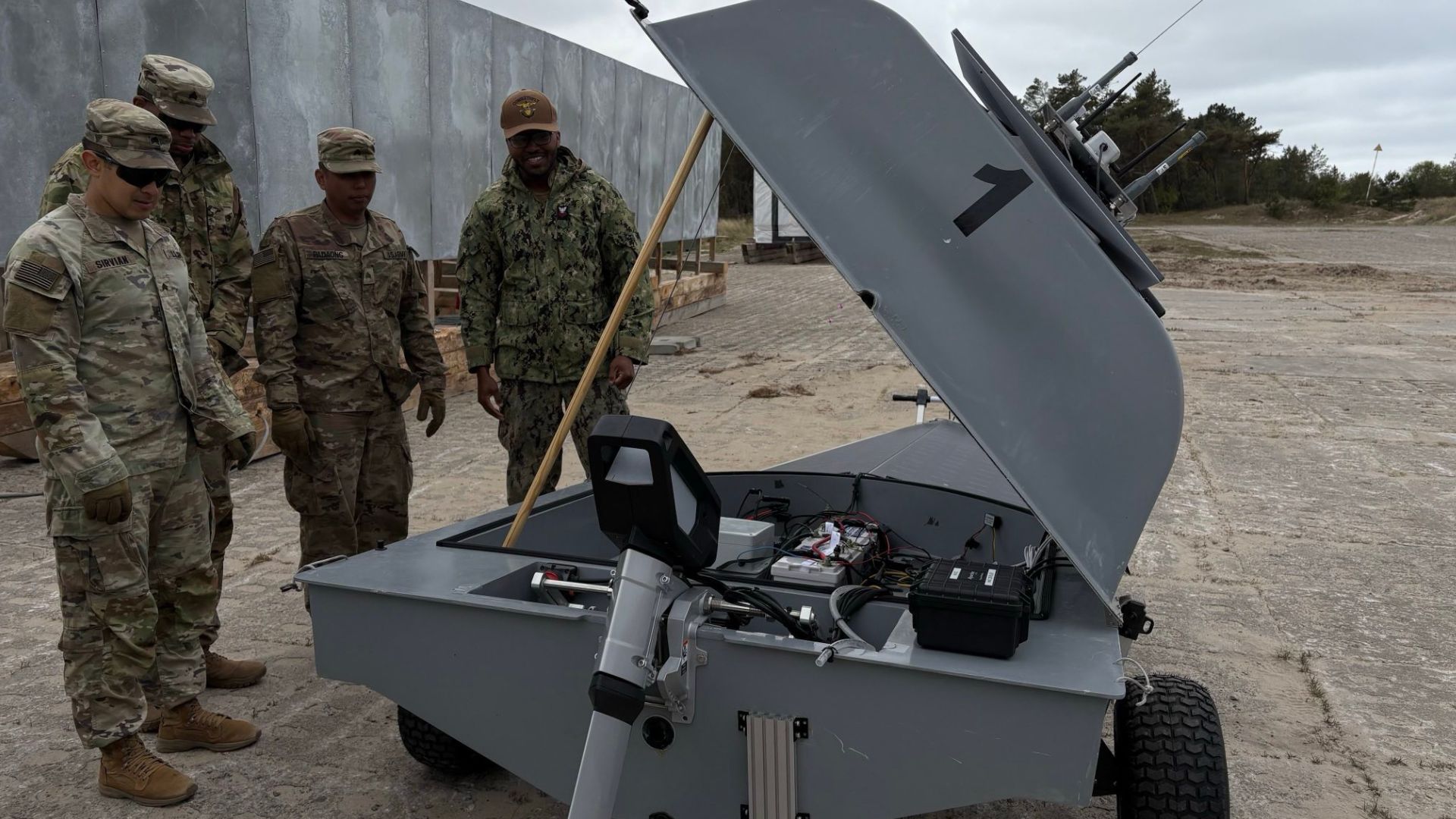
NIWC Atlantic’s Unmanned Naval Innovation Team (UNIT) trains US Army and Polish Armed Forces on unmanned technology. (DVIDS)
And alongside the Army in Arcane Thunder, USVs experimented with contested logistics, hauling hundreds of pounds of ammunition and rations to isolated troops on shore.
The flotilla also worked with NATO’s Task Force X to expand maritime domain awareness, passing real-time video feeds and location data to partners while exploring how networks of uncrewed platforms might track threats across vast regions.
Advertisement
From Destroyer to Hedge Force
What TF66 is attempting is more than cost savings. It’s a rethink of presence and persistence at sea. A destroyer can be pulled away for refueling or redirected to another mission.
A USV, by contrast, might persist in a region for six months without relief. That endurance could provide the Navy with what Mattis calls a “hedge force,” which is essentially a robotic presence that fills gaps when there aren’t enough manned ships to cover every mission set.
The challenge lies in proving that this flotilla can be both resilient and regenerable. A destroyer lost in combat is irreplaceable in the short term. A USV lost can be swapped out for another.
Advertisement
But to sell the concept, Mattis must show hard data, including telemetry, performance metrics, and attrition rates, that would convince Navy leadership this is more than an experiment.
HMS Pursuer conducts counter-unmanned surface vessel operations with global autonomous reconnaissance crafts (GARC) units during BALTOPS 2025, June 12. (DVIDS)
Can It Replace a Destroyer?
The lessons of TF66 could converge with those from Task Force 59 in the Middle East and 4th Fleet’s experiments in the Americas, forming the backbone of a new distributed, unmanned naval force. If successful, this “deconstructed DDG” concept could free manned ships for missions that demand human judgment, while robotic flotillas provide scalable presence, persistent surveillance, and logistical support.
For a Navy confronting rapid technological change, rising global threats, and tighter budgets, TF66’s work is more than an experiment as it provides a glimpse of the fleet’s future.
The question now isn’t whether a flotilla of drones can replace a destroyer. It’s whether the Navy is ready to trust its next battlefield edge to machines.
Advertisement
What readers are saying
Generating a quick summary of the conversation...
This summary is AI-generated. AI can make mistakes and this summary is not a replacement for reading the comments.










COMMENTS