

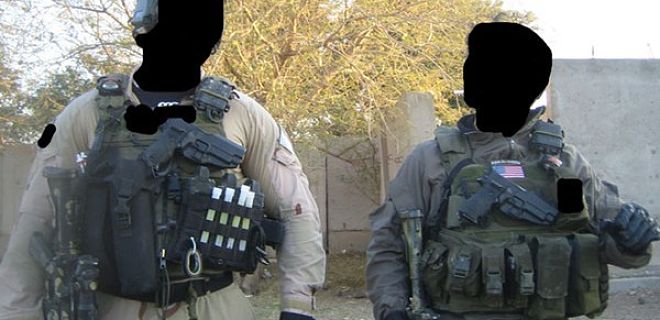
The culture of a Tier One unit is not only unique, it is protected. But, after ten plus years at war, most Americans know there to be two Special Mission Units—the Army’s Delta Force and the Navy’s SEAL Team Six. Members of these organizations sign non-disclosure agreements, or NDA, before they can drop their kit bags in the team room. The signature is binding for life. The NDA is perfectly clear about disclosing information, and includes steps that must be followed to ensure the information is checked by competent authority prior to release. If signing the form letter isn’t enough deterrent from one day sharing experiences, the culture is designed to police anyone considering otherwise.
Basically, what happens down range stays down range. You don’t talk about it, you definitely don’t write about it. And anyone who blows off the rules, even if he does seek and receive security reviews from the proper authorities for 18 months as I did, is ostracized, demonized, and banned. That’s not Merriam-Webster’s exact definition of having been PNGed, but it about covers it.
Everyone serving in a Tier One unit has their every need seen to while they are operational. Nine out of ten, upon retirement or release from these two elite units, will only have the skills, knowledge, and know-how they learned while serving the ranks—skill sets that are limited to a select few, but very much earned by the same select few. Are these skill sets marketable? Of course they are. Whether they should be is irrelevant. The demand is there and the operators need to work when they leave the teams, too.
Almost every former unit operator includes the phrases “Delta Force” or “SEAL Team Six” in their resumes. The ones that don’t are so well known in their trade that it isn’t necessary, or they still have some support or business ties to the organization that they don’t want to jeopardize. Either way, captured on a web site or not, you are cashing in largely on what you learned and experienced while serving the Tier One ranks.
Some “black” SPECOPS warriors become independent contractors with the CIA and head back down range. Former teammate and Delta operator William “Chief” Carlson did in 2003 and was killed in a Taliban ambush. Former mate Dale “Slugger” Comstock, one of the operatives in the NBC reality show Stars Earn Stripes spent eight years serving his country as an independent contractor on the battlefield. Some take less dangerous routes. They may teach tactics, shooting, jumping, driving, lock picking, assault planning, or even open up their own business to solve real problems. Among a dozen other things related to the skills you learned and earned while in a Tier One unit, you can even consult for a video game company.
And, you can write a book.
From that moment on, it’s yours to lose. The standards are extremely high, as they should be. We all know that talking about the unit, particularly in a tell-all memoir, regardless of how vanilla the contents are, is tantamount to alumni suicide.
Let me be clear here. I’m referring only to members of Delta Force and SEAL Team Six—not Army Green Berets, not “white” Navy SEALs, not conventional military soldiers, airmen, or Marines. If you are even remotely interested in reading this post, you know the book stores are filled with memoirs authored by former military men and women. Yes, absolutely, they are true heroes, but I know of none that are PNGed from their communities.
Write about your time in a Tier One unit absolutely equals PNG for life. This will prove to be the most damning psychological stain on Owen. Been there, done that—when I wrote Kill Bin Laden, in which national security was not put at risk and no special operations unique tactics, techniques, procedures or personalities were compromised.
I read an advance copy of Owen’s book, No Easy Day. Folks, former SEAL Team Six warrior Mark Owen, who gave his country 12 years of faithful service, does not disappoint the American people.
The manuscript was combed over by a trusted agent, a former special operations attorney who has performed similar vetting reviews for other military authors. I’m absolutely convinced and entirely confident that Owen’s book does not reveal any secret tactics, sensitive techniques or delicate procedures that would put current servicemen and women in jeopardy.
Owen isn’t the first person involved with the May 2011 raid to go public with details that some might argue should be protected. President Obama’s administration confirmed the participation of Navy SEALs on national television within a few hours of the raid. Last week, Judicial Watch published communication between CIA and filmmakers Mark Boal and Kathryn Bigelow, indicating that “Boal and Bigelow would be ‘meeting individually with both [name redacted] and the translator who was on the raid…’” Admiral McRaven has sat down and discussed various aspects of the raid with journalists, too.
Just as Admiral McRaven is smart enough to know what to share and what to protect, Owen is equally careful in No Easy Day not to allow innocuous facts to be compiled to potentially compromise sensitive national security information. Instead, he captures the essence of what it is like to live your life as a protector of the freedoms all of us hold so dear. Owen said, “Look at Hollywood stars, pro athletes etc., nobody, and I repeat nobody, does what we do, for the reasons we do it. That’s the story, not Mark Owen.”
We highly encourage you to read the rest here and check out our SOFREP eBook “No Easy Op“, the unclassified analysis of No Easy Day. Buy it on Amazon.








COMMENTS