

Pretending otherwise does not protect civil liberties. It undermines them by ensuring the next incident unfolds under the same conditions—or worse.
Democratic Mandate and Operational Pressure
Recent enforcement actions also did not arise in a political vacuum. During a recent election cycle, immigration enforcement was a central campaign issue, and the candidate who prevailed ran explicitly on restoring and strengthening the application of existing immigration law. That outcome created both public expectations and an institutional mandate for visible enforcement.
Recognizing this reality does not require agreement with every policy choice or operational decision. But it matters. Democratic authorization does not absolve agencies of responsibility—it intensifies it. When enforcement proceeds under an electoral mandate, professionalism is no longer optional, and errors carry greater consequences because they risk undermining the legitimacy of the very process that set the policy in motion.
A mandate to enforce the law is never a mandate to ignore constitutional limits. Political direction increases pressure on leadership and operators alike, and that pressure must be met with discipline, preparation, and restraint—not shortcuts.
Training Is About Judgment, Not Just Tactics
Public debate often fixates on whether officers are “trained enough,” as if training were synonymous with weapons handling or physical control techniques. In reality, the most consequential training gaps are usually judgmental, not mechanical.
Effective enforcement requires sustained training in:
- decision-making under stress
- escalation and de-escalation logic, with emphasis on de-escalation
- crowd psychology
- command presence and clear communication
- discipline in ambiguous, emotionally charged moments
When these skills are rushed, deprioritized, or treated as optional, agencies risk producing reactive actors operating at the edge of panic, relying on technical justifications after the fact.
Accountability without attention to training becomes performative. It punishes outcomes while ignoring causes.
Civilian Responsibility Is Part of the Equation
A functioning civil society depends on more than professional enforcement. It requires citizens to understand risk, consequence, responsibility, and adherence to the law.
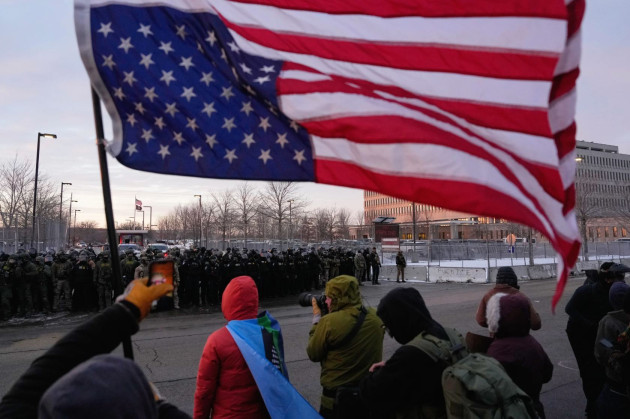
Peaceful protest is a protected right. Provocation, physical interference, and assault on law enforcement are not. Rights do not suspend legal consequences, nor do they nullify personal responsibility.
Crowd situations amplify emotion, confusion, and error. When individuals choose to escalate—by inserting themselves physically, carrying weapons into volatile environments, or attempting to “intervene” in enforcement actions—they dramatically increase the probability of serious injury or lethal outcomes.
This is not victim-blaming. It is risk acknowledgment.
Ignoring civilian responsibility teaches a dangerous lesson: that escalation carries no cost and that adherence to the law is contingent on political convenience. In reality, the cost is often paid by people who believed they were acting morally or rationally until chaos rendered that belief obsolete.
For much of the twentieth century, civic education emphasized not only individual rights, but also the responsibilities that accompany participation in a free society. Over time, that balance has faded. Legal boundaries, lawful protest, and the consequences of escalation are often assumed rather than taught.
Reintroducing serious civic education at the high-school level—covering constitutional authority, lawful dissent, and personal responsibility—would not suppress activism. It would strengthen it by grounding civic engagement in understanding rather than impulse and reducing preventable harm.
Precision Matters More Than Rhetoric
Historical analogies and charged labels may feel satisfying, but they rarely improve understanding. Comparisons to totalitarian regimes or secret police organizations collapse critical distinctions and obscure more than they reveal, to the detriment of civil discourse and responsible behavior.
Media coverage also plays a significant role in shaping public perception of enforcement actions and unrest. Selective reporting, truncated video clips, and narrative framing that precedes verified facts can intensify emotions and harden positions before investigations are complete.
This dynamic affects behavior on all sides. Protesters may arrive primed for confrontation, believing abuse is inevitable. Officers and agents may anticipate hostility rather than compliance. Once these expectations take hold, miscalculation becomes more likely—not because facts have been established, but because narratives have already taken root.
If reform is the objective, precision must replace caricature. Accountability demands specificity: what failed, why it failed, and how recurrence can be prevented.
Broad denunciations signal emotion. They do not produce reform.
Leadership Sets the Ceiling
In every enforcement organization, culture flows downward. Training priorities, deployment tempo, public messaging, and discipline practices are leadership decisions.
When leadership emphasizes optics over preparation, speed over judgment, or rhetoric over standards, downstream failures are not anomalies. They are outcomes.
True accountability does not begin with individual scapegoats. It begins with institutional honesty—identifying structural incentives that reward aggression, excuse poor judgment, or treat internal criticism as disloyalty.
Organizations improve when professionalism is protected, not politicized.
Accountability Without Paralysis
The choice facing the country is not between enforcement and liberty. Framing it that way creates a false dilemma—and one that ultimately weakens both.
A free society depends on the consistent and equal enforcement of its laws. When laws are ignored, selectively applied, or suspended for reasons of political expediency, the rule of law erodes. Liberty does not survive in that environment; it degrades into arbitrariness, where outcomes depend more on ideology, pressure, or power than on principle.
In constitutional systems, including our own, federal law is supreme within its enumerated powers. Immigration enforcement falls squarely within that framework. States and localities retain significant authority over their own jurisdictions, but they do not possess the authority to nullify federal law on their own initiative.
Disagreements over federal policy are properly addressed through legislation, litigation, and elections. Until a court issues a legal determination or a law is changed through constitutional means, duly enacted federal law remains binding. When state or local officials instead attempt to countermand federal enforcement through rhetoric, standing orders, or public defiance, the resulting confusion falls not on the law itself, but on individual citizens and personnel who may not fully understand the constitutional hierarchy.
Those actions—rather than any ambiguity in the law—create operational consequences.
At the same time, enforcement without discipline, judgment, and restraint can produce its own consequences. Authority exercised carelessly or aggressively damages public trust and fuels instability. The answer to that danger is not paralysis or abdication of enforcement, but professionalism.
Conflicting messages about legitimacy, authority, and compliance increase the likelihood of miscalculation, escalation, and confrontation in environments that already demand clarity and restraint.
If we want enforcement agencies to protect public order and individual rights without exceeding constitutional boundaries, we must insist on higher professional standards without weakening lawful authority. That requires sober analysis, realistic training expectations, clear leadership accountability, and a citizenry that understands both the rights and responsibilities that accompany civic life.
Accountability is not a slogan. It is a system.
And systems improve only when we are willing to think as carefully as we feel.








COMMENTS