

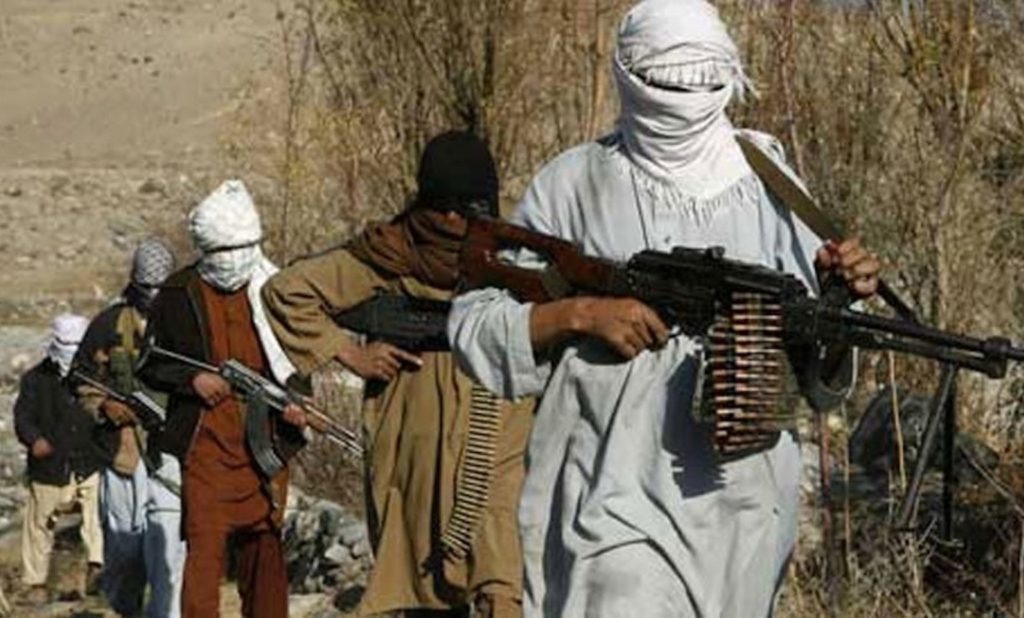
The author of a recent article in The Dispatch spoke with several security officials who believe that “at least hundreds” of al-Qaeda terrorists were released during the Taliban’s jailbreaks this year. Some of these terrorists are al-Qaeda bigwigs. Others are lower-level fighters and mid-level operatives.
Most alarming, multiple “external operatives” — that is, al-Qaeda terrorists responsible for plotting against the West — have also been freed.
Authors from The Dispatch and The Long War Journal tracked al-Qaeda’s presence in at least 18 of Afghanistan’s 34 provinces between November 202- and April 2021. Their findings have been corroborated by both the UN Security Council as well as members of the U.S. government.
The UN Security Council published a report on June 1, on terrorist trends that clearly spells out that the terrorist group still has a significant presence in Afghanistan.
“A significant part of the leadership of Al-Qaida (QDe.004) resides in the Afghanistan and Pakistan border region, alongside Al-Qaida in the Indian Subcontinent. Large numbers of Al-Qaida fighters and other foreign extremist elements aligned with the Taliban are located in various parts of Afghanistan. Al-Qaida continued to suffer attrition during the period under review, with a number of senior figures killed, often alongside Taliban associates while co-located with them. The primary component of the Taliban in dealing with Al-Qaida is the Haqqani Network (TAe.012). Ties between the two groups remain close.”
The U.S. Treasury Department similarly released a report early this year stating that the Taliban and al-Qaeda have kept close ties and that the terrorist organization was gaining strength in Afghanistan.
The report was clear that
“al-Qaeda is gaining strength in Afghanistan while continuing to operate with the Taliban under the Taliban’s protection. Al-Qaeda capitalizes on its relationship with the Taliban through its network of mentors and advisers who are embedded with the Taliban, providing advice, guidance, and financial support. Senior Haqqani Network5 figures have discussed forming a new joint unit of armed fighters in cooperation with and funded by al-Qaeda.”
Most damningly, in October last year, Afghan SF commandos killed al-Qaeda’s number two man in the Indian subcontinent, Abu Muhsin al-Masri, in an operation in Ghazni province.
US Lack of Credibility and a Tarnished Image
Biden’s relationship with our European and NATO allies, who welcomed him after a contentious relationship during the Trump administration, has been damaged by the American withdrawal plan. The ill-conceived plan was poorly vetted with our European allies, such as Britain, France, and Germany, which have all been part of the U.S.-led coalition in Afghanistan.
Yet, the president still claims, “I have seen no question of our credibility from our allies around the world. I’ve spoken with our NATO allies. We’ve spoken with NATO allies, the secretary of state.”
President Biden’s “America is back” approach was meant to reassure America’s allies that the U.S. would be engaged globally in contrast to the “America First” legacy of the Trump administration.
Not only did that not happen with Afghanistan, but our European allies were also livid that President Biden claimed he had consulted with them about his withdrawal plans, when in fact several key decisions such as the abrupt abandonment of Bagram Airfield in early July, completely blind-sided them.
Tom Tugendhat, the Conservative chairman of the U.K. Parliament’s Foreign Affairs Committee and a combat veteran of Afghanistan, posted on Twitter that “Afghanistan is the biggest foreign policy disaster since Suez. We need to think again about how we handle friends, who matters, and how we defend our interests.”

Norbert Röttgen, chairman of the German parliament’s foreign relations committee, a long-time acquaintance of President Biden and previously vocal supporter of his administration, was extremely critical of the abrupt withdrawal.
“I say this with a heavy heart and with horror over what is happening, but the early withdrawal was a serious and far-reaching miscalculation by the current administration,” Röttgen said.
“This does fundamental damage to the political and moral credibility of the West.”
French President Emmanuel Macron is suggesting that calls for “strategic autonomy” from the United States should now be reconsidered.
American Is Back, Not Really
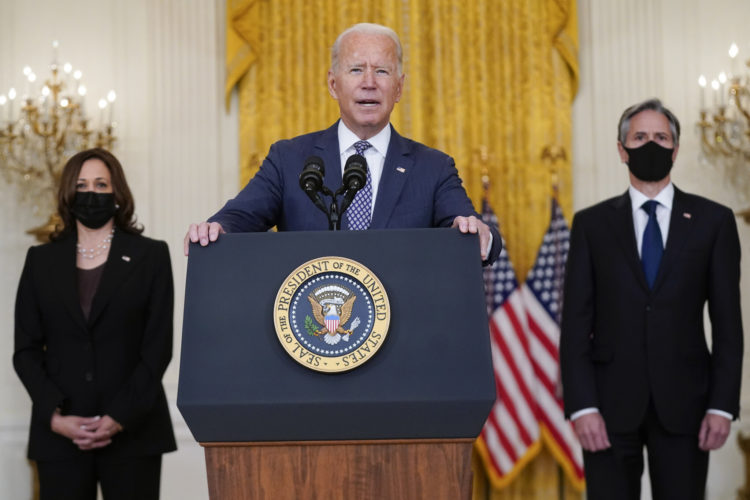
Biden’s presidential platform during the election was one of honesty, transparency, and assumption of responsibility. In this Afghanistan debacle, he has failed at each of those.
On Monday, he had said, “The truth is: This did unfold more quickly than we had anticipated.”
Yet when speaking with ABC’s George Stephanopoulos on Wednesday, he claimed that he had anticipated what later ensued in Kabul and denied he had made any mistakes in planning, saying “the idea that somehow there’s a way to have gotten out without chaos ensuing, I don’t know how that happens.”
His refusal to assume any responsibility for what has transpired and to keep pushing blame on the Trump administration also strains credibility.
Although he continues to wear blinders about his handling of the withdrawal, our European allies are not feeling the “America Is Back” vibe.








COMMENTS