Russia's military campaign in Ukraine has resulted in the deaths of seven generals, including Lieutenant General Yakov Rezantsev, highlighting significant issues within the Russian command structure and morale. The Ukrainian intelligence efforts targeting high-ranking officers have contributed to these losses, exacerbating the challenges faced by Russian forces.
Key points from this article:
The death of Lieutenant General Yakov Rezantsev marks the seventh Russian general killed in Ukraine, confirmed by Ukrainian advisor Oleksiy Arestovych on March 25th.
How the loss of senior officers like Rezantsev affects Russian troops is evident, as it undermines morale and reflects the Kremlin's frustration with the ongoing military failures.
Why the high casualty rate among Russian generals matters is tied to the rigid command structure of the Russian military, which forces senior leaders to engage in tactical decisions, making them more vulnerable on the battlefield.
Updating summary...
Another One Bites the Dust: Russian Lieutenant General Yakov Rezantsev Killed in Ukraine
Guy D. McCardle
Speed
1x
Listen
COMMENTS
As their war on Ukraine enters its second month, Russia has seen yet another General officer killed. That makes seven, and yes, people are counting. Russia has confirmed the death of one. An equal number of senior colonels have died as well in the fighting. In contrast, The United States lost only one General officer […]
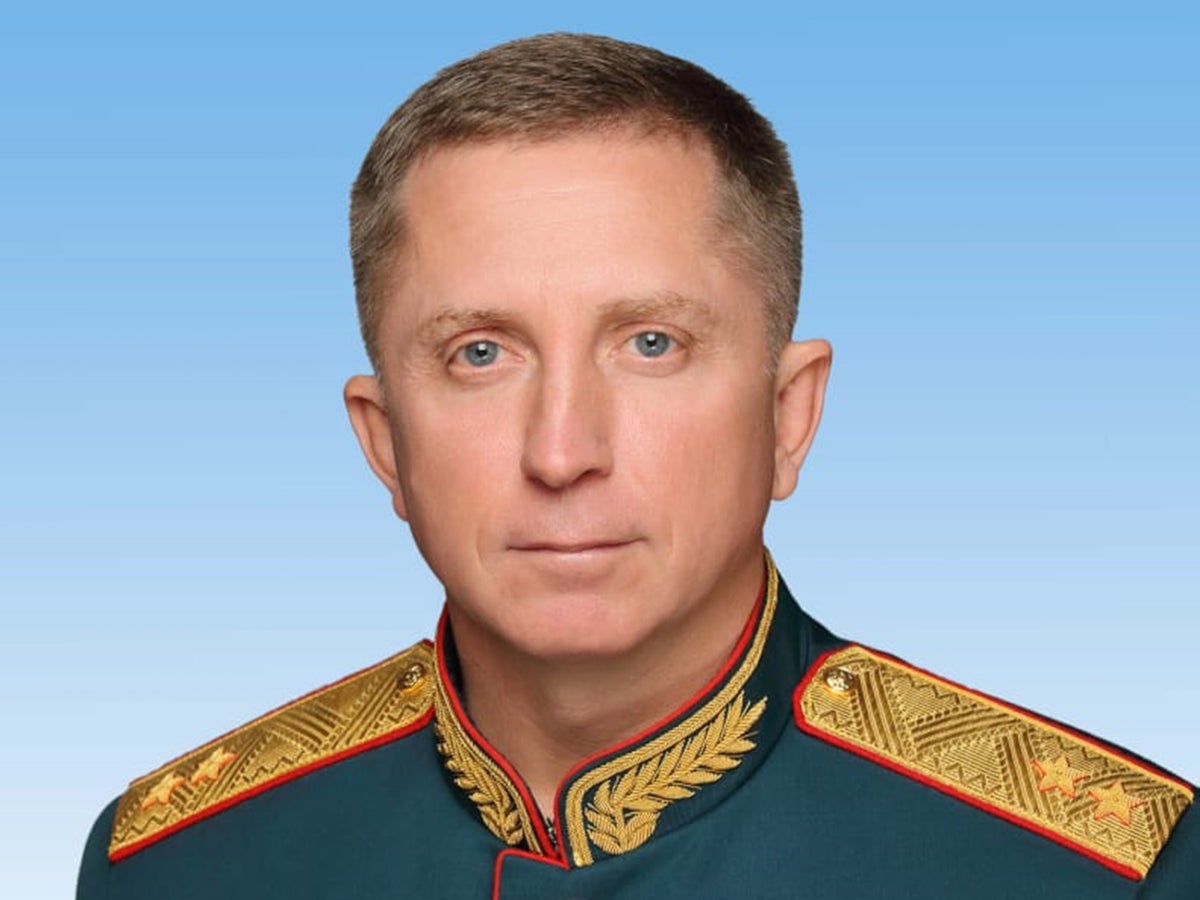
Lieutenant General Yakov Rezantsev, was killed amid intense fighting at Chornobaivka airfield in Ukraine. Image from Hindustan News Hub
As their war on Ukraine enters its second month, Russia has seen yet another General officer killed. That makes seven, and yes, people are counting. Russia has confirmed the death of one. An equal number of senior colonels have died as well in the fighting.
Advertisement
In contrast, The United States lost only one General officer to combat operations in our wars in Iraq and Afghanistan (rest in peace, General Greene).
Lieutenant General Yakov Rezantsev has become the seventh Russian general to die in Ukraine. Image courtesy of independent.co.uk
Oleksiy Arestovych, an advisor to Ukrainian President Zelensky, was the first to announce the death on Friday, March 25th. He stated that Rezantsev died during intense combat at Chornobaivka airfield. The airfield sits near Kherson, a city of almost 290,000 in the south of Ukraine. Russian forces had previously used the city as a command post.
The forty-eight-year-old Rezantsev is the second general killed at Chornobaivka. The first was Lieutenant General Andrei Mordvichev, who reportedly died at the airfield last Saturday.
Advertisement
Rezantsev was commander of the 49th Combined Arms Army of the Southern Military District of Russia. The unit can trace its heritage back to 1941, following the German invasion of the Soviet Union. Rezantsev assumed command of the unit in August of 2020.
A Poor Prediction
According to a conversation intercepted by Ukrainian intelligence, Rezantsev was quite confident that the Russian military campaign would be successful in only a matter of hours.
Advertisement
Bits of the conversation was posted on social media. In it, a Russian soldier comments to his superior:
“Here, Rezantsev is in charge. We only met him once since we arrived here … It was the 4th day and you know what he said? Get this: ‘It’s no secret that this operation is going to be over in mere hours’.”
It Is No Coincidence
Sources from inside Volodymyr Zelensky’s inner circle have reported to the Wall Street Journal that Ukraine has an intelligence team dedicated to targeting high-ranking Russian officers. It makes sense. Seeing your generals die off does not do wonders for the morale of the common soldier.
And it’s not just generals:
Advertisement
“They look for high profile generals, pilots, artillery commanders,” the source told the newspaper.
The Kremlin is supposedly furious at the loss of some of its top leaders. Accordingly, the deaths coincide with numerous reports of unreliable equipment, poorly fed troops with low morale, and subordinate leaders too terrified to make quick decisions.
One main reason for the loss of so many high-ranking officers can be traced to the rigid structure of the Russian military itself. Generals are given broad strategic authority, which they execute at the command level, but they are notoriously involved at the tactical level as well. As a result, small-unit leadership is poor in the modern Russian army. Senior leaders are expected to lead from the front.
Junior leaders are largely unable to act on their initiative. Instead, they rely heavily on colonels and above to become involved in decision-making and plan execution that would typically occur at much lower levels in western military forces.
Their command structure is inflexible, and senior leaders are untrusting of mid-level leaders who take the initiative. This rigidity is directly leading to multiple senior officer deaths on the battlefield.
As we’ve previously reported, the Russian have modern communications gear with encryption but it required a 3G or 4G network that the Russians foolishly destroyed in Ukraine, leaving them using VHF/UHF radios and cell phones to talk with. UHF/VHF can not only be jammed easily but also intercepted and the position of a person using a cell phone can be easily located as well. The Ukrainians are doing a very good job at signals intelligence and locating senior Russian leaders because Russian communications methods and discipline is so terribly bad.
Advertisement
What readers are saying
Generating a quick summary of the conversation...
This summary is AI-generated. AI can make mistakes and this summary is not a replacement for reading the comments.











COMMENTS